
以下是一个mongo查询的综合应用,即介绍一个生产中实际应用的模糊查询,当然其实也很简单,主要用到mongo中的模糊查询和$or查询,以及并的关系,下面是一个mongo中的一条记录
1{
2    "_id" : "ffe6a068-9043-4334-97d2-75387340e655",
3    "file_id" : "ffe6a068-9043-4334-97d2-75387340e655",
4    "name" : "中国正大",
5    "update_time" : NumberInt(1554975642),
6    "create_time" : NumberInt(1554975642),
7    "content" : "中国正大相关信息",
8    "file_url" : "",
9    "file_type" : "",
10    "user_ids" : [
11        1.0,
12        10.0
13    ],
14    "group_ids" : [
15
16    ],
17    "is_common" : NumberInt(0),
18    "confidence" : -1.0,
19    "obj_id" : "",
20    "source" : "",
21    "content_time" : "",
22    "author" : "",
23    "summary" : "",
24    "info_type" : "00",
25    "sub_info_type" : "",
26    "title" : "",
27    "word_num" : NumberInt(8)
28}
对上面一条记录或者更多条记录我们生产中的需求是:查询出集合中(mongo中的集合即是mysql中的表),name或content中包含"正大"二字的记录(关键词即是用户随机输入的,其实是一个变量),并且时间戳的值大于某一个开始时间和某一个结束时间(这个也是用户在前端进行选择,然后我们拿到前端的请求来进行查询的),并且文件的类型即info_type字段的值为"00",“00”代表的是word也是前端用户选择后我们获取的条件之一,当然还有其他条件想进行尝试可以自由发挥
下面就是使用mongo语句进行实现的上面的需求:
db.getCollection("subscribe_test").find({$or:[{"name":{"$regex":"正大"}},{"content":{"$regex":"正大"}}],"update_time":{$gte:1,$lte:2000000000},info_type:"00"})
对于查询我们有的时候会选择在程序中进行,有的小伙伴会问上面的mongo语句怎么在编程语言中进行实现,下面是用python语言中进行实现的,我们会引用python中操作mongo的一个模块即pymongo模块可以使用pip install pymongo在控制台或cmd中进行一键安装,至于如何使用也很简单,可以自行百度或者访问我的另一篇博客:pymono的简单使用,下面附上用python代码实现上面需求的业务代码:
1import pymongo
2import re
3# 创建数据库连接
4client = pymongo.MongoClient(host='127.0.0.1', port=8014) #填写自己本机数据库的ip和port或者远程服务器数据库的ip和port
5# 指定数据库db1,没有则创建数据库db1
6db = client.dataretrieve
7#指定数据库中指定的表
8collection=db.subscribe_test
9
10"""1、对表中的数据进行查询"""
11"""
12db.collection.find(query, projection)
13query :可选,使用查询操作符指定查询条件
14projection :可选,使用投影操作符指定返回的键。查询时返回文档中所有键值, 只需省略该参数即可(默认省略)。
15"""
16query = {}
17query["$or"] = [
18    {"name": re.compile("正大")},
19    {"content": re.compile("正大")},
20]
21query["file_type"] = "00"
22query["update_time"] = {"$gte": 0,"$lte": 2000000000}
23row=collection.find(filter=query)
24for r in row:
25    print(r["content"])
下面是生产中实际的开发代码,只供参考,只是把上面的一些常量,换成了从前端请求的数据:
1def person_handler(req_params, page_size, search_offset):
2    """
3    去mongo中查询个人数据
4    :param req_params:
5    :param page_size:
6    :param search_offset:
7    :return:
8    """
9    results = []
10    query = {}
11    update_time = {}
12    if 'start_time' in req_params and req_params["start_time"]:
13        start_time = int(req_params["start_time"])
14        update_time['$gte'] = start_time
15    if 'end_time' in req_params and req_params['end_time']:
16        end_time = int(req_params["end_time"])
17        update_time['$lte'] = end_time
18    if update_time:
19        query["update_time"] = update_time
20    if 'file_type' in req_params and req_params['file_type']:
21        query["file_type"] = req_params["file_type"]
22    if 'user_ids' in req_params and req_params['user_ids']:
23        query['user_ids'] = int(req_params['user_id'])
24    serch_keywords = req_params["search_keywords"]
25
26    query["$or"] = [
27        {"name": re.compile(serch_keywords)},
28        {"content": re.compile(serch_keywords)},
29    ]
30    print(query)
31    result = person_mongodao.search(filter=query).skip(search_offset).limit(page_size)
32    count = person_mongodao.search(filter=query).skip(search_offset).limit(page_size).count()
33    for row in result:
34        results.append(row)
35    additions = {"word_segs": req_params["search_keywords"], "remind": 0}
36    print("查询结果", results)
37    return results, additions, count
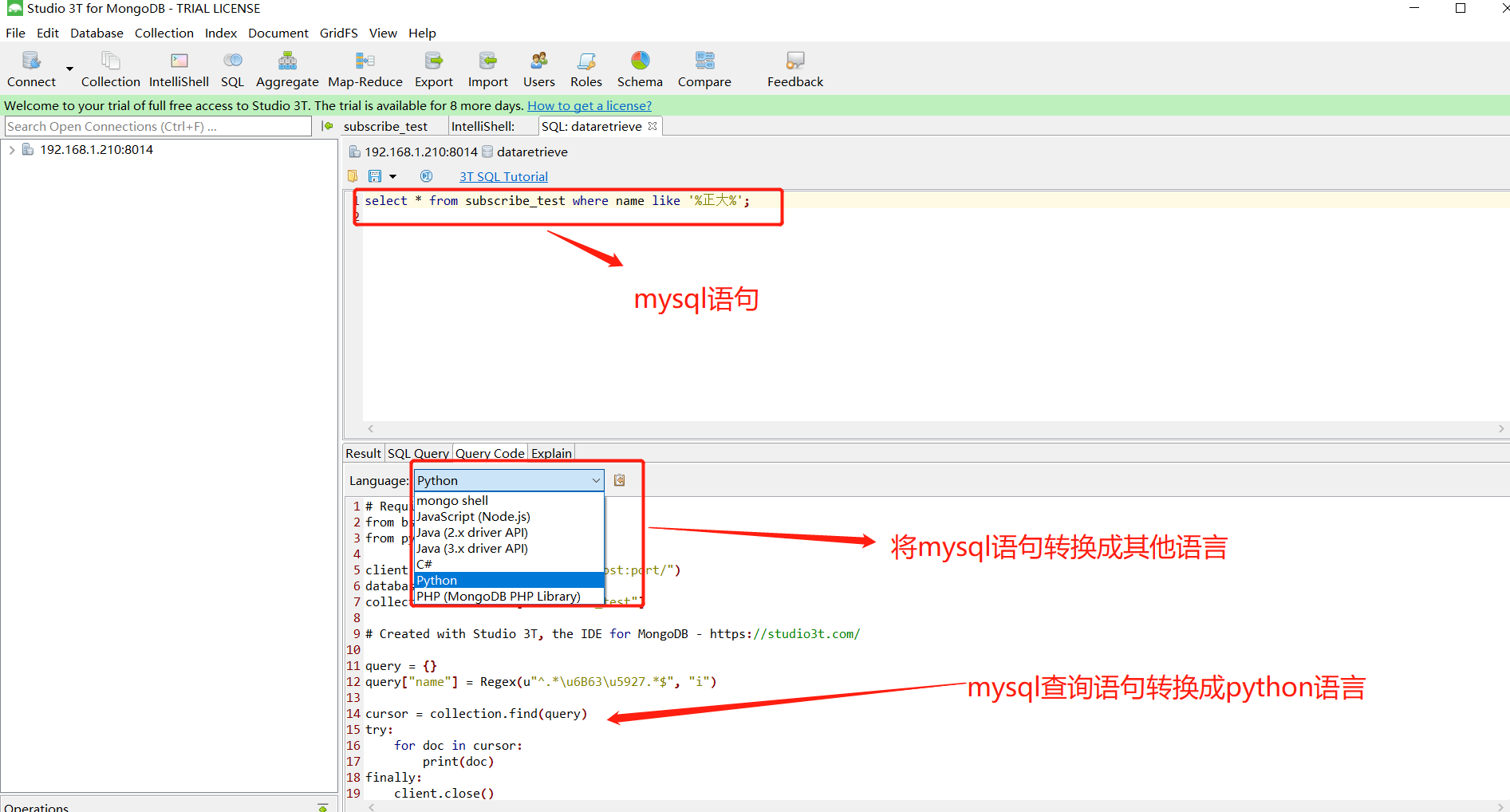
如果有小伙伴说我用的不是python语言譬如java用代码怎么实现呢?那么如果你会写mysql来实现上面的需求的话本博主可以推荐你使用mongo的一款可视化工具Studio 3T来将mysql语句转换成mongo语句,python语句,java语句等
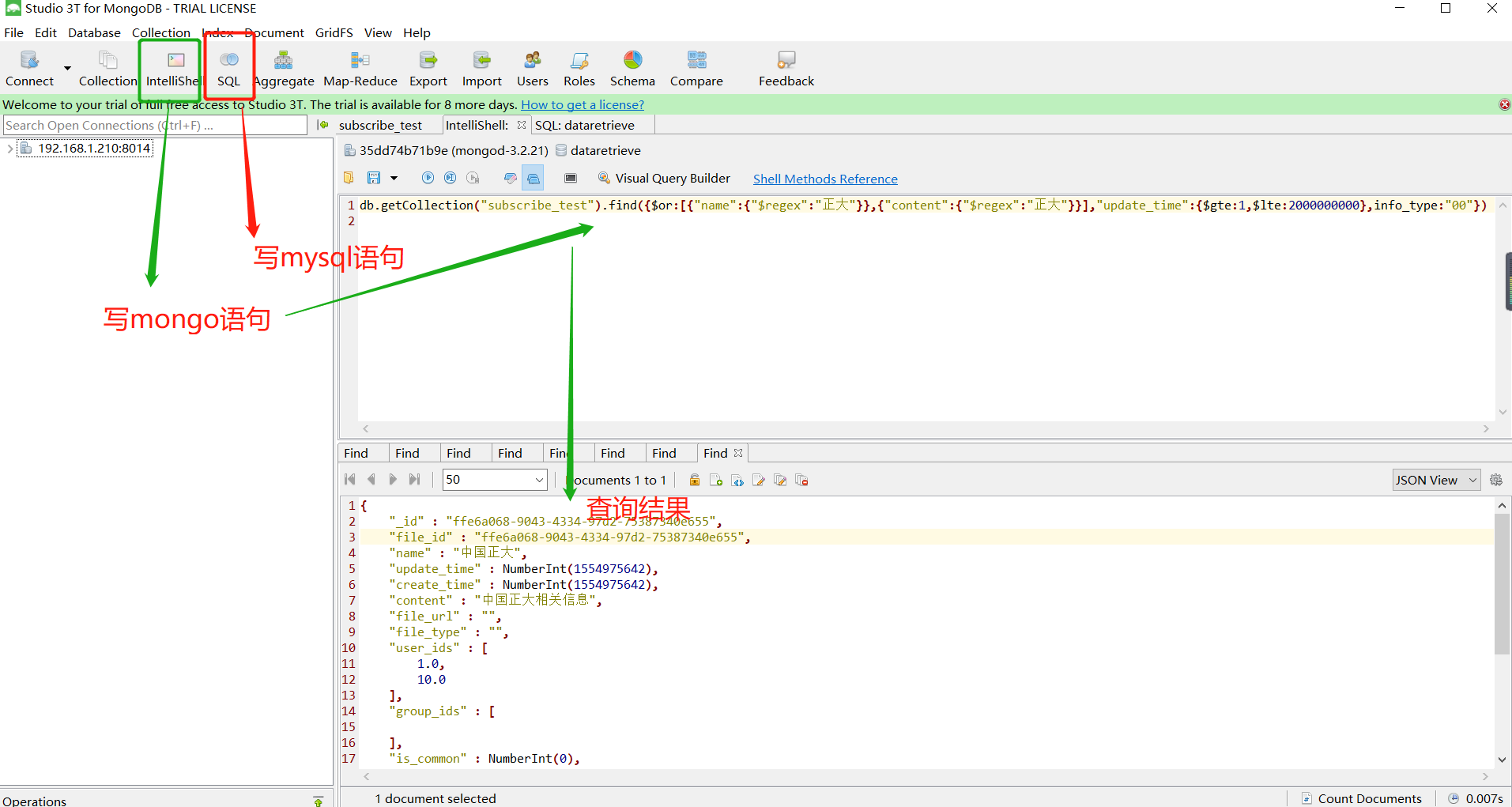
mysql语句也类似mongo语句有一个控制台可以来进行书写mysql语句,然后进行查询之后将结果进行转换
以上就是关于mongo模糊查询的简单使用,希望对你有所帮助,原创不易,转载请说明出处,谢谢!!!!