
一、概述
之前讲解Thread类中方法的时候,interrupt()、interrupted()、isInterrupted()三个方法没有讲得很清楚,只是提了一下。现在把这三个方法同一放到这里来讲,因为这三个方法都涉及到多线程的一个知识点----中断机制。
Java没有提供一种安全、直接的方法来停止某个线程,而是提供了中断机制。中断机制是一种协作机制,也就是说通过中断并不能直接终止另一个线程,而需要被中断的线程自己处理。有个例子举个蛮好,就像父母叮嘱出门在外的子女要注意身体一样,父母说了,但是子女是否注意身体、如何注意身体,还是要看自己。
中断机制也是一样的,每个线程对象里都有一个标识位表示是否有中断请求(当然JDK的源码是看不到这个标识位的,是虚拟机线程实现层面的),代表着是否有中断请求。
二、三个中断有关的方法
1、interrupt()方法
1 1 /**
2 2      * Interrupts this thread.
3 3      *
4 4      * <p> Unless the current thread is interrupting itself, which is
5 5      * always permitted, the {@link #checkAccess() checkAccess} method
6 6      * of this thread is invoked, which may cause a {@link
7 7      * SecurityException} to be thrown.
8 8      *
9 9      * <p> If this thread is blocked in an invocation of the {@link
1010      * Object#wait() wait()}, {@link Object#wait(long) wait(long)}, or {@link
1111      * Object#wait(long, int) wait(long, int)} methods of the {@link Object}
1212      * class, or of the {@link #join()}, {@link #join(long)}, {@link
1313      * #join(long, int)}, {@link #sleep(long)}, or {@link #sleep(long, int)},
1414      * methods of this class, then its interrupt status will be cleared and it
1515      * will receive an {@link InterruptedException}.
1616      *
1717      * <p> If this thread is blocked in an I/O operation upon an {@link
1818      * java.nio.channels.InterruptibleChannel InterruptibleChannel}
1919      * then the channel will be closed, the thread's interrupt
2020      * status will be set, and the thread will receive a {@link
2121      * java.nio.channels.ClosedByInterruptException}.
2222      *
2323      * <p> If this thread is blocked in a {@link java.nio.channels.Selector}
2424      * then the thread's interrupt status will be set and it will return
2525      * immediately from the selection operation, possibly with a non-zero
2626      * value, just as if the selector's {@link
2727      * java.nio.channels.Selector#wakeup wakeup} method were invoked.
2828      *
2929      * <p> If none of the previous conditions hold then this thread's interrupt
3030      * status will be set. </p>
3131      *
3232      * <p> Interrupting a thread that is not alive need not have any effect.
3333      *
3434      * @throws  SecurityException
3535      *          if the current thread cannot modify this thread
3636      *
3737      * @revised 6.0
3838      * @spec JSR-51
3939      */
4040     public void interrupt() {
4141         if (this != Thread.currentThread())
4242             checkAccess();
4343
4444         synchronized (blockerLock) {
4545             Interruptible b = blocker;
4646             if (b != null) {
4747                 interrupt0();           // Just to set the interrupt flag
4848                 b.interrupt(this);
4949                 return;
5050             }
5151         }
5252         interrupt0();
5353     }
54
551 /* Some private helper methods */
562     private native void setPriority0(int newPriority);
573     private native void stop0(Object o);
584     private native void suspend0();
595     private native void resume0();
606     private native void interrupt0();
617     private native void setNativeName(String name);
①:看一下第47行,interrupt()方法的作用只是设置中断标识位(Just to set the interrupt flag),并不会强制要求线程必须进行处理。再看一下第32行,interrupt()方法作用的线程是处于不是终止状态或新建状态的线程(Interrupting a thread that is not alive need not have any effect.)。
关于线程是否是alive的判断(A thread is alive if it has been started and has not yet died.)
②:看一下第29-30行,只有当那三种情况都不成立时,interrupt()方法才会设置线程的中断标识位(If none of the previous conditions hold then this thread's interrupt status will be set.)。这里介绍第一种,当调用Object的wait()/wait(long)/wait(long, int)方法,或是调用线程的join()/join(long)/join(long, int)/sleep(long)/sleep(long, int)方法, 那么interrupt()方法作用的线程的中断标识位会被清除并抛出InterruptedException异常。其余两种情况自己参看注释。
③:看一下第二块代码的第6行interrupt0()方法(设置中断标识位),这是一个被native修饰的方法,很明显这是一个本地方法,是Java虚拟机实现的。
2、isInterrupted()
该方法的作用就是测试线程是否已经中断,且线程的中断标识位并不受该方法的影响。
1 1 /**
2 2      * Tests whether this thread has been interrupted.  The <i>interrupted
3 3      * status</i> of the thread is unaffected by this method.
4 4      *
5 5      * <p>A thread interruption ignored because a thread was not alive
6 6      * at the time of the interrupt will be reflected by this method
7 7      * returning false.
8 8      *
9 9      * @return  <code>true</code> if this thread has been interrupted;
1010      *          <code>false</code> otherwise.
1111      * @see     #interrupted()
1212      * @revised 6.0
1313      */
1414     public boolean isInterrupted() {
1515         return isInterrupted(false);
1616     }
1717
1818     /**
1919      * Tests if some Thread has been interrupted.  The interrupted state
2020      * is reset or not based on the value of ClearInterrupted that is
2121      * passed.
2222      */
2323     private native boolean isInterrupted(boolean ClearInterrupted);
①:注意一下第5-7行,若是调用isInterrupted()方法时,当前已经调用interrupt()方法的线程was not alive,方法会返回false,而不是true。
②:最终调用的是isInterrupted(boolean ClearInterrupted),这个方法是一个native的,看得出也是Java虚拟机实现的。方法的参数ClearInterrupted,顾名思义,清除中断标识位,这里传递false,明显就是不清除。
举例:验证一下①中情况
1public class Thread01 extends Thread{
2
3    @Override
4    public void run() {
5
6    }
7}
测试一下:
1public class Test {
2    public static void main(String[] args) throws InterruptedException {
3        Thread01 thread01 = new Thread01();
4        thread01.start();
5        thread01.interrupt();
6        Thread.sleep(10);
7        System.out.println(thread01.isInterrupted());
8        System.out.println(thread01.isInterrupted());
9        System.out.println(thread01.isInterrupted());
10    }
11}
结果:
1false
2false
3false
可以看到,虽然调用了interrupt()方法,但是在调用isInterrupted()方法的时候,线程已经执行完了,所以返回的是false。
看一下反例,调用interrupt()方法,在线程没执行完的时候调用isInterrupted()方法
1public class Thread01 extends Thread{
2
3    @Override
4    public void run() {
5        for(int i = 0; i < 50000; i++) {
6
7        }
8    }
9}
测试一下:
1public class Test {
2    public static void main(String[] args) throws InterruptedException {
3        Thread01 thread01 = new Thread01();
4        thread01.start();
5        thread01.interrupt();
6        System.out.println(thread01.isInterrupted());
7        System.out.println(thread01.isInterrupted());
8        System.out.println(thread01.isInterrupted());
9    }
10}
结果:
1true
2true
3true
3、interrupted()
该方法的作用就是测试**当前线程(currentThread)**是否已经中断,且线程的中断标识位会被清除,换句话说,连续成功调用两次该方法,第二次的返回值一定是false。注意该方法是一个静态方法。
1 1 /**
2 2      * Tests whether the current thread has been interrupted.  The
3 3      * <i>interrupted status</i> of the thread is cleared by this method.  In
4 4      * other words, if this method were to be called twice in succession, the
5 5      * second call would return false (unless the current thread were
6 6      * interrupted again, after the first call had cleared its interrupted
7 7      * status and before the second call had examined it).
8 8      *
9 9      * <p>A thread interruption ignored because a thread was not alive
1010      * at the time of the interrupt will be reflected by this method
1111      * returning false.
1212      *
1313      * @return  <code>true</code> if the current thread has been interrupted;
1414      *          <code>false</code> otherwise.
1515      * @see #isInterrupted()
1616      * @revised 6.0
1717      */
1818     public static boolean interrupted() {
1919         return currentThread().isInterrupted(true);
2020     }
21
221 private native boolean isInterrupted(boolean ClearInterrupted);
①:注意一下第9-11行,若是调用interrupted()方法时,当前已经调用interrupt()方法的线程was not alive,方法会返回false,而不是true。
②:最终调用的是isInterrupted(boolean ClearInterrupted),这个方法是一个native的,看得出也是Java虚拟机实现的。方法的参数ClearInterrupted,顾名思义,清除中断标识位,这里传递true,明显就是清除线程的中断标识位。
此外,JDK API中有些类的方法也可能会调用中断,比如FutureTask的cancel,如果传入true则会在正在运行的异步任务上调用interrupt()方法,又如ThreadPoolExecutor中的shutdownNow方法会遍历线程池中的工作线程并调用线程的interrupt()方法。这些场景下只要代码没有对中断作出响应,那么任务将一直执行下去。
举例1:说明interrupted()方法测试的是当前线程是否被中断
1public class Thread01 extends Thread{
2
3    private List<Integer> list = new ArrayList<>();
4    @Override
5    public void run() {
6        System.out.println("开始执行run方法");
7        for(int i = 0; i < 50000; i++) {
8            list.add(i);
9        }
10        System.out.println("执行run方法结束");
11
12    }
13}
测试:
1 1 public class Test {
2 2     public static void main(String[] args) throws InterruptedException {
3 3         Thread01 thread01 = new Thread01();
4 4         thread01.start();
5 5         Thread.sleep(5);
6 6         thread01.interrupt();
7 7         System.out.println(Thread.interrupted());
8 8         System.out.println(thread01.isInterrupted());
9 9         System.out.println(thread01.isInterrupted());
1010     }
1111 }
结果:
1开始执行run方法
2false
3true
4true
5执行run方法结束
说明:由8行和9行结果来看,thread01确实是在执行期间被设置了中断标识位,但是第7行结果并没有返回true,这是因为Thread.interrupted()方法测试的当前线程是否处于中断状态,其当前线程是main线程,而main线程并没有处于中断状态,所以返回false。
举例2:若是run方法之行结束了,再来测试thread01是否处于中断状态,那么结果是什么
1public class Thread01 extends Thread{
2    @Override
3    public void run() {
4        System.out.println("开始执行run方法");
5        System.out.println("执行run方法结束");
6    }
7}
测试:sleep方法确保thread01执行完了在测试其是否处于中断状态
1public class Test {
2    public static void main(String[] args) throws InterruptedException {
3        Thread01 thread01 = new Thread01();
4        thread01.start();
5        thread01.interrupt();
6        Thread.sleep(50);
7        System.out.println(Thread.interrupted());
8        System.out.println(thread01.isInterrupted());
9        System.out.println(thread01.isInterrupted());
10    }
11}
结果:
1开始执行run方法
2执行run方法结束
3false
4false
5false
说明:可以看到,即使thread01被设置了中断标识位,但若是线程执行完成了再来测试其是否处于中断状态,那么一定会返回false。
举例3:中断main线程,给main线程设置中断标识位
1public class Thread01 extends Thread{
2
3    private List<Integer> list = new ArrayList<>();
4    @Override
5    public void run() {
6        System.out.println("开始执行run方法");
7        for(int i = 0; i < 50000; i++) {
8            list.add(i);
9        }
10        System.out.println("执行run方法结束");
11    }
12}
测试:
1public class Test {
2    public static void main(String[] args) throws InterruptedException {
3        Thread01 thread01 = new Thread01();
4        thread01.start();
5        thread01.interrupt();
6        Thread.sleep(5);
7        Thread.currentThread().interrupt();
8        System.out.println(Thread.interrupted());
9        System.out.println(Thread.interrupted());
10        System.out.println(thread01.isInterrupted());
11        System.out.println(thread01.isInterrupted());
12    }
13}
结果:
1开始执行run方法
2true
3false
4true
5true
6执行run方法结束
三、中断处理时机
这其实是一个很宽泛的、没有标注答案的话题。显然,作为一种协作机制,不会强求被中断的线程一定要在某个点进行中断处理。实际上,被中断线程只需要在合适的时候处理即可,如果没有合适的时间点,甚至可以不处理。"合适的时间点"就和业务逻辑密切相关了。
处理时机决定着程序的效率和响应的灵敏度。频繁的检查中断可能会导致程序执行效率低下,较少的检查则可能导致中断请求得不到及时响应。在实际场景中,如果性能指标比较关键,可能需要建立一个测试模型来分析最佳的中断检测点,以平衡性能和响应灵敏性。
四、线程中断举例
示例1:线程被设置了中断标识位且没有抛出异常:InterruptedException
1public class Thread01 extends Thread{
2
3    @Override
4    public void run() {
5
6        while(true){
7            if(Thread.currentThread().isInterrupted()){
8                System.out.println(Thread.currentThread().getName() + "被中断了");
9                break;
10            }else{
11                System.out.println(Thread.currentThread().getName() + "在运行中");
12            }
13        }
14
15    }
16}
测试:
1public class Test {
2    public static void main(String[] args) throws InterruptedException {
3        Thread01 thread01 = new Thread01();
4        thread01.start();
5        Thread.sleep(1000);
6        thread01.interrupt();
7    }
8}
结果:
1.......
2Thread-0在运行中
3Thread-0在运行中
4Thread-0在运行中
5Thread-0在运行中
6Thread-0在运行中
7Thread-0在运行中
8Thread-0在运行中
9Thread-0被中断了
代码分为以下几步:
1、main函数起一个thread01线程
2、main函数1秒钟之后给t线程打一个中断标识位,表示thread01线程要中断
3、thread01线程无限轮询自己的中断标识位,中断了则打印、退出,否则一直运行
从控制台上打印的语句看到,1秒钟中断后,就停止了。那这种场景就是前面说的"频繁地检查",导致程序效率低下;那如果不频繁地检查呢,比如在while中的else分支中加上Thread.sleep(500),表示500ms即0.5s检查一次,那这种场景就是前面说的"中断得不到及时的响应"。
其实这个例子中,thread01线程完全可以不用去管这个中断标识位的,不去检查就好了,只管做自己的事情,这说明中断标识位设不设置是别人的事情,处不处理是我自己的事情,没有强制要求必须处理中断。按照这个例子理解就是,main线程中给thread01线程设置了中断标识位,但是thread01线程处不处理就是它自己的事情了。
但是,那些会抛出InterruptedException的方法要除外。像sleep、wait、notify、join,这些方法遇到中断必须有对应的措施,可以直接在catch块中处理,也可以抛给上一层。这些方法之所以会抛出InterruptedException就是由于Java虚拟机在实现这些方法的时候,本身就有某种机制在判断中断标识位,如果中断了,就抛出一个InterruptedException。
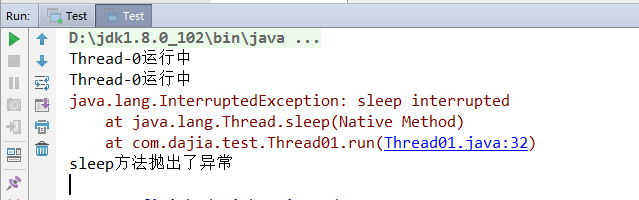
示例2:若线程被设置了中断标识位,调用sleep方法时会抛出异常
1public class Thread01 extends Thread{
2
3    @Override
4    public void run() {
5
6        while(true){
7            if(Thread.currentThread().isInterrupted()){
8                System.out.println(Thread.currentThread().getName() + "被中断了");
9                break;
10            }else{
11                try {
12                    Thread.sleep(400);
13                    System.out.println(Thread.currentThread().getName() + "运行中");
14                } catch (InterruptedException e) {
15                    e.printStackTrace();
16                    System.out.println("sleep方法抛出了异常");
17                    break;
18                }
19            }
20        }
21
22    }
23}
测试:
1public class Test {
2    public static void main(String[] args) throws InterruptedException {
3        Thread01 thread01 = new Thread01();
4        thread01.start();
5        Thread.sleep(1000);
6        thread01.interrupt();
7    }
8}
结果:
参考资料: