
摘要: ## 前言 在上一篇 [《 ES6 系列 Babel 是如何编译 Class 的(上)》](https://github.com/mqyqingfeng/Blog/issues/105),我们知道了 Babel 是如何编译 Class 的,这篇我们学习 Babel 是如何用 ES5 实现 Class 的继承。 ## ES5 寄生组合式继承 ```js function Pare
前言
在上一篇 《 ES6 系列 Babel 是如何编译 Class 的(上)》,我们知道了 Babel 是如何编译 Class 的,这篇我们学习 Babel 是如何用 ES5 实现 Class 的继承。
ES5 寄生组合式继承
1function Parent (name) {
2    this.name = name;
3}
4
5Parent.prototype.getName = function () {
6    console.log(this.name)
7}
8
9function Child (name, age) {
10    Parent.call(this, name);
11    this.age = age;
12}
13
14Child.prototype = Object.create(Parent.prototype);
15
16var child1 = new Child('kevin', '18');
17
18console.log(child1);
原型链示意图为:
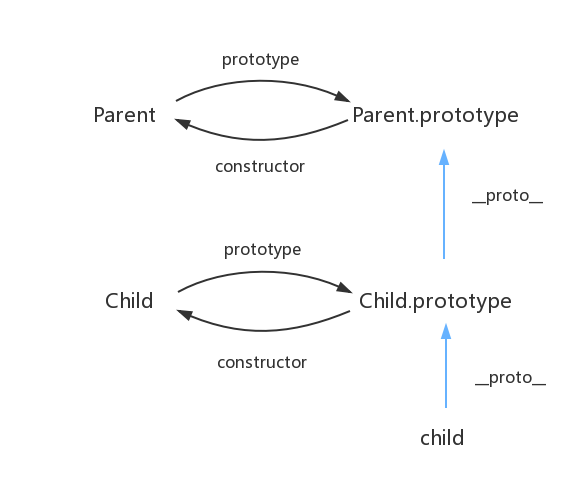
关于寄生组合式继承我们在 《JavaScript深入之继承的多种方式和优缺点》 中介绍过。
引用《JavaScript高级程序设计》中对寄生组合式继承的夸赞就是:
这种方式的高效率体现它只调用了一次 Parent 构造函数,并且因此避免了在 Parent.prototype 上面创建不必要的、多余的属性。与此同时,原型链还能保持不变;因此,还能够正常使用 instanceof 和 isPrototypeOf。开发人员普遍认为寄生组合式继承是引用类型最理想的继承范式。
ES6 extend
Class 通过 extends 关键字实现继承,这比 ES5 的通过修改原型链实现继承,要清晰和方便很多。
以上 ES5 的代码对应到 ES6 就是:
1class Parent {
2    constructor(name) {
3        this.name = name;
4    }
5}
6
7class Child extends Parent {
8    constructor(name, age) {
9        super(name); // 调用父类的 constructor(name)
10        this.age = age;
11    }
12}
13
14var child1 = new Child('kevin', '18');
15
16console.log(child1);
值得注意的是:
super 关键字表示父类的构造函数,相当于 ES5 的 Parent.call(this)。
子类必须在 constructor 方法中调用 super 方法,否则新建实例时会报错。这是因为子类没有自己的 this 对象,而是继承父类的 this 对象,然后对其进行加工。如果不调用 super 方法,子类就得不到 this 对象。
也正是因为这个原因,在子类的构造函数中,只有调用 super 之后,才可以使用 this 关键字,否则会报错。
子类的 __proto__
在 ES6 中,父类的静态方法,可以被子类继承。举个例子:
1class Foo {
2  static classMethod() {
3    return 'hello';
4  }
5}
6
7class Bar extends Foo {
8}
9
10Bar.classMethod(); // 'hello'
这是因为 Class 作为构造函数的语法糖,同时有 prototype 属性和 __proto__ 属性,因此同时存在两条继承链。
(1)子类的 __proto__ 属性,表示构造函数的继承,总是指向父类。
(2)子类 prototype 属性的 __proto__ 属性,表示方法的继承,总是指向父类的 prototype 属性。
1class Parent {
2}
3
4class Child extends Parent {
5}
6
7console.log(Child.__proto__ === Parent); // true
8console.log(Child.prototype.__proto__ === Parent.prototype); // true
ES6 的原型链示意图为:
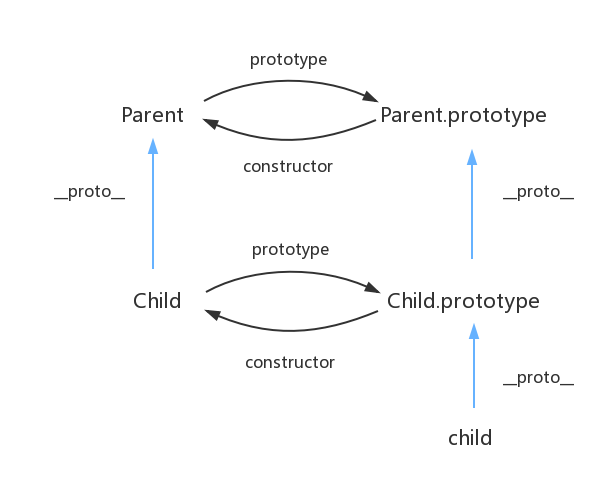
我们会发现,相比寄生组合式继承,ES6 的 class 多了一个 Object.setPrototypeOf(Child, Parent)的步骤。
继承目标
extends 关键字后面可以跟多种类型的值。
1class B extends A {
2}
上面代码的 A,只要是一个有 prototype 属性的函数,就能被 B 继承。由于函数都有 prototype 属性(除了 Function.prototype 函数),因此 A 可以是任意函数。
除了函数之外,A 的值还可以是 null,当 extend null 的时候:
1class A extends null {
2}
3
4console.log(A.__proto__ === Function.prototype); // true
5console.log(A.prototype.__proto__ === undefined); // true
Babel 编译
那 ES6 的这段代码:
1class Parent {
2    constructor(name) {
3        this.name = name;
4    }
5}
6
7class Child extends Parent {
8    constructor(name, age) {
9        super(name); // 调用父类的 constructor(name)
10        this.age = age;
11    }
12}
13
14var child1 = new Child('kevin', '18');
15
16console.log(child1);
Babel 又是如何编译的呢?我们可以在 Babel 官网的 Try it out 中尝试:
1'use strict';
2
3function _possibleConstructorReturn(self, call) {
4    if (!self) {
5        throw new ReferenceError("this hasn't been initialised - super() hasn't been called");
6    }
7    return call && (typeof call === "object" || typeof call === "function") ? call : self;
8}
9
10function _inherits(subClass, superClass) {
11    if (typeof superClass !== "function" && superClass !== null) {
12        throw new TypeError("Super expression must either be null or a function, not " + typeof superClass);
13    }
14    subClass.prototype = Object.create(superClass && superClass.prototype, { constructor: { value: subClass, enumerable: false, writable: true, configurable: true } });
15    if (superClass) Object.setPrototypeOf ? Object.setPrototypeOf(subClass, superClass) : subClass.__proto__ = superClass;
16}
17
18function _classCallCheck(instance, Constructor) {
19    if (!(instance instanceof Constructor)) {
20        throw new TypeError("Cannot call a class as a function");
21    }
22}
23
24var Parent = function Parent(name) {
25    _classCallCheck(this, Parent);
26
27    this.name = name;
28};
29
30var Child = function(_Parent) {
31    _inherits(Child, _Parent);
32
33    function Child(name, age) {
34        _classCallCheck(this, Child);
35
36        // 调用父类的 constructor(name)
37        var _this = _possibleConstructorReturn(this, (Child.__proto__ || Object.getPrototypeOf(Child)).call(this, name));
38
39        _this.age = age;
40        return _this;
41    }
42
43    return Child;
44}(Parent);
45
46var child1 = new Child('kevin', '18');
47
48console.log(child1);
我们可以看到 Babel 创建了 _inherits 函数帮助实现继承,又创建了 _possibleConstructorReturn 函数帮助确定调用父类构造函数的返回值,我们来细致的看一看代码。
_inherits
1function _inherits(subClass, superClass) {
2    // extend 的继承目标必须是函数或者是 null
3    if (typeof superClass !== "function" && superClass !== null) {
4        throw new TypeError("Super expression must either be null or a function, not " + typeof superClass);
5    }
6
7    // 类似于 ES5 的寄生组合式继承,使用 Object.create,设置子类 prototype 属性的 __proto__ 属性指向父类的 prototype 属性
8    subClass.prototype = Object.create(superClass && superClass.prototype, { constructor: { value: subClass, enumerable: false, writable: true, configurable: true } });
9
10    // 设置子类的 __proto__ 属性指向父类
11    if (superClass) Object.setPrototypeOf ? Object.setPrototypeOf(subClass, superClass) : subClass.__proto__ = superClass;
12}
关于 Object.create(),一般我们用的时候会传入一个参数,其实是支持传入两个参数的,第二个参数表示要添加到新创建对象的属性,注意这里是给新创建的对象即返回值添加属性,而不是在新创建对象的原型对象上添加。
举个例子:
1// 创建一个以另一个空对象为原型,且拥有一个属性 p 的对象
2const o = Object.create({}, { p: { value: 42 } });
3console.log(o); // {p: 42}
4console.log(o.p); // 42
再完整一点:
1const o = Object.create({}, {
2    p: {
3        value: 42,
4        enumerable: false,
5        // 该属性不可写
6        writable: false,
7        configurable: true
8    }
9});
10o.p = 24;
11console.log(o.p); // 42
那么对于这段代码:
subClass.prototype = Object.create(superClass && superClass.prototype, { constructor: { value: subClass, enumerable: false, writable: true, configurable: true } });
作用就是给 subClass.prototype 添加一个可配置可写不可枚举的 constructor 属性,该属性值为 subClass。
_possibleConstructorReturn
函数里是这样调用的:
var _this = _possibleConstructorReturn(this, (Child.__proto__ || Object.getPrototypeOf(Child)).call(this, name));
我们简化为:
var _this = _possibleConstructorReturn(this, Parent.call(this, name));
_possibleConstructorReturn 的源码为:
1function _possibleConstructorReturn(self, call) {
2    if (!self) {
3        throw new ReferenceError("this hasn't been initialised - super() hasn't been called");
4    }
5    return call && (typeof call === "object" || typeof call === "function") ? call : self;
6}
在这里我们判断 Parent.call(this, name) 的返回值的类型,咦?这个值还能有很多类型?
对于这样一个 class:
1class Parent {
2    constructor() {
3        this.xxx = xxx;
4    }
5}
Parent.call(this, name) 的值肯定是 undefined。可是如果我们在 constructor 函数中 return 了呢?比如:
1class Parent {
2    constructor() {
3        return {
4            name: 'kevin'
5        }
6    }
7}
我们可以返回各种类型的值,甚至是 null:
1class Parent {
2    constructor() {
3        return null
4    }
5}
我们接着看这个判断:
call && (typeof call === "object" || typeof call === "function") ? call : self;
注意,这句话的意思并不是判断 call 是否存在,如果存在,就执行 (typeof call === "object" || typeof call === "function") ? call : self
因为 && 的运算符优先级高于 ? :,所以这句话的意思应该是:
(call && (typeof call === "object" || typeof call === "function")) ? call : self;
对于 Parent.call(this) 的值,如果是 object 类型或者是 function 类型,就返回 Parent.call(this),如果是 null 或者基本类型的值或者是 undefined,都会返回 self 也就是子类的 this。
这也是为什么这个函数被命名为 _possibleConstructorReturn。
总结
1var Child = function(_Parent) {
2    _inherits(Child, _Parent);
3
4    function Child(name, age) {
5        _classCallCheck(this, Child);
6
7        // 调用父类的 constructor(name)
8        var _this = _possibleConstructorReturn(this, (Child.__proto__ || Object.getPrototypeOf(Child)).call(this, name));
9
10        _this.age = age;
11        return _this;
12    }
13
14    return Child;
15}(Parent);
最后我们总体看下如何实现继承:
首先执行 _inherits(Child, Parent),建立 Child 和 Parent 的原型链关系,即 Object.setPrototypeOf(Child.prototype, Parent.prototype) 和 Object.setPrototypeOf(Child, Parent)。
然后调用 Parent.call(this, name),根据 Parent 构造函数的返回值类型确定子类构造函数 this 的初始值 _this。
最终,根据子类构造函数,修改 _this 的值,然后返回该值。
ES6 系列
ES6 系列目录地址:https://github.com/mqyqingfeng/Blog
ES6 系列预计写二十篇左右,旨在加深 ES6 部分知识点的理解,重点讲解块级作用域、标签模板、箭头函数、Symbol、Set、Map 以及 Promise 的模拟实现、模块加载方案、异步处理等内容。