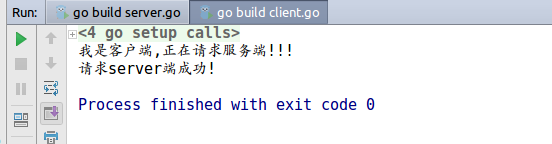
grpc 跟常见的client-server模型相似(dubbo)
grpc 编码之前需要准备以下环境:
- 安装protobuf,grpc的client与server之间消息传递使用的protoc格式消息,比起json,xml速度快
- 安装grpc 的源码包
下面开始编写grpc示例代码:
- 首先编写proto文件,示例:helloworld
1syntax = "proto3";
2
3option objc\_class\_prefix = "HLW";
4
5package helloworld;
6
7// 定义一个Greeter服务,其中API为SayHello
8// 形式参数: HelloRequest
9// 返回参数:HelloReply
10service Greeter {
11  // Sends a greeting
12  rpc SayHello (HelloRequest) returns (HelloReply) {}
13
14  // rpc 借口的类型分为一下四种: A为接受参数,B为返回参数
15  // 1. rpc GetFeature(Point) returns (Feature) {} 普通调用:A-B
16  // 2. rpc ListFeatures(Rectangle) returns (stream Feature) {} 单向流:A - B(流)
17  // 3. rpc RecordRoute(stream Point) returns (RouteSummary) {} 单向流:A(流) - B
18  // 4. rpc RouteChat(stream RouteNote) returns (stream RouteNote) {} 双向流:A(流) - B(流)
19}
20
21// 请求参数-根据自己的需求定义
22message HelloRequest {
23  string name = 1;
24}
25
26// 返回参数-根据自己的需求定义
27message HelloReply {
28  string message = 1;
29}
30
2. 将helloworld.proto转化为helloworld.proto.go
命令:protoc --go_out=plugins=grpc:. helloworld.proto 结果如下:
1// Code generated by protoc-gen-go.
2// source: helloworld.proto
3// DO NOT EDIT!
4
5/\*
6Package helloworld is a generated protocol buffer package.
7
8It is generated from these files:
9	helloworld.proto
10
11It has these top-level messages:
12	HelloRequest
13	HelloReply
14\*/
15package myblogproto
16
17import proto "github.com/golang/protobuf/proto"
18import fmt "fmt"
19import math "math"
20
21import (
22	context "golang.org/x/net/context"
23	grpc "google.golang.org/grpc"
24)
25
26// Reference imports to suppress errors if they are not otherwise used.
27var \_ = proto.Marshal
28var \_ = fmt.Errorf
29var \_ = math.Inf
30
31// This is a compile-time assertion to ensure that this generated file
32// is compatible with the proto package it is being compiled against.
33// A compilation error at this line likely means your copy of the
34// proto package needs to be updated.
35const \_ = proto.ProtoPackageIsVersion2 // please upgrade the proto package
36
37// 请求参数-根据自己的需求定义
38type HelloRequest struct {
39	Name string \`protobuf:"bytes,1,opt,name=name" json:"name,omitempty"\`
40}
41
42func (m \*HelloRequest) Reset()                    { \*m = HelloRequest{} }
43func (m \*HelloRequest) String() string            { return proto.CompactTextString(m) }
44func (\*HelloRequest) ProtoMessage()               {}
45func (\*HelloRequest) Descriptor() (\[\]byte, \[\]int) { return fileDescriptor0, \[\]int{0} }
46
47func (m \*HelloRequest) GetName() string {
48	if m != nil {
49		return m.Name
50	}
51	return ""
52}
53
54// 返回参数-根据自己的需求定义
55type HelloReply struct {
56	Message string \`protobuf:"bytes,1,opt,name=message" json:"message,omitempty"\`
57}
58
59func (m \*HelloReply) Reset()                    { \*m = HelloReply{} }
60func (m \*HelloReply) String() string            { return proto.CompactTextString(m) }
61func (\*HelloReply) ProtoMessage()               {}
62func (\*HelloReply) Descriptor() (\[\]byte, \[\]int) { return fileDescriptor0, \[\]int{1} }
63
64func (m \*HelloReply) GetMessage() string {
65	if m != nil {
66		return m.Message
67	}
68	return ""
69}
70
71func init() {
72	proto.RegisterType((\*HelloRequest)(nil), "helloworld.HelloRequest")
73	proto.RegisterType((\*HelloReply)(nil), "helloworld.HelloReply")
74}
75
76// Reference imports to suppress errors if they are not otherwise used.
77var \_ context.Context
78var \_ grpc.ClientConn
79
80// This is a compile-time assertion to ensure that this generated file
81// is compatible with the grpc package it is being compiled against.
82const \_ = grpc.SupportPackageIsVersion4
83
84// Client API for Greeter service
85
86type GreeterClient interface {
87	// Sends a greeting
88	SayHello(ctx context.Context, in \*HelloRequest, opts ...grpc.CallOption) (\*HelloReply, error)
89}
90
91type greeterClient struct {
92	cc \*grpc.ClientConn
93}
94
95func NewGreeterClient(cc \*grpc.ClientConn) GreeterClient {
96	return &greeterClient{cc}
97}
98
99func (c \*greeterClient) SayHello(ctx context.Context, in \*HelloRequest, opts ...grpc.CallOption) (\*HelloReply, error) {
100	out := new(HelloReply)
101	err := grpc.Invoke(ctx, "/helloworld.Greeter/SayHello", in, out, c.cc, opts...)
102	if err != nil {
103		return nil, err
104	}
105	return out, nil
106}
107
108// Server API for Greeter service
109
110type GreeterServer interface {
111	// Sends a greeting
112	SayHello(context.Context, \*HelloRequest) (\*HelloReply, error)
113}
114
115func RegisterGreeterServer(s \*grpc.Server, srv GreeterServer) {
116	s.RegisterService(&\_Greeter\_serviceDesc, srv)
117}
118
119func \_Greeter\_SayHello\_Handler(srv interface{}, ctx context.Context, dec func(interface{}) error, interceptor grpc.UnaryServerInterceptor) (interface{}, error) {
120	in := new(HelloRequest)
121	if err := dec(in); err != nil {
122		return nil, err
123	}
124	if interceptor == nil {
125		return srv.(GreeterServer).SayHello(ctx, in)
126	}
127	info := &grpc.UnaryServerInfo{
128		Server:     srv,
129		FullMethod: "/helloworld.Greeter/SayHello",
130	}
131	handler := func(ctx context.Context, req interface{}) (interface{}, error) {
132		return srv.(GreeterServer).SayHello(ctx, req.(\*HelloRequest))
133	}
134	return interceptor(ctx, in, info, handler)
135}
136
137var \_Greeter\_serviceDesc = grpc.ServiceDesc{
138	ServiceName: "helloworld.Greeter",
139	HandlerType: (\*GreeterServer)(nil),
140	Methods: \[\]grpc.MethodDesc{
141		{
142			MethodName: "SayHello",
143			Handler:    \_Greeter\_SayHello\_Handler,
144		},
145	},
146	Streams:  \[\]grpc.StreamDesc{},
147	Metadata: "helloworld.proto",
148}
149
150func init() { proto.RegisterFile("helloworld.proto", fileDescriptor0) }
151
152var fileDescriptor0 = \[\]byte{
153	// 149 bytes of a gzipped FileDescriptorProto
154	0x1f, 0x8b, 0x08, 0x00, 0x00, 0x00, 0x00, 0x00, 0x02, 0xff, 0xe2, 0x12, 0xc8, 0x48, 0xcd, 0xc9,
155	0xc9, 0x2f, 0xcf, 0x2f, 0xca, 0x49, 0xd1, 0x2b, 0x28, 0xca, 0x2f, 0xc9, 0x17, 0xe2, 0x42, 0x88,
156	0x28, 0x29, 0x71, 0xf1, 0x78, 0x80, 0x78, 0x41, 0xa9, 0x85, 0xa5, 0xa9, 0xc5, 0x25, 0x42, 0x42,
157	0x5c, 0x2c, 0x79, 0x89, 0xb9, 0xa9, 0x12, 0x8c, 0x0a, 0x8c, 0x1a, 0x9c, 0x41, 0x60, 0xb6, 0x92,
158	0x1a, 0x17, 0x17, 0x54, 0x4d, 0x41, 0x4e, 0xa5, 0x90, 0x04, 0x17, 0x7b, 0x6e, 0x6a, 0x71, 0x71,
159	0x62, 0x3a, 0x4c, 0x11, 0x8c, 0x6b, 0xe4, 0xc9, 0xc5, 0xee, 0x5e, 0x94, 0x9a, 0x5a, 0x92, 0x5a,
160	0x24, 0x64, 0xc7, 0xc5, 0x11, 0x9c, 0x58, 0x09, 0xd6, 0x25, 0x24, 0xa1, 0x87, 0xe4, 0x02, 0x64,
161	0xcb, 0xa4, 0xc4, 0xb0, 0xc8, 0x14, 0xe4, 0x54, 0x2a, 0x31, 0x38, 0xb1, 0x2d, 0x62, 0x62, 0xf6,
162	0xf0, 0x09, 0x4f, 0x62, 0x03, 0xbb, 0xd8, 0x18, 0x10, 0x00, 0x00, 0xff, 0xff, 0xbe, 0xde, 0x1d,
163	0x2e, 0xc5, 0x00, 0x00, 0x00,
164}
165
3. 编写grpc服务端,伪代码:
1package main
2
3import (
4	"fmt"
5	"golang.org/x/net/context"
6	"google.golang.org/grpc"
7	"net"
8
9	pb "unicontract-validate/tests/grpcStudy/mybloggrpc/myblogproto"
10)
11
12const port = ":50051"
13
14// 定义struct实现我们自定义的helloworld.proto对应的服务
15type myServer struct {
16}
17
18func (m \*myServer) SayHello(ctx context.Context, in \*pb.HelloRequest) (\*pb.HelloReply, error) {
19	return &pb.HelloReply{"请求server端成功!"}, nil
20}
21
22/\*\*
23	1. 首先我们必须实现我们自定义rpc服务,例如:rpc SayHello()-在此我们可以实现我们自己的逻辑
24	2. 创建监听listener
25	3. 创建grpc的服务
26	4. 将我们的服务注册到grpc的server中
27	5. 启动grpc服务,将我们自定义的监听信息传递给grpc服务器
28 \*/
29
30func main() {
31
32	//	创建server端监听端口
33	list, err := net.Listen("tcp", port)
34	if err != nil {
35		fmt.Println(err)
36	}
37
38	//	创建grpc的server
39	server := grpc.NewServer()
40	//	注册我们自定义的helloworld服务
41	pb.RegisterGreeterServer(server, &myServer{})
42
43	//	启动grpc服务
44	fmt.Println("grpc 服务启动... ...")
45	server.Serve(list)
46}
47
4. 编写client端代码,伪代码如下:
1package main
2
3import (
4	"google.golang.org/grpc"
5	"fmt"
6	"context"
7
8	pb "unicontract-validate/tests/grpcStudy/mybloggrpc/myblogproto"
9)
10
11// 此处应与服务器端对应
12const address  = "127.0.0.1:50051"
13
14/\*\*
15	1. 创建groc连接器
16	2. 创建grpc客户端,并将连接器赋值给客户端
17	3. 向grpc服务端发起请求
18	4. 获取grpc服务端返回的结果
19 \*/
20func main()  {
21
22	// 创建一个grpc连接器
23	conn, err := grpc.Dial(address, grpc.WithInsecure())
24	if err != nil{
25		fmt.Println(err)
26	}
27	// 当请求完毕后记得关闭连接,否则大量连接会占用资源
28	defer conn.Close()
29
30	// 创建grpc客户端
31	c := pb.NewGreeterClient(conn)
32
33	name := "我是客户端,正在请求服务端!!!"
34	// 客户端向grpc服务端发起请求
35	result, err := c.SayHello(context.Background(), &pb.HelloRequest{Name:name})
36	fmt.Println(name)
37	if err != nil{
38		fmt.Println("请求失败!!!")
39		return
40	}
41	// 获取服务端返回的结果
42	fmt.Println(result.Message)
43}
44
服务端结果:
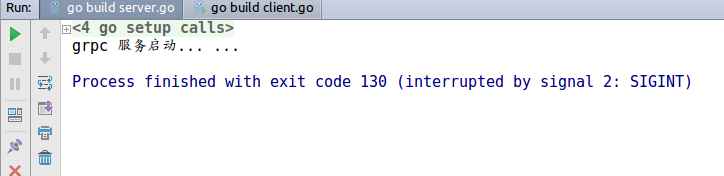
客户端请求之后结果: