
日常开发中,数组和集合使用的很多,而数组的无序插入和删除效率都是偏低的,这点在学习ArrayList源码的时候就知道了,因为需要把要
插入索引后面的所以元素全部后移一位。
而本文会详细讲解链表,可以解决数组的部分问题,相比数组的大小不可更改,链表更加灵活,在学习LinkedList源码对链表有了一个大致的
了解。
ArrayList和LinkedList源码请参考:
Java集合(四)--基于JDK1.8的ArrayList源码解读
本文我们会学习:单链表、双端链表、有序链表、双向链表和有迭代器的链表,并且会讲解一下抽象数据类型(ADT)的思想,如何用 ADT 描述
栈和队列,如何用链表代替数组来实现栈和队列。
链节点:
在链表中,每个元素都被包含在链节点Link中。一个链节点是某个类的对象,这个类可以叫做Link。每个Link对象都包含对下一个Link引用的
字段(通常叫next)。但是链表本身有个字段指向对第一个Link的引用。

代码示例:
1public class Link {
2    private Object data;
3    private Link next;
4}
单链表:
单链表的机构比较简单,每个Node包含data和next(指向下个Node),最后一个Node的next指向null
图例:
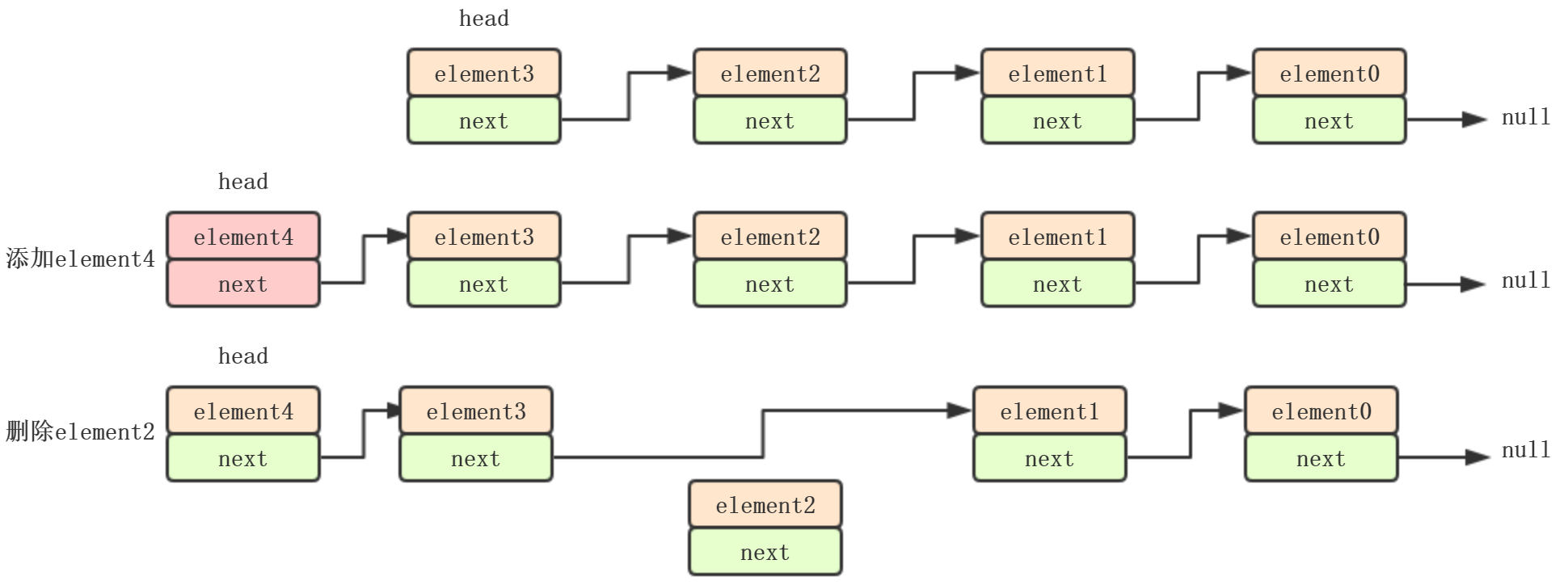
代码实现:
1public class SingleLinkList<E> {
2    private int size;   //链表长度大小
3    private Node head;  //头结点
4
5    public SingleLinkList() {
6        size = 0;
7        head = null;
8    }
9
10    //添加元素到head
11    public void addFirst(E data) {
12        Node newNode = new Node(data);
13        if (size == 0) {
14            head = newNode;
15        } else {
16            newNode.next = head;
17            head = newNode;
18        }
19        size++;
20    }
21
22    //删除头结点
23    public E deleteFirst() {
24        final E data = (E)head.data;
25        head = head.next;
26        size--;
27        return data;
28    }
29
30    //查询某个元素是否存在
31    public E find(E object) {
32        Node current = head;
33        int tempSize = size;
34        while (tempSize > 0) {
35            if (object == current.data) {
36                return (E)current.data;
37            } else {
38                current = current.next;
39            }
40            tempSize--;
41        }
42        return null;
43    }
44
45    //删除链表中某个元素
46    public boolean delete(E object) {
47        if (null != object) {
48            Node current = head;
49            Node previous = head;
50            while (!object.equals(current.data)) {
51                if (current.next == null) {
52                    return false;
53                } else {
54                    previous = current;
55                    current = current.next;
56                }
57            }
58            if (current == head) {
59                head = current.next;
60            } else {
61                previous.next = current.next;
62            }
63            size--;
64        }
65        return true;
66
67    }
68
69    //遍历打印链表
70    public void displayList() {
71        Node current = head;
72        int tempSize = size;
73        if (tempSize == 0) {
74            System.out.print("[]");
75        } else {
76            System.out.print("[");
77            while (current != null) {
78                if (current.next == null) {
79                    System.out.print(current.data);;
80                } else {
81                    System.out.print(current.data + "-->");;
82                }
83                current = current.next;
84            }
85            System.out.println("]");
86        }
87    }
88
89    public boolean isEmpty() {
90        return size == 0;
91    }
92
93    private static class Node<E>{
94        E data;
95        Node<E> next;
96        Node(E data) {
97            this.data = data;
98        }
99    }
100}
101
102public static void main(String[] args) {    SingleLinkList<Integer> singleList = new SingleLinkList<Integer>();    singleList.addFirst(22);   //添加节点    singleList.addFirst(44);    singleList.addFirst(66);    singleList.addFirst(88);    singleList.displayList();   //打印链表结构    singleList.delete(44);   //删除某个节点    singleList.displayList();    System.out.println(singleList.find(66));   //查询某个节点}
103
104打印结果:
105[88-->66-->44-->22]
106[88-->66-->22]
10766
双端链表:
双端链表和单向链表很相似,但是增加了一个新特性:就是对最后一个节点的引用,最后一个节点定义为tail
PS:双端链表不是双向链表,只能单向遍历,只是可以在双端添加/删除数据
图例:

代码实现:
1public class DoubleLinkList<E> {
2    private int size;   //链表长度大小
3    private Node head;  //头结点
4    private Node tail;  //尾结点
5
6    public DoubleLinkList() {
7        size = 0;
8        head = null;
9        tail = null;
10    }
11
12    //添加元素到head
13    public void addFirst(E data) {
14        Node newNode = new Node(data);
15        if (size == 0) {
16            head = newNode;
17            tail = newNode;
18        } else {
19            newNode.next = head;
20            head = newNode;
21        }
22        size++;
23    }
24
25    //添加元素到tail
26    public void addLast(E data) {
27        Node newNode = new Node(data);
28        if (size == 0) {
29            head = newNode;
30            tail = newNode;
31        } else {
32            tail.next = newNode;
33            tail = newNode;
34        }
35        size++;
36    }
37
38    //删除头结点
39    public E deleteFirst() {
40        if (isEmpty()) {
41            return null;
42        }
43        final E data = (E)head.data;
44        if (head.next == null) {
45            tail = null;
46        }
47        head = head.next;
48        size--;
49        return data;
50    }
51
52    //删除尾结点
53    public E deleteLast() {
54        if (isEmpty()) {
55            return null;
56        }
57        final E data = (E)tail.data;
58        if (head.next == null) {
59            head = null;
60        }
61        int tempSize = size;
62        Node current = head;
63        Node previous = head;
64        while (tempSize > 0) {
65            if (current.next == null) {
66                previous.next = null;
67                break;
68            }
69            previous = current;
70            current = current.next;
71            tempSize--;
72        }
73        tail = previous;
74        size--;
75        return data;
76    }
77
78    //查询某个元素是否存在
79    public E find(E object) {
80        Node current = head;
81        int tempSize = size;
82        while (tempSize > 0) {
83            if (object == current.data) {
84                return (E)current.data;
85            } else {
86                current = current.next;
87            }
88            tempSize--;
89        }
90        return null;
91    }
92
93    //删除链表中某个元素
94    public boolean delete(E object) {
95        if (null != object) {
96            Node current = head;
97            Node previous = head;
98            while (!object.equals(current.data)) {
99                if (current.next == null) {
100                    return false;
101                } else {
102                    previous = current;
103                    current = current.next;
104                }
105            }
106            if (current == head) {
107                head = current.next;
108            }else {
109                previous.next = current.next;
110            }
111            size--;
112        }
113        return true;
114
115    }
116
117    //遍历打印链表
118    public void displayList() {
119        Node current = head;
120        int tempSize = size;
121        if (tempSize == 0) {
122            System.out.print("[]");
123        } else {
124            System.out.print("[");
125            while (current != null) {
126                if (current == tail) {
127                    System.out.print(current.data);
128                    break;
129                } else {
130                    System.out.print(current.data + "-->");
131                }
132                current = current.next;
133            }
134            System.out.println("]");
135        }
136    }
137
138    public boolean isEmpty() {
139        return size == 0;
140    }
141
142    private static class Node<E>{
143        E data;
144        Node<E> next;
145        Node(E data) {
146            this.data = data;
147        }
148    }
149}
150
151public static void main(String[] args) {
152	DoubleLinkList<Integer> doubleLinkList = new DoubleLinkList<Integer>();
153	doubleLinkList.addFirst(22);   //添加节点
154	doubleLinkList.addFirst(44);
155	doubleLinkList.addLast(66);
156	doubleLinkList.addLast(88);
157	doubleLinkList.addFirst(101);
158	doubleLinkList.displayList();   //打印链表结构
159	doubleLinkList.delete(44); //删除某个节点
160	doubleLinkList.displayList();
161	doubleLinkList.deleteLast();    //删除尾节点
162	doubleLinkList.displayList();
163	doubleLinkList.deleteFirst();   //删除头结点
164	doubleLinkList.displayList();
165	System.out.println(doubleLinkList.find(66));   //查询某个节点
166}
167
168输出结果:
169[101-->44-->22-->66-->88]
170[101-->22-->66-->88]
171[101-->22-->66]
172[22-->66]
17366
链表的效率:
表头插入和删除的速度很快,时间复杂度O(1)
平均下来,定点插入、删除、查询都需要搜索链表中一半的节点,需要O(N)次比较,相比而言,数组执行这些操作也需要O(N)次比较,但是
链表不需要移动数据,只需要改变前后引用,而数组只能整体复制,效率会好很多
链表的另一个优点体现在内存使用上,需要多少内存就使用多少内存,而数组一开始的内存空间都是确定的
有序链表:
对于某些应用来说,在链表中保持数据的有序很很有用的。有序链表中,数据都是按照关键值有序排列的。
在大多数使用有序数组的场景也可以使用有序链表,在插入速度方面有很大优势
有序链表和一般单向链表只是添加方法有区别,其余方法都是相同的
代码示例:
1public class SortedLinkList {
2    private int size;   //链表长度大小
3    private Node head;  //头结点
4
5    public SortedLinkList() {
6        size = 0;
7        head = null;
8    }
9
10    //添加元素
11    public void add(int data) {
12        Node newNode = new Node(data);
13        Node previoue = null;
14        Node current = head;
15        while (current != null && data > current.data) {
16            previoue = current;
17            current = current.next;
18        }
19        if (previoue == null) {
20            head = newNode;
21            head.next = current;
22        } else {
23            previoue.next = newNode;
24            newNode.next = current;
25        }
26        size++;
27    }
28
29    //删除头结点
30    public int deleteFirst() {
31        final int data = head.data;
32        head = head.next;
33        size--;
34        return data;
35    }
36
37    //查询某个元素是否存在
38    public int find(int object) {
39        Node current = head;
40        int tempSize = size;
41        while (tempSize > 0) {
42            if (object == current.data) {
43                return current.data;
44            } else {
45                current = current.next;
46            }
47            tempSize--;
48        }
49        return -1;
50    }
51
52    //删除链表中某个元素
53    public boolean delete(int object) {
54        Node current = head;
55        Node previous = head;
56        while (object != current.data) {
57            if (current.next == null) {
58                return false;
59            } else {
60                previous = current;
61                current = current.next;
62            }
63        }
64        if (current == head) {
65            head = current.next;
66        } else {
67            previous.next = current.next;
68        }
69        size--;
70        return true;
71
72    }
73
74    //遍历打印链表
75    public void displayList() {
76        Node current = head;
77        int tempSize = size;
78        if (tempSize == 0) {
79            System.out.print("[]");
80        } else {
81            System.out.print("[");
82            while (current != null) {
83                if (current.next == null) {
84                    System.out.print(current.data);;
85                } else {
86                    System.out.print(current.data + "-->");;
87                }
88                current = current.next;
89            }
90            System.out.println("]");
91        }
92    }
93
94    public boolean isEmpty() {
95        return size == 0;
96    }
97
98    private static class Node{
99        int data;
100        Node next;
101        Node(int data) {
102            this.data = data;
103        }
104    }
105}
106
107public static void main(String[] args) {
108	SortedLinkList sortedLinkList = new SortedLinkList();
109	sortedLinkList.add(5);   //添加节点
110	sortedLinkList.add(1);
111	sortedLinkList.add(8);
112	sortedLinkList.add(2);
113	sortedLinkList.add(101);
114	sortedLinkList.displayList();   //打印链表结构
115	sortedLinkList.delete(8); //删除某个节点
116	sortedLinkList.displayList();
117	sortedLinkList.deleteFirst();   //删除头结点
118	sortedLinkList.displayList();
119	System.out.println(sortedLinkList.find(101));   //查询某个节点
120}
121
122输出结果:
123[1-->2-->5-->8-->101]
124[1-->2-->5-->101]
125[2-->5-->101]
126101
双向链表:
双向链表就是为了解决单向链表只能单向遍历而效率慢的问题,因为只能current=current.next进行遍历,只能获得下一个节点,而不能
获取上一个节点
在学习LinkedList源码的时候,我们已经详细了解过双向链表了,Java集合(五)--LinkedList源码解读
图例:

代码示例:
1public class DoubleLinkedList<E> {
2    private int size;   //链表长度大小
3    private Node head;  //头结点
4    private Node tail;  //尾结点
5
6    public DoubleLinkedList() {
7        size = 0;
8        head = null;
9        tail = null;
10    }
11
12    //添加元素到head
13    public void addFirst(E data) {
14        Node newNode = new Node(data);
15        if (size == 0) {
16            tail = newNode;
17        } else {
18            head.previous = newNode;
19            newNode.next = head;
20        }
21        head = newNode;
22        size++;
23    }
24
25    //添加元素到tail
26    public void addLast(E data) {
27        Node newNode = new Node(data);
28        if (size == 0) {
29            head = newNode;
30        } else {
31            tail.next = newNode;
32            newNode.previous = tail;
33        }
34        tail = newNode;
35        size++;
36    }
37
38    //删除头结点
39    public E deleteFirst() {
40        if (isEmpty()) {
41            return null;
42        }
43        final E data = (E)head.data;
44        if (head.next == null) {
45            tail = null;
46        }
47        head = head.next;
48        head.previous = null;
49        size--;
50        return data;
51    }
52
53    //删除尾结点
54    public E deleteLast() {
55        if (isEmpty()) {
56            return null;
57        }
58        final E data = (E)tail.data;
59        if (head.next == null) {
60            head = null;
61        }
62        tail = tail.previous;
63        tail.next = null;
64        size--;
65        return data;
66    }
67
68    //查询某个元素是否存在
69    /*public E find(E object) {
70        if (object == null) {
71            for (Node<E> x = head; x != null; x = x.next) {
72                if (x.data == null) {
73                    return x.data;
74                }
75            }
76        } else {
77            for (Node<E> x = head; x != null; x = x.next) {
78                if (object.equals(x.data)) {
79                    return x.data;
80                }
81            }
82        }
83        return null;
84    }*/
85
86    //查询某个索引下标的数据
87    public E find(int index) {
88        return (E)node(index).data;
89    }
90
91    //删除链表中某个元素
92    public boolean delete(E object) {
93        if (object == null) {
94            for (Node<E> x = head; x != null; x = x.next) {
95                if (x.data == null) {
96                    unlink(x);
97                    return true;
98                }
99            }
100        } else {
101            for (Node<E> x = head; x != null; x = x.next) {
102                if (object.equals(x.data)) {
103                    unlink(x);
104                    return true;
105                }
106            }
107        }
108        return false;
109
110    }
111
112    E unlink(Node<E> x) {
113        final E element = x.data;
114        final Node<E> next = x.next;
115        final Node<E> prev = x.previous;
116
117        if (prev == null) {
118            head = next;
119        } else {
120            prev.next = next;
121            x.previous = null;
122        }
123
124        if (next == null) {
125            tail = prev;
126        } else {
127            next.previous = prev;
128            x.next = null;
129        }
130
131        x.data = null;
132        size--;
133        return element;
134    }
135
136    Node node(int index) {
137        if (index < (size >> 1)) {
138            Node x = head;
139            for (int i = 0; i < index; i++)
140                x = x.next;
141            return x;
142        } else {
143            Node<E> x = tail;
144            for (int i = size - 1; i > index; i--)
145                x = x.previous;
146            return x;
147        }
148    }
149
150    //遍历打印链表
151    public void displayList() {
152        Node current = head;
153        int tempSize = size;
154        if (tempSize == 0) {
155            System.out.print("[]");
156        } else {
157            System.out.print("[");
158            while (current != null) {
159                if (current == tail) {
160                    System.out.print(current.data);
161                    break;
162                } else {
163                    System.out.print(current.data + "-->");
164                }
165                current = current.next;
166            }
167            System.out.println("]");
168        }
169    }
170
171    public boolean isEmpty() {
172        return size == 0;
173    }
174
175    private static class Node<E>{
176        E data;
177        Node<E> previous;
178        Node<E> next;
179        Node(E data) {
180            this.data = data;
181        }
182    }
183}
184
185public static void main(String[] args) {
186	DoubleLinkedList<Integer> doubleLinkList = new DoubleLinkedList<Integer>();
187	doubleLinkList.addFirst(22);   //添加节点
188	doubleLinkList.addFirst(44);
189	doubleLinkList.addLast(66);
190	doubleLinkList.addLast(88);
191	doubleLinkList.addFirst(101);
192	doubleLinkList.displayList();   //打印链表结构
193	doubleLinkList.delete(44); //删除某个节点
194	doubleLinkList.displayList();
195	doubleLinkList.deleteLast();    //删除尾节点
196	doubleLinkList.displayList();
197	doubleLinkList.deleteFirst();   //删除头结点
198	doubleLinkList.displayList();
199	System.out.println(doubleLinkList.find(66));   //查询某个节点
200	System.out.println(doubleLinkList.find(33));   //查询某个节点
201}
202
203输出结果:
204[101-->44-->22-->66-->88]
205[101-->22-->66-->88]
206[101-->22-->66]
207[22-->66]
20866
拓展1、用链表实现:
1public class MyStackByLinkedList<E> {
2    private SingleLinkList linkList;
3
4    public MyStackByLinkedList() {
5        linkList = new SingleLinkList();
6    }
7
8    public void push(E e) {
9        linkList.addFirst(e);
10    }
11
12    public E pop(){
13        E e = (E)linkList.deleteFirst();
14        return e;
15    }
16
17}
拓展2:用双端链表实现队列
1public class MyQueueByLinkedList<E> {
2    private DoubleLinkedList linkedList;
3
4    public MyQueueByLinkedList() {
5        linkedList = new DoubleLinkedList();
6    }
7
8    public void add(E e) {
9        linkedList.addFirst(e);
10    }
11
12    //移除数据
13    public E remove(){
14        return (E)linkedList.deleteFirst();
15    }
16
17}
内容参考:<Java数据结构和算法>