
由于要用到固定长度的随机字符串。
首先是一段PHP代码
1        $str_md5=md5(uniqid());
2	$rand = mt_rand(1, 28);
3	$str1=substr($str_md5,$rand,6);
4	$rand = mt_rand(1, 28);
5	$str2=substr($str_md5,$rand,6);
6	$rand = mt_rand(1, 28);
7	$str3=substr($str_md5,$rand,6);
8	$code=substr($str1.$str2.$str3,0,8);
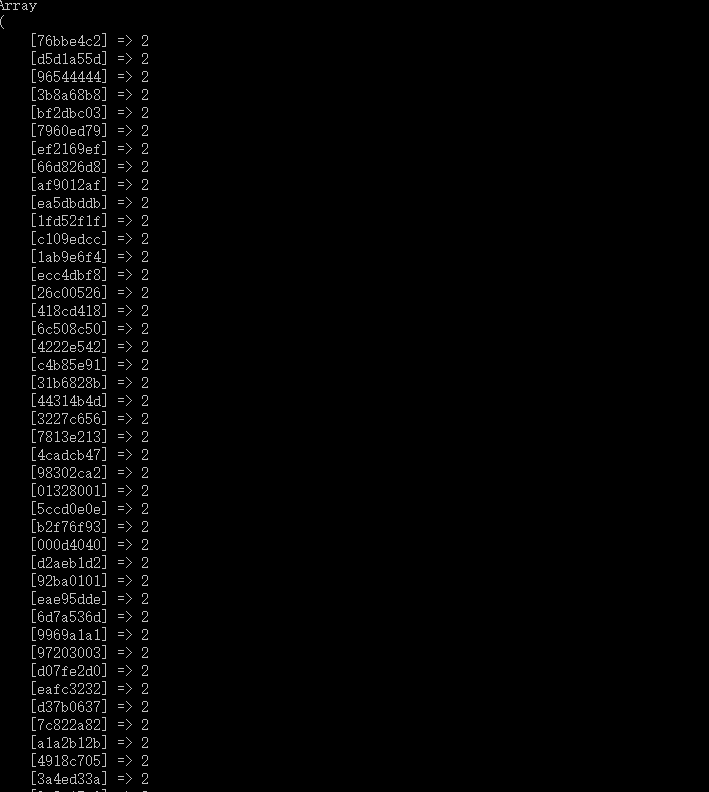
生成180000个随机字符串,图中是按照重复数量倒序排列,可以看到基本都有重复的。不过也是比较理想的。
由于想提升一下自己的C语言能力,所以用C重新写了一下随机生成字符串。
其中用到了随机数函数srand(),rand();
不过折腾一两个小时,随机数还是有问题。并发访问时时间可能几乎为同时,那么srand给的种子时间可以视为相同的。这样就导致了,产生的随机数也是一样的。从而产生的随机字符串也是一样的。循环输出随机字符串,几乎都是一模一样的。
后来想到了ukey,这个扩展可以实现唯一的ID,那么访问都产生唯一的ID,是不是可以将这个ID作为种子时间。答案是肯定的。
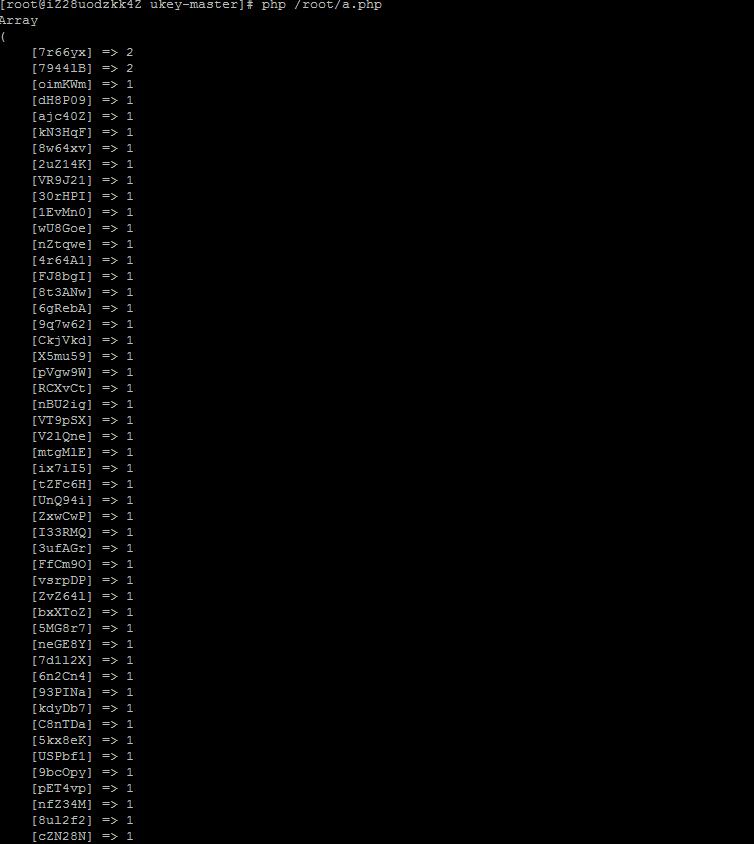
上图是产生的随机字符串,可以自定义长度。也同样可以输出只有数字的字符串。相较PHP所产生的随机字符串重复率更低且速度更快。
1 PHP_FUNCTION(get_random__num_str)
2{
3     int length=8;
4
5     if (zend_parse_parameters(ZEND_NUM_ARGS() TSRMLS_CC, "l", &length) == FAILURE)
6     {
7		length=8;
8
9     }
10	 length++;
11    int flag, i;
12    char* string;
13	__uint64_t timestamp = realtime();
14    __uint64_t retval;
15    int len;
16    char buf[128];
17
18    if (timestamp == 0ULL) {
19        RETURN_FALSE;
20    }
21
22    spin_lock(lock, pid);
23
24    if (context->last_timestamp == timestamp) {
25        context->sequence = (context->sequence + 1) & context->sequence_mask;
26        if (context->sequence == 0) {
27            timestamp = skip_next_millis();
28        }
29
30    } else {
31        context->sequence = 0; /* Back to zero */
32    }
33
34    context->last_timestamp = timestamp;
35
36    retval = ((timestamp - context->twepoch) << context->timestamp_left_shift)
37           | (context->datacenter_id << context->datacenter_id_shift)
38           | (worker_id << context->worker_id_shift)
39           | context->sequence;
40
41    spin_unlock(lock, pid);
42	//printf('%ld',retval);
43	srand((unsigned)retval);
44    //srand((unsigned) time(NULL ));
45    if ((string = (char*) emalloc(length)) == NULL )
46    {
47        //myLog("Malloc failed!flag:14\n");
48        RETURN_NULL() ;
49    }
50
51    for (i = 0; i < length - 1; i++)
52    {
53        flag = rand() % 3;
54
55		switch (flag)
56		{
57			case 0:
58				string[i] = '1' + rand() % 5;
59				break;
60			case 1:
61				string[i] = '2' + rand() % 7;
62				break;
63			case 2:
64				string[i] = '0' + rand() % 10;
65				break;
66			default:
67				string[i] = '9';
68				break;
69		}
70
71
72
73    }
74    string[length - 1] = '\0';
75    RETURN_STRINGL(string,length,0);
76}
77 PHP_FUNCTION(get_random_str)
78{
79     int length=8;
80
81     if (zend_parse_parameters(ZEND_NUM_ARGS() TSRMLS_CC, "l", &length) == FAILURE)
82     {
83		length=8;
84
85     }
86	 length++;
87    int flag, i;
88    char* string;
89	__uint64_t timestamp = realtime();
90    __uint64_t retval;
91    int len;
92    char buf[128];
93
94    if (timestamp == 0ULL) {
95        RETURN_FALSE;
96    }
97
98    spin_lock(lock, pid);
99
100    if (context->last_timestamp == timestamp) {
101        context->sequence = (context->sequence + 1) & context->sequence_mask;
102        if (context->sequence == 0) {
103            timestamp = skip_next_millis();
104        }
105
106    } else {
107        context->sequence = 0; /* Back to zero */
108    }
109
110    context->last_timestamp = timestamp;
111
112    retval = ((timestamp - context->twepoch) << context->timestamp_left_shift)
113           | (context->datacenter_id << context->datacenter_id_shift)
114           | (worker_id << context->worker_id_shift)
115           | context->sequence;
116
117    spin_unlock(lock, pid);
118	//printf('%ld',retval);
119	srand((unsigned)retval);
120    //srand((unsigned) time(NULL ));
121    if ((string = (char*) emalloc(length)) == NULL )
122    {
123        //myLog("Malloc failed!flag:14\n");
124        RETURN_NULL() ;
125    }
126
127    for (i = 0; i < length - 1; i++)
128    {
129        flag = rand() % 3;
130
131		switch (flag)
132		{
133			case 0:
134				string[i] = 'A' + rand() % 26;
135				break;
136			case 1:
137				string[i] = 'a' + rand() % 26;
138				break;
139			case 2:
140				string[i] = '0' + rand() % 10;
141				break;
142			default:
143				string[i] = 'x';
144				break;
145		}
146
147
148
149    }
150    string[length - 1] = '\0';
151    RETURN_STRINGL(string,length,0);
152}

上图是PHP生成18W随机字符串所用的时间
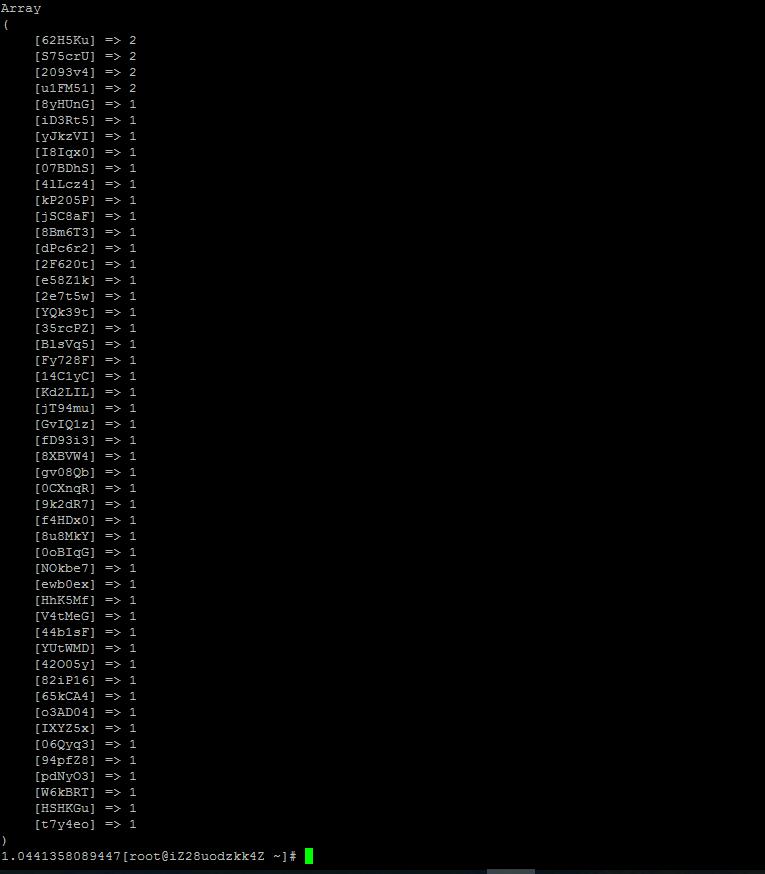
上图是C扩展生成18W随机字符串所用的时间
所用的服务器都是1G内存 双核的阿里云服务器。
只要在ukey中加入上如代码就可以生产随机字符串和随机长度数字字符串