
前言:现今SpringBoot、SpringCloud技术非常火热,作为Spring之上的框架,他们大量使用到了Spring的一些底层注解、原理,比如@Conditional、@Import、@EnableXXX等。如果掌握这些底层原理、注解,那么我们对这些高层框架就能做到高度定制,使用的游刃有余
一、servlet3.0规范
1、新增的注解支持
在servlet3.0之前的话,我们要添加Servlet、Filter、Listener都需要在web.xml中注册,而在servlet3.0添加了注解支持:
@WebServlet: 用于将一个类声明为 Servlet,该注解将会在部署时被容器处理,容器将根据具体的属性配置将相应的类部署为 Servlet,如:
1@WebServlet(urlPatterns = {"/simple"}, asyncSupported = true,
2loadOnStartup = -1, name = "SimpleServlet", displayName = "ss",
3initParams = {@WebInitParam(name = "username", value = "tom")}
4)
5public class SimpleServlet extends HttpServlet{ … }
@WebFilter: 用于将一个类声明为过滤器,该注解将会在部署时被容器处理,容器将根据具体的属性配置将相应的类部署为过滤器;
@WebListener:该注解用于将类声明为监听器,被 @WebListener 标注的类必须实现对应的监听器接口
@WebInitParam:该注解通常不单独使用,而是配合 @WebServlet 或者 @WebFilter 使用。它的作用是为 Servlet 或者过滤器指定初始化参数,这等价于 web.xml 中 <servlet> 和 <filter> 的 <init-param> 子标签。
2、runtimes pluggability(运行时插件能力)
在使用实现了servlet3.0规范的servlet容器中,Servlet容器启动会扫描当前应用里面每一个jar包的ServletContainerInitializer的实现,前提是ServletContainerInitializer的实现类必须绑定在META-INF/services/javax.servlet.ServletContainerInitializer中,文件的内容就是ServletContainerInitializer实现类的全类名
1//容器启动的时候会将@HandlesTypes指定的这个类型下面的子类(实现类,子接口等)传递过来;
2//传入感兴趣的类型;
3@HandlesTypes(value={HelloService.class})
4public class MyServletContainerInitializer implements ServletContainerInitializer {
5
6    /**
7     * 应用启动的时候,会运行onStartup方法;
8     *
9     * Set<Class<?>> arg0:感兴趣的类型的所有子类型;
10     * ServletContext arg1:代表当前Web应用的ServletContext;一个Web应用一个ServletContext;
11     *
12     * 1)、使用ServletContext注册Web组件(Servlet、Filter、Listener)
13     * 2)、使用编码的方式,在项目启动的时候给ServletContext里面添加组件;
14     *         必须在项目启动的时候来添加;
15     *         1)、ServletContainerInitializer得到的ServletContext;
16     *         2)、ServletContextListener得到的ServletContext;
17     */
18    @Override
19        public void onStartup(Set<Class<?>> arg0, ServletContext sc) throws ServletException {
20            // TODO Auto-generated method stub
21            System.out.println("感兴趣的类型:");
22            for (Class<?> claz : arg0) {
23                System.out.println(claz);
24            }
25
26        //注册组件  ServletRegistration
27        ServletRegistration.Dynamic servlet = sc.addServlet("userServlet", new UserServlet());
28        //配置servlet的映射信息
29        servlet.addMapping("/user");
30
31
32        //注册Listener
33        sc.addListener(UserListener.class);
34
35        //注册Filter  FilterRegistration
36        FilterRegistration.Dynamic filter = sc.addFilter("userFilter", UserFilter.class);
37        //配置Filter的映射信息
38        filter.addMappingForUrlPatterns(EnumSet.of(DispatcherType.REQUEST), true, "/*");
39
40    }
41
42}
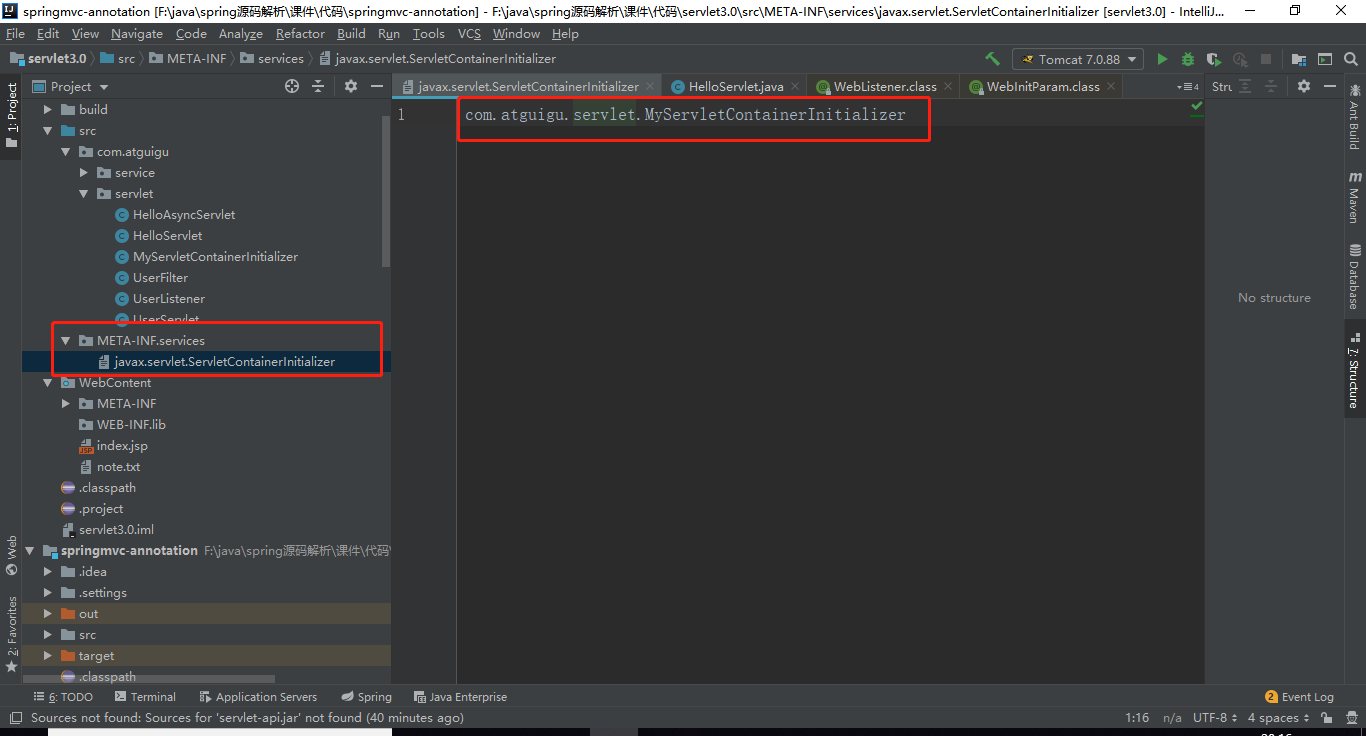
使用该特性,现在我们可以在不修改已有 Web 应用的前提下,只需将按照一定格式打成的 JAR 包放到 WEB-INF/lib 目录下,即可实现新功能的扩充(比如注册三大组件),不需要额外的配置;
二、SpringMVC注解启动
在之前使用SpringMVC时,很多时候都是在web.xml中配置的方式来启动,而从SpringMVC 3.1开始就使用了servlet3.0的插件机制,可通过配置类的方式来启动SpringMVC
1、SpringServletContainerInitializer
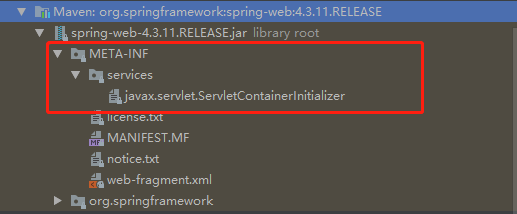
在spring的web模块的jar包下存在META-INF/services/javax.servlet.ServletContainerInitializer,该文件中指定ServletContainerInitializer的实现类为SpringServletContainerInitializer,可知在web容启动时会加载这个类,来看看这个类:
1@HandlesTypes(WebApplicationInitializer.class)//容器启动的时候会将WebApplicationInitializer类型下面的子类(实现类,子接口等)传递过来
2public class SpringServletContainerInitializer implements ServletContainerInitializer {    //webAppInitializerClasses就是WebApplicationInitializer类型
3       @Override
4    public void onStartup(Set<Class<?>> webAppInitializerClasses, ServletContext servletContext)
5            throws ServletException {
6
7        List<WebApplicationInitializer> initializers = new LinkedList<WebApplicationInitializer>();
8
9        if (webAppInitializerClasses != null) {
10            for (Class<?> waiClass : webAppInitializerClasses) {
11                // 将webAppInitializerClasses集合中的非抽象,不是接口类型的class实例化并添加到initializer中
12                if (!waiClass.isInterface() && !Modifier.isAbstract(waiClass.getModifiers()) &&
13                        WebApplicationInitializer.class.isAssignableFrom(waiClass)) {
14                    try {
15                        initializers.add((WebApplicationInitializer) waiClass.newInstance());
16                    }
17                    catch (Throwable ex) {
18                        throw new ServletException("Failed to instantiate WebApplicationInitializer class", ex);
19                    }
20                }
21            }
22        }
23
24        if (initializers.isEmpty()) {
25            servletContext.log("No Spring WebApplicationInitializer types detected on classpath");
26            return;
27        }
28
29        servletContext.log(initializers.size() + " Spring WebApplicationInitializers detected on classpath");
30        AnnotationAwareOrderComparator.sort(initializers);     //遍历执行initializers集合中WebApplicationInitializer.onStartup(servletContext)方法
31        for (WebApplicationInitializer initializer : initializers) {
32            initializer.onStartup(servletContext);
33        }
34    }
35
36}
接下来看看SpringServletContainerInitializer使用@HandlesTypes引入的WebApplicationInitializer接口(只定义了一个onStartup方法)的子类:

2、AbstractContextLoaderInitializer
1public abstract class AbstractContextLoaderInitializer implements WebApplicationInitializer {
2
3    /** Logger available to subclasses */
4    protected final Log logger = LogFactory.getLog(getClass());
5
6  //该方法会在web容器启动时SpringServletContainerInitializer.onStartup中被调用
7    @Override
8    public void onStartup(ServletContext servletContext) throws ServletException {      //注册加载上下文的监听器
9        registerContextLoaderListener(servletContext);
10    }
11
12
13    protected void registerContextLoaderListener(ServletContext servletContext) {    //调用createRootApplicationContext()创建根容器,需要具体的实现类去实现该抽象方法获取根容器
14        WebApplicationContext rootAppContext = createRootApplicationContext();
15        if (rootAppContext != null) {       //创建监听器,并将根容器传入
16            ContextLoaderListener listener = new ContextLoaderListener(rootAppContext);       //设置上下文初始化器
17            listener.setContextInitializers(getRootApplicationContextInitializers());       //添加监听器
18            servletContext.addListener(listener);
19        }
20        else {
21            logger.debug("No ContextLoaderListener registered, as " +
22                    "createRootApplicationContext() did not return an application context");
23        }
24    }
25
26    //抽象方法,子类必须实现
27    protected abstract WebApplicationContext createRootApplicationContext();
28   //默认返回空 子类可重写
29    protected ApplicationContextInitializer<?>[] getRootApplicationContextInitializers() {
30        return null;
31    }
32
33}
AbstractContextLoaderInitializer主要的功能:
调用创建createRootApplicationContext()创建根容器,
注册了监听器ContextLoaderListener(extends ContextLoader implements ServletContextListener)
3、AbstractDispatcherServletInitializer:
1public abstract class AbstractDispatcherServletInitializer extends AbstractContextLoaderInitializer {
2
3    /**
4     * The default servlet name. Can be customized by overriding {@link #getServletName}.
5     */
6    public static final String DEFAULT_SERVLET_NAME = "dispatcher";
7
8   //重写了AbstractContextLoaderInitializer.onStartup(ServletContext)
9    @Override
10    public void onStartup(ServletContext servletContext) throws ServletException {     //维持父类的实现
11        super.onStartup(servletContext);     //添加了注册DispatcherServlet的步骤
12        registerDispatcherServlet(servletContext);
13    }
14
15
16    protected void registerDispatcherServlet(ServletContext servletContext) {
17        String servletName = getServletName();
18        Assert.hasLength(servletName, "getServletName() must not return empty or null");
19     //调用createServletApplicationContext()创建web的ioc容器(管理Controller等springmvc的组件),需要子类去实现该抽象方法去获取web容器
20        WebApplicationContext servletAppContext = createServletApplicationContext();
21        Assert.notNull(servletAppContext,
22                "createServletApplicationContext() did not return an application " +
23                "context for servlet [" + servletName + "]");
24     //创建了前端控制器DispatcherServlet
25        FrameworkServlet dispatcherServlet = createDispatcherServlet(servletAppContext);
26        dispatcherServlet.setContextInitializers(getServletApplicationContextInitializers());
27     //使用servletContext添加DispatcherServlet
28        ServletRegistration.Dynamic registration = servletContext.addServlet(servletName, dispatcherServlet);
29        Assert.notNull(registration,
30                "Failed to register servlet with name '" + servletName + "'." +
31                "Check if there is another servlet registered under the same name.");
32
33        registration.setLoadOnStartup(1);     //具体的路径映射规则需要子类实现getServletMappings()
34        registration.addMapping(getServletMappings());
35        registration.setAsyncSupported(isAsyncSupported());
36
37        Filter[] filters = getServletFilters();
38        if (!ObjectUtils.isEmpty(filters)) {
39            for (Filter filter : filters) {
40                registerServletFilter(servletContext, filter);
41            }
42        }
43
44        customizeRegistration(registration);
45    }
46
47
48    protected String getServletName() {
49        return DEFAULT_SERVLET_NAME;
50    }
51
52
53    protected abstract WebApplicationContext createServletApplicationContext();
54
55
56    protected FrameworkServlet createDispatcherServlet(WebApplicationContext servletAppContext) {
57        return new DispatcherServlet(servletAppContext);
58    }
59
60
61    protected ApplicationContextInitializer<?>[] getServletApplicationContextInitializers() {
62        return null;
63    }
64
65
66    protected abstract String[] getServletMappings();
67
68
69    protected Filter[] getServletFilters() {
70        return null;
71    }
72
73
74    protected FilterRegistration.Dynamic registerServletFilter(ServletContext servletContext, Filter filter) {
75        String filterName = Conventions.getVariableName(filter);
76        Dynamic registration = servletContext.addFilter(filterName, filter);
77        if (registration == null) {
78            int counter = -1;
79            while (counter == -1 || registration == null) {
80                counter++;
81                registration = servletContext.addFilter(filterName + "#" + counter, filter);
82                Assert.isTrue(counter < 100,
83                        "Failed to register filter '" + filter + "'." +
84                        "Could the same Filter instance have been registered already?");
85            }
86        }
87        registration.setAsyncSupported(isAsyncSupported());
88        registration.addMappingForServletNames(getDispatcherTypes(), false, getServletName());
89        return registration;
90    }
91
92    private EnumSet<DispatcherType> getDispatcherTypes() {
93        return (isAsyncSupported() ?
94                EnumSet.of(DispatcherType.REQUEST, DispatcherType.FORWARD, DispatcherType.INCLUDE, DispatcherType.ASYNC) :
95                EnumSet.of(DispatcherType.REQUEST, DispatcherType.FORWARD, DispatcherType.INCLUDE));
96    }
97
98
99    protected boolean isAsyncSupported() {
100        return true;
101    }
102
103    protected void customizeRegistration(ServletRegistration.Dynamic registration) {
104    }
105
106}
AbstractDispatcherServletInitializer 的主要功能:
创建一个web的ioc容器:createServletApplicationContext();
创建了DispatcherServlet:createDispatcherServlet();
将创建的DispatcherServlet添加到ServletContext中,并设置路径映射等;
4、AbstractAnnotationConfigDispatcherServletInitializer
1public abstract class AbstractAnnotationConfigDispatcherServletInitializer
2        extends AbstractDispatcherServletInitializer {
3   //实现了AbstractContextLoaderInitializer.createRootApplicationContext(),创建根容器
4    @Override
5    protected WebApplicationContext createRootApplicationContext() {     //获取根容器的配置类
6        Class<?>[] configClasses = getRootConfigClasses();
7        if (!ObjectUtils.isEmpty(configClasses)) {        //创建ioc容器
8            AnnotationConfigWebApplicationContext rootAppContext = new AnnotationConfigWebApplicationContext();       //注册组件
9            rootAppContext.register(configClasses);
10            return rootAppContext;
11        }
12        else {
13            return null;
14        }
15    }
16
17   //实现了AbstractDispatcherServletInitializer.createServletApplicationContext(),创建web的ioc容器
18    @Override
19    protected WebApplicationContext createServletApplicationContext() {
20        AnnotationConfigWebApplicationContext servletAppContext = new AnnotationConfigWebApplicationContext();     //获取web ioc容器的配置类
21        Class<?>[] configClasses = getServletConfigClasses();
22        if (!ObjectUtils.isEmpty(configClasses)) {       //
23            servletAppContext.register(configClasses);
24        }
25        return servletAppContext;
26    }
27
28   //抽象方法 子类实现 返回根容器的配置类
29    protected abstract Class<?>[] getRootConfigClasses();
30
31  //抽象方法 子类实现 返回web ioc容器的配置类
32    protected abstract Class<?>[] getServletConfigClasses();
33
34}
AbstractAnnotationConfigDispatcherServletInitializer (注解方式配置的DispatcherServlet初始化器) 主要作用:
创建根容器:createRootApplicationContext(),调用getRootConfigClasses()获取配置类
创建web的ioc容器: createServletApplicationContext(),调用getServletConfigClasses()获取配置类
5、以注解方式来启动SpringMVC:
上面我们分析了三个抽象类的功能,最终需要我们需要继承AbstractAnnotationConfigDispatcherServletInitializer,实现对应抽象方法来指定DispatcherServlet的配置信息
1//web容器启动的时候创建对象;调用方法来初始化容器以前前端控制器
2public class MyWebAppInitializer extends AbstractAnnotationConfigDispatcherServletInitializer {
3
4    //获取根容器的配置类;(Spring的配置文件)   父容器;
5    @Override
6    protected Class<?>[] getRootConfigClasses() {
7        // TODO Auto-generated method stub
8        return new Class<?>[]{RootConfig.class};
9    }
10
11    //获取web容器的配置类(SpringMVC配置文件)  子容器;
12    @Override
13    protected Class<?>[] getServletConfigClasses() {
14        // TODO Auto-generated method stub
15        return new Class<?>[]{AppConfig.class};
16    }
17
18    //获取DispatcherServlet的映射信息
19    //  /:拦截所有请求(包括静态资源(xx.js,xx.png)),但是不包括*.jsp;
20    //  /*:拦截所有请求;连*.jsp页面都拦截;jsp页面是tomcat的jsp引擎解析的;
21    @Override
22    protected String[] getServletMappings() {
23        // TODO Auto-generated method stub
24        return new String[]{"/"};
25    }
26
27}
3、定制SpringMVC
在一个配置类中添加@EnableWebMvc注解,开启SpringMVC定制配置功能,类似于使用xml的mvc:annotation-driven/标签:
@Configuration
@EnableWebMvc
public class WebConfig {
}
实现WebMvcConfigurer,配置组件(视图解析器、视图映射、静态资源映射、拦截器。。。)
@Configuration
@EnableWebMvc
public class WebConfig implements WebMvcConfigurer {
// Override configuration methods...
}
当然有时候我们不需要配置所有的组件,没必要去实现WebMvcConfigurer所有方法,而WebMvcConfigurerAdapter实现了WebMvcConfigurer接口的所有方法(空实现),我们只要继承该类重写我们需要实现的方法即可:
1@EnableWebMvc@Configuration
2public class AppConfig extends WebMvcConfigurerAdapter  {
3
4    //定制
5
6    //视图解析器
7    @Override
8    public void configureViewResolvers(ViewResolverRegistry registry) {
9        // TODO Auto-generated method stub
10        //默认所有的页面都从 /WEB-INF/ xxx .jsp
11        //registry.jsp();
12        registry.jsp("/WEB-INF/views/", ".jsp");
13    }
14
15    //静态资源访问
16    @Override
17    public void configureDefaultServletHandling(DefaultServletHandlerConfigurer configurer) {
18        // TODO Auto-generated method stub
19        configurer.enable();
20    }
21
22    //拦截器
23    @Override
24    public void addInterceptors(InterceptorRegistry registry) {
25        // TODO Auto-generated method stub
26        //super.addInterceptors(registry);
27        registry.addInterceptor(new MyFirstInterceptor()).addPathPatterns("/**");
28    }
29
30}
注意:WebMvcConfigurer在5.0版本中已经被弃用了,spring的api文档有说明:as of 5.0 WebMvcConfigurer has default methods (made possible by a Java 8 baseline) and can be implemented directly without the need for this adapter 大概意思:从5.0开始,WebMvcConfigurer具有默认方法(从Java 8开始,接口可以有默认方法)并且可以直接实现而无需此适配器
最后@EnableWebMvc做了什么:
使用@Import(DelegatingWebMvcConfiguration.class)引入了DelegatingWebMvcConfiguration,是一个配置类,继承了WebMvcConfigurationSupport:
WebMvcConfigurationSupport:使用@Bean为我们默认添加了很多springmvc组件,同时留下了一些空方法给子类重写来添加组件(模板方法模式)
DelegatingWebMvcConfiguration:使用@Autowired(required = false)注入所有的WebMvcConfigurer的实现类,重写WebMvcConfigurationSupport添加组件的方法 ,实际上是依次调用WebMvcConfigurer对应的方法来添加组件
所以其实可以不使用@EnableWebMvc,直接继承WebMvcConfigurationSupport,自己去实现对应的添加组件的方法也是可以的,当然还是推荐使用WebMvcConfigurer