
多线程是实现并发机制的一种有效手段。在 Java 中实现多线程有两种手段,一种是继承 Thread 类,另一种就是实现 Runnable/Callable 接口。
java.util.concurrent 包是专为 Java并发编程而设计的包。类图如下:
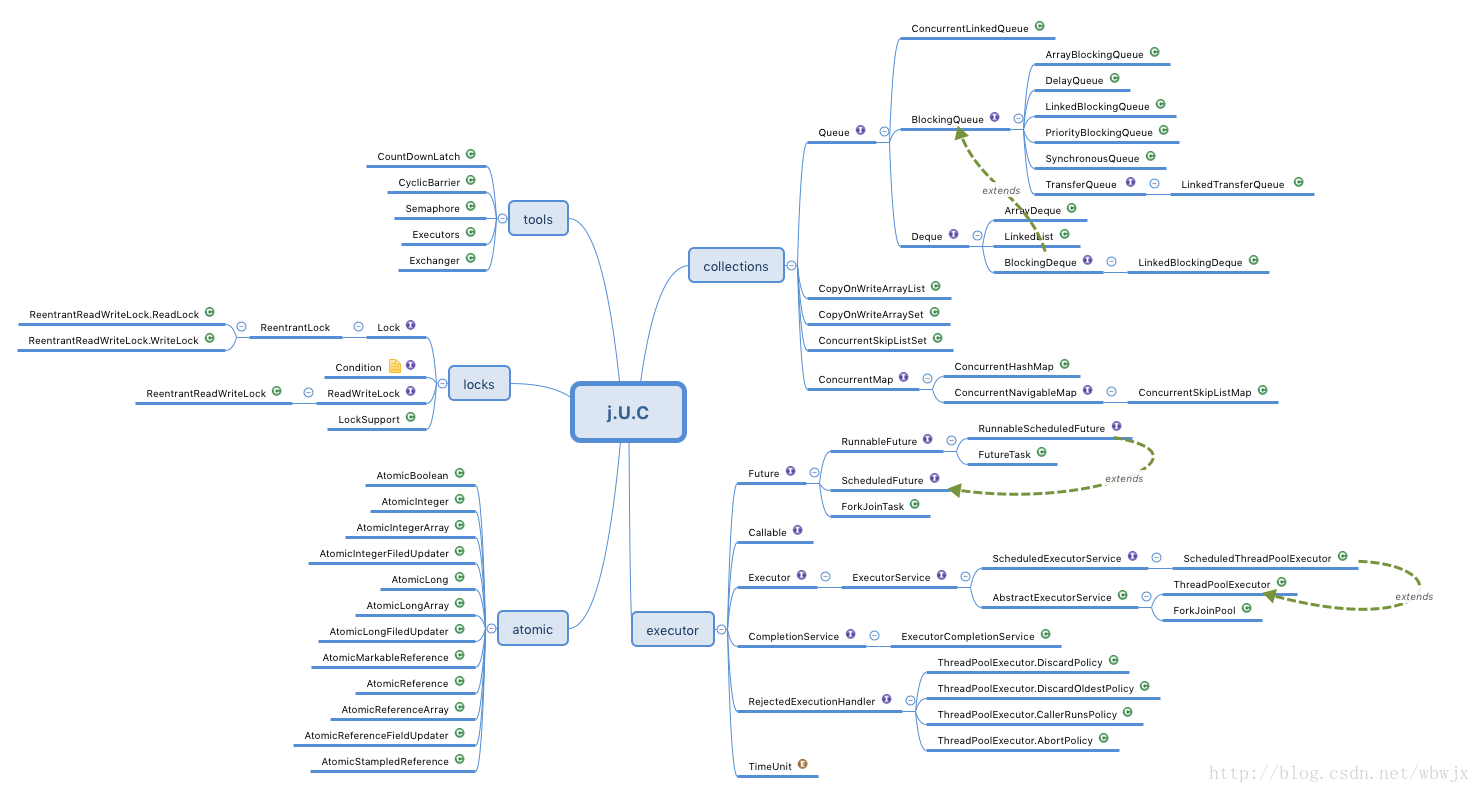
一、同步
1.1 synchronized 关键字,用来给对象和方法或者代码块加锁。
1同步方法
2synchronized T methodName(){}
3同步方法锁定的是当前对象。当多线程通过同一个对象引用多次调用当前同步方法时,需同步执行。静态同步方法,锁的是当前类型的类对象。同步方法只影响锁定同一个锁对象的同步方法。不影响其他线程调用非同步方法,或调用其他锁资源的同步方法。锁可重入。 同一个线程,多次调用同步代码,锁定同一个锁对象,可重入。子类同步方法覆盖父类同步方法。可以指定调用父类的同步方法,相当于锁的重入。当同步方法中发生异常的时候,自动释放锁资源。不会影响其他线程的执行。
4同步代码块
5T methodName(){
6    synchronized(object){}
7}
8同步代码块在执行时,是锁定 object 对象。当多个线程调用同一个方法时,锁定对象不变的情况下,需同步执行。
9同步代码块的同步粒度更加细致,效率更高。
10
11T methodName(){
12    synchronized(this){}
13}
14当锁定对象为 this 时,相当于同步方法。
同步代码一旦加锁后,那么会有一个临时的锁引用执行锁对象,和真实的引用无直接关联。在锁未释放之前,修改锁对象引用,不会影响同步代码的执行。
Java 虚拟机中的同步(Synchronization)基于进入和退出管程(Monitor)对象实现。同步方法 并不是由 monitor enter 和 monitor exit 指令来实现同步的,而是由方法调用指令读取运行时常量池中方法的 ACC_SYNCHRONIZED 标志来隐式实现的。在 Java 虚拟机(HotSpot)中,monitor 是由 ObjectMonitor 实现的。


1 1 /**
2 2  * synchronized关键字
3 3  * 锁对象。synchronized(this)和synchronized方法都是锁当前对象。
4 4  */
5 5 package concurrent.t01;
6 6
7 7 import java.util.concurrent.TimeUnit;
8 8
9 9 public class Test_01 {
1010     private int count = 0;
1111     private Object o = new Object();
1212
1313     public void testSync1(){
1414         synchronized(o){
1515             System.out.println(Thread.currentThread().getName()
1616                     + " count = " + count++);
1717         }
1818     }
1919
2020     public void testSync2(){
2121         synchronized(this){
2222             System.out.println(Thread.currentThread().getName()
2323                     + " count = " + count++);
2424         }
2525     }
2626
2727     public synchronized void testSync3(){
2828         System.out.println(Thread.currentThread().getName()
2929                 + " count = " + count++);
3030         try {
3131             TimeUnit.SECONDS.sleep(3);
3232         } catch (InterruptedException e) {
3333             e.printStackTrace();
3434         }
3535     }
3636
3737     public static void main(String[] args) {
3838         final Test_01 t = new Test_01();
3939         new Thread(new Runnable() {
4040             @Override
4141             public void run() {
4242                 t.testSync3();
4343             }
4444         }).start();
4545         new Thread(new Runnable() {
4646             @Override
4747             public void run() {
4848                 t.testSync3();
4949             }
5050         }).start();
5151     }
5252
5353 }
synchronized关键字
1.2 volatile 关键字
变量的线程可见性。在 CPU 计算过程中,会将计算过程需要的数据加载到 CPU 计算缓存中,当 CPU 计算中断时,有可能刷新缓存,重新读取内存中的数据。在线程运行的过程中,如果某变量被其他线程修改,可能造成数据不一致的情况,从而导致结果错误。而 volatile修饰的变量是线程可见的,当 JVM 解释 volatile 修饰的变量时,会通知 CPU,在计算过程中,每次使用变量参与计算时,都会检查内存中的数据是否发生变化,而不是一直使用 CPU 缓存中的数据,可以保证计算结果的正确。volatile 只是通知底层计算时,CPU 检查内存数据,而不是让一个变量在多个线程中同步。


1 1 /**
2 2  * volatile关键字
3 3  * volatile的可见性
4 4  * 通知OS操作系统底层,在CPU计算过程中,都要检查内存中数据的有效性。保证最新的内存数据被使用。
5 5  *
6 6  */
7 7 package concurrent.t01;
8 8
9 9 import java.util.concurrent.TimeUnit;
1010
1111 public class Test_09 {
1212
1313     volatile boolean b = true;
1414
1515     void m(){
1616         System.out.println("start");
1717         while(b){}
1818         System.out.println("end");
1919     }
2020
2121     public static void main(String[] args) {
2222         final Test_09 t = new Test_09();
2323         new Thread(new Runnable() {
2424             @Override
2525             public void run() {
2626                 t.m();
2727             }
2828         }).start();
2929
3030         try {
3131             TimeUnit.SECONDS.sleep(1);
3232         } catch (InterruptedException e) {
3333             // TODO Auto-generated catch block
3434             e.printStackTrace();
3535         }
3636
3737         t.b = false;
3838     }
3939
4040 }
volatile的可见性


1 1 /**
2 2  * volatile关键字
3 3  * volatile的非原子性问题
4 4  * volatile, 只能保证可见性,不能保证原子性。
5 5  * 不是枷锁问题,只是内存数据可见。
6 6  */
7 7 package concurrent.t01;
8 8
9 9 import java.util.ArrayList;
1010 import java.util.List;
1111
1212 public class Test_10 {
1313
1414     volatile int count = 0;
1515     /*synchronized*/ void m(){
1616         for(int i = 0; i < 10000; i++){
1717             count++;
1818         }
1919     }
2020
2121     public static void main(String[] args) {
2222         final Test_10 t = new Test_10();
2323         List<Thread> threads = new ArrayList<>();
2424         for(int i = 0; i < 10; i++){
2525             threads.add(new Thread(new Runnable() {
2626                 @Override
2727                 public void run() {
2828                     t.m();
2929                 }
3030             }));
3131         }
3232         for(Thread thread : threads){
3333             thread.start();
3434         }
3535         for(Thread thread : threads){
3636             try {
3737                 thread.join();
3838             } catch (InterruptedException e) {
3939                 // TODO Auto-generated catch block
4040                 e.printStackTrace();
4141             }
4242         }
4343         System.out.println(t.count);
4444     }
4545 }
volatile的非原子性问题
1.3 wait¬ify
当线程执行wait()方法时候,会释放当前的锁,然后让出CPU,进入等待状态。只有当 notify/notifyAll() 被执行时候,才会唤醒一个或多个正处于等待状态的线程,然后继续往下执行,直到执行完synchronized 代码块的代码或是中途遇到wait() ,再次释放锁。
由于 wait()、notify/notifyAll() 在synchronized 代码块执行,说明当前线程一定是获取了锁的。wait()、notify/notifyAll() 方法是Object的本地final方法,无法被重写。


1 1 /** 2 2 * 生产者消费者 3 3 * wait¬ify 4 4 * wait/notify都是和while配合应用的。可以避免多线程并发判断逻辑失效问题。各位想想为什么不能用if 5 5 */ 6 6 package concurrent.t04; 7 7 8 8 import java.util.LinkedList; 9 9 import java.util.concurrent.TimeUnit; 1010 1111 public class TestContainer01<E> { 1212 1313 private final LinkedList<E> list = new LinkedList<>(); 1414 private final int MAX = 10; 1515 private int count = 0; 1616 1717 public synchronized int getCount(){ 1818 return count; 1919 } 2020 2121 public synchronized void put(E e){ 2222 while(list.size() == MAX){ 2323 try { 2424 this.wait(); 2525 } catch (InterruptedException e1) { 2626 e1.printStackTrace(); 2727 } 2828 } 2929 3030 list.add(e); 3131 count++; 3232 this.notifyAll(); 3333 } 3434 3535 public synchronized E get(){ 3636 E e = null; 3737 while(list.size() == 0){ 3838 try{ 3939 this.wait(); 4040 } catch (InterruptedException e1) { 4141 e1.printStackTrace(); 4242 } 4343 } 4444 e = list.removeFirst(); 4545 count--; 4646 this.notifyAll(); 4747 return e; 4848 } 4949 5050 public static void main(String[] args) { 5151 final TestContainer01<String> c = new TestContainer01<>(); 5252 for(int i = 0; i < 10; i++){ 5353 new Thread(new Runnable() { 5454 @Override 5555 public void run() { 5656 for(int j = 0; j < 5; j++){ 5757 System.out.println(c.get()); 5858 } 5959 } 6060 }, "consumer"+i).start(); 6161 } 6262 try { 6363 TimeUnit.SECONDS.sleep(2); 6464 } catch (InterruptedException e) { 6565 // TODO Auto-generated catch block 6666 e.printStackTrace(); 6767 } 6868 for(int i = 0; i < 2; i++){ 6969 new Thread(new Runnable() { 7070 @Override 7171 public void run() { 7272 for(int j = 0; j < 25; j++){ 7373 c.put("container value " + j); 7474 } 7575 } 7676 }, "producer"+i).start(); 7777 } 7878 } 7979 8080 }
wait¬ify
1.4 AtomicXxx 类型
原子类型。
在 concurrent.atomic 包中定义了若干原子类型,这些类型中的每个方法都是保证了原子操作的。多线程并发访问原子类型对象中的方法,不会出现数据错误。在多线程开发中,如果某数据需要多个线程同时操作,且要求计算原子性,可以考虑使用原子类型对象。
- AtomicBoolean,AtomicInteger,AtomicLong,AtomicReference
- AtomicIntegerArray,AtomicLongArray
- AtomicLongFieldUpdater,AtomicIntegerFieldUpdater,AtomicReferenceFieldUpdater
- AtomicMarkableReference,AtomicStampedReference,AtomicReferenceArray
注意:原子类型中的方法 是保证了原子操作,但多个方法之间是没有原子性的。即访问对2个或2个以上的atomic变量(或者对单个atomic变量进行2次或2次以上的操作),还是需要同步。


1 1 /**
2 2  * AtomicXxx
3 3  * 同步类型
4 4  * 原子操作类型。 其中的每个方法都是原子操作。可以保证线程安全。
5 5  */
6 6 package concurrent.t01;
7 7
8 8 import java.util.ArrayList;
9 9 import java.util.List;
1010 import java.util.concurrent.atomic.AtomicInteger;
1111
1212 public class Test_11 {
1313     AtomicInteger count = new AtomicInteger(0);
1414     void m(){
1515         for(int i = 0; i < 10000; i++){
1616             /*if(count.get() < 1000)*/
1717                 count.incrementAndGet();
1818         }
1919     }
2020
2121     public static void main(String[] args) {
2222         final Test_11 t = new Test_11();
2323         List<Thread> threads = new ArrayList<>();
2424         for(int i = 0; i < 10; i++){
2525             threads.add(new Thread(new Runnable() {
2626                 @Override
2727                 public void run() {
2828                     t.m();
2929                 }
3030             }));
3131         }
3232         for(Thread thread : threads){
3333             thread.start();
3434         }
3535         for(Thread thread : threads){
3636             try {
3737                 thread.join();
3838             } catch (InterruptedException e) {
3939                 // TODO Auto-generated catch block
4040                 e.printStackTrace();
4141             }
4242         }
4343         System.out.println(t.count.intValue());
4444     }
4545 }
AtomicXxx
1.5 CountDownLatch 门闩
门闩是 concurrent 包中定义的一个类型,是用于多线程通讯的一个辅助类型。门闩相当于在一个门上加多个锁,当线程调用 await 方法时,会检查门闩数量,如果门闩数量大于 0,线程会阻塞等待。当线程调用 countDown 时,会递减门闩的数量,当门闩数量为 0 时,await 阻塞线程可执行。


1 1 /**
2 2  * 门闩 - CountDownLatch
3 3  * 可以和锁混合使用,或替代锁的功能。
4 4  * 在门闩未完全开放之前等待。当门闩完全开放后执行。
5 5  * 避免锁的效率低下问题。
6 6  */
7 7 package concurrent.t01;
8 8
9 9 import java.util.concurrent.CountDownLatch;
1010 import java.util.concurrent.TimeUnit;
1111
1212 public class Test_15 {
1313     CountDownLatch latch = new CountDownLatch(5);
1414
1515     void m1(){
1616         try {
1717             latch.await();// 等待门闩开放。
1818         } catch (InterruptedException e) {
1919             e.printStackTrace();
2020         }
2121         System.out.println("m1() method");
2222     }
2323
2424     void m2(){
2525         for(int i = 0; i < 10; i++){
2626             if(latch.getCount() != 0){
2727                 System.out.println("latch count : " + latch.getCount());
2828                 latch.countDown(); // 减门闩上的锁。
2929             }
3030             try {
3131                 TimeUnit.MILLISECONDS.sleep(500);
3232             } catch (InterruptedException e) {
3333                 // TODO Auto-generated catch block
3434                 e.printStackTrace();
3535             }
3636             System.out.println("m2() method : " + i);
3737         }
3838     }
3939
4040     public static void main(String[] args) {
4141         final Test_15 t = new Test_15();
4242         new Thread(new Runnable() {
4343             @Override
4444             public void run() {
4545                 t.m1();
4646             }
4747         }).start();
4848
4949         new Thread(new Runnable() {
5050             @Override
5151             public void run() {
5252                 t.m2();
5353             }
5454         }).start();
5555     }
5656
5757 }
CountDownLatch
1.6 锁的重入
在 Java 中,同步锁是可以重入的。只有同一线程调用同步方法或执行同步代码块,对同一个对象加锁时才可重入。
当线程持有锁时,会在 monitor 的计数器中执行递增计算,若当前线程调用其他同步代码,且同步代码的锁对象相同时,monitor 中的计数器继续递增。每个同步代码执行结束,monitor 中的计数器都会递减,直至所有同步代码执行结束,monitor 中的计数器为 0 时,释放锁标记,_Owner 标记赋值为 null。


1 1 /**
2 2  * 锁可重入。 同一个线程,多次调用同步代码,锁定同一个锁对象,可重入。
3 3  */
4 4 package concurrent.t01;
5 5
6 6 import java.util.concurrent.TimeUnit;
7 7
8 8 public class Test_06 {
9 9
1010     synchronized void m1(){ // 锁this
1111         System.out.println("m1 start");
1212         try {
1313             TimeUnit.SECONDS.sleep(2);
1414         } catch (InterruptedException e) {
1515             e.printStackTrace();
1616         }
1717         m2();
1818         System.out.println("m1 end");
1919     }
2020     synchronized void m2(){ // 锁this
2121         System.out.println("m2 start");
2222         try {
2323             TimeUnit.SECONDS.sleep(1);
2424         } catch (InterruptedException e) {
2525             e.printStackTrace();
2626         }
2727         System.out.println("m2 end");
2828     }
2929
3030     public static void main(String[] args) {
3131
3232         new Test_06().m1();
3333
3434     }
3535
3636 }
锁可重入
1.7 ReentrantLock
重入锁,建议应用的同步方式。相对效率比 synchronized 高。量级较轻。使用重入锁, 必须手工释放锁标记。一般都是在 finally 代码块中定义释放锁标记的 unlock 方法。


1 1 /**
2 2  * ReentrantLock
3 3  *  重入锁
4 4  */
5 5 package concurrent.t03;
6 6
7 7 import java.util.concurrent.TimeUnit;
8 8 import java.util.concurrent.locks.Lock;
9 9 import java.util.concurrent.locks.ReentrantLock;
1010
1111 public class Test_01 {
1212     Lock lock = new ReentrantLock();
1313
1414     void m1(){
1515         try{
1616             lock.lock(); // 加锁
1717             for(int i = 0; i < 10; i++){
1818                 TimeUnit.SECONDS.sleep(1);
1919                 System.out.println("m1() method " + i);
2020             }
2121         }catch(InterruptedException e){
2222             e.printStackTrace();
2323         }finally{
2424             lock.unlock(); // 解锁
2525         }
2626     }
2727
2828     void m2(){
2929         lock.lock();
3030         System.out.println("m2() method");
3131         lock.unlock();
3232     }
3333
3434     public static void main(String[] args) {
3535         final Test_01 t = new Test_01();
3636         new Thread(new Runnable() {
3737             @Override
3838             public void run() {
3939                 t.m1();
4040             }
4141         }).start();
4242         try {
4343             TimeUnit.SECONDS.sleep(1);
4444         } catch (InterruptedException e) {
4545             e.printStackTrace();
4646         }
4747         new Thread(new Runnable() {
4848             @Override
4949             public void run() {
5050                 t.m2();
5151             }
5252         }).start();
5353     }
5454 }
重入锁


1 1 /**
2 2  * 尝试锁
3 3  */
4 4 package concurrent.t03;
5 5
6 6 import java.util.concurrent.TimeUnit;
7 7 import java.util.concurrent.locks.Lock;
8 8 import java.util.concurrent.locks.ReentrantLock;
9 9
1010 public class Test_02 {
1111     Lock lock = new ReentrantLock();
1212
1313     void m1(){
1414         try{
1515             lock.lock();
1616             for(int i = 0; i < 10; i++){
1717                 TimeUnit.SECONDS.sleep(1);
1818                 System.out.println("m1() method " + i);
1919             }
2020         }catch(InterruptedException e){
2121             e.printStackTrace();
2222         }finally{
2323             lock.unlock();
2424         }
2525     }
2626
2727     void m2(){
2828         boolean isLocked = false;
2929         try{
3030             // 尝试锁, 如果有锁,无法获取锁标记,返回false。
3131             // 如果获取锁标记,返回true
3232             // isLocked = lock.tryLock();
3333
3434             // 阻塞尝试锁,阻塞参数代表的时长,尝试获取锁标记。
3535             // 如果超时,不等待。直接返回。
3636             isLocked = lock.tryLock(5, TimeUnit.SECONDS);
3737
3838             if(isLocked){
3939                 System.out.println("m2() method synchronized");
4040             }else{
4141                 System.out.println("m2() method unsynchronized");
4242             }
4343         }catch(Exception e){
4444             e.printStackTrace();
4545         }finally{
4646             if(isLocked){
4747                 // 尝试锁在解除锁标记的时候,一定要判断是否获取到锁标记。
4848                 // 如果当前线程没有获取到锁标记,会抛出异常。
4949                 lock.unlock();
5050             }
5151         }
5252     }
5353
5454     public static void main(String[] args) {
5555         final Test_02 t = new Test_02();
5656         new Thread(new Runnable() {
5757             @Override
5858             public void run() {
5959                 t.m1();
6060             }
6161         }).start();
6262         try {
6363             TimeUnit.SECONDS.sleep(1);
6464         } catch (InterruptedException e) {
6565             // TODO Auto-generated catch block
6666             e.printStackTrace();
6767         }
6868         new Thread(new Runnable() {
6969             @Override
7070             public void run() {
7171                 t.m2();
7272             }
7373         }).start();
7474     }
7575 }
尝试锁


1 1 /**
2 2  * 可打断
3 3  *
4 4  * 阻塞状态: 包括普通阻塞,等待队列,锁池队列。
5 5  * 普通阻塞: sleep(10000), 可以被打断。调用thread.interrupt()方法,可以打断阻塞状态,抛出异常。
6 6  * 等待队列: wait()方法被调用,也是一种阻塞状态,只能由notify唤醒。无法打断
7 7  * 锁池队列: 无法获取锁标记。不是所有的锁池队列都可被打断。
8 8  *  使用ReentrantLock的lock方法,获取锁标记的时候,如果需要阻塞等待锁标记,无法被打断。
9 9  *  使用ReentrantLock的lockInterruptibly方法,获取锁标记的时候,如果需要阻塞等待,可以被打断。
1010  *
1111  */
1212 package concurrent.t03;
1313
1414 import java.util.concurrent.TimeUnit;
1515 import java.util.concurrent.locks.Lock;
1616 import java.util.concurrent.locks.ReentrantLock;
1717
1818 public class Test_03 {
1919     Lock lock = new ReentrantLock();
2020
2121     void m1(){
2222         try{
2323             lock.lock();
2424             for(int i = 0; i < 5; i++){
2525                 TimeUnit.SECONDS.sleep(1);
2626                 System.out.println("m1() method " + i);
2727             }
2828         }catch(InterruptedException e){
2929             e.printStackTrace();
3030         }finally{
3131             lock.unlock();
3232         }
3333     }
3434
3535     void m2(){
3636         try{
3737             lock.lockInterruptibly(); // 可尝试打断,阻塞等待锁。可以被其他的线程打断阻塞状态
3838             System.out.println("m2() method");
3939         }catch(InterruptedException e){
4040             System.out.println("m2() method interrupted");
4141         }finally{
4242             try{
4343                 lock.unlock();
4444             }catch(Exception e){
4545                 e.printStackTrace();
4646             }
4747         }
4848     }
4949
5050     public static void main(String[] args) {
5151         final Test_03 t = new Test_03();
5252         new Thread(new Runnable() {
5353             @Override
5454             public void run() {
5555                 t.m1();
5656             }
5757         }).start();
5858         try {
5959             TimeUnit.SECONDS.sleep(1);
6060         } catch (InterruptedException e) {
6161             // TODO Auto-generated catch block
6262             e.printStackTrace();
6363         }
6464         Thread t2 = new Thread(new Runnable() {
6565             @Override
6666             public void run() {
6767                 t.m2();
6868             }
6969         });
7070         t2.start();
7171         try {
7272             TimeUnit.SECONDS.sleep(1);
7373         } catch (InterruptedException e) {
7474             // TODO Auto-generated catch block
7575             e.printStackTrace();
7676         }
7777         t2.interrupt();// 打断线程休眠。非正常结束阻塞状态的线程,都会抛出异常。
7878     }
7979 }
可打断


1 1 /**
2 2  * 公平锁
3 3  */
4 4 package concurrent.t03;
5 5
6 6 import java.util.concurrent.locks.ReentrantLock;
7 7
8 8 public class Test_04 {
9 9
1010     public static void main(String[] args) {
1111         TestReentrantlock t = new TestReentrantlock();
1212         //TestSync t = new TestSync();
1313         Thread t1 = new Thread(t);
1414         Thread t2 = new Thread(t);
1515         t1.start();
1616         t2.start();
1717     }
1818 }
1919
2020 class TestReentrantlock extends Thread{
2121     // 定义一个公平锁
2222     private static ReentrantLock lock = new ReentrantLock(true);
2323     public void run(){
2424         for(int i = 0; i < 5; i++){
2525             lock.lock();
2626             try{
2727                 System.out.println(Thread.currentThread().getName() + " get lock");
2828             }finally{
2929                 lock.unlock();
3030             }
3131         }
3232     }
3333
3434 }
3535
3636 class TestSync extends Thread{
3737     public void run(){
3838         for(int i = 0; i < 5; i++){
3939             synchronized (this) {
4040                 System.out.println(Thread.currentThread().getName() + " get lock in TestSync");
4141             }
4242         }
4343     }
4444 }
公平锁


1  1 /**
2  2  * 生产者消费者
3  3  * 重入锁&条件
4  4  * 条件 - Condition, 为Lock增加条件。当条件满足时,做什么事情,如加锁或解锁。如等待或唤醒
5  5  */
6  6 package concurrent.t04;
7  7
8  8 import java.io.IOException;
9  9 import java.util.LinkedList;
10 10 import java.util.concurrent.TimeUnit;
11 11 import java.util.concurrent.locks.Condition;
12 12 import java.util.concurrent.locks.Lock;
13 13 import java.util.concurrent.locks.ReentrantLock;
14 14
15 15 public class TestContainer02<E> {
16 16
17 17     private final LinkedList<E> list = new LinkedList<>();
18 18     private final int MAX = 10;
19 19     private int count = 0;
20 20
21 21     private Lock lock = new ReentrantLock();
22 22     private Condition producer = lock.newCondition();
23 23     private Condition consumer = lock.newCondition();
24 24
25 25     public int getCount(){
26 26         return count;
27 27     }
28 28
29 29     public void put(E e){
30 30         lock.lock();
31 31         try {
32 32             while(list.size() == MAX){
33 33                 System.out.println(Thread.currentThread().getName() + " 等待。。。");
34 34                 // 进入等待队列。释放锁标记。
35 35                 // 借助条件,进入的等待队列。
36 36                 producer.await();
37 37             }
38 38             System.out.println(Thread.currentThread().getName() + " put 。。。");
39 39             list.add(e);
40 40             count++;
41 41             // 借助条件,唤醒所有的消费者。
42 42             consumer.signalAll();
43 43         } catch (InterruptedException e1) {
44 44             e1.printStackTrace();
45 45         } finally {
46 46             lock.unlock();
47 47         }
48 48     }
49 49
50 50     public E get(){
51 51         E e = null;
52 52
53 53         lock.lock();
54 54         try {
55 55             while(list.size() == 0){
56 56                 System.out.println(Thread.currentThread().getName() + " 等待。。。");
57 57                 // 借助条件,消费者进入等待队列
58 58                 consumer.await();
59 59             }
60 60             System.out.println(Thread.currentThread().getName() + " get 。。。");
61 61             e = list.removeFirst();
62 62             count--;
63 63             // 借助条件,唤醒所有的生产者
64 64             producer.signalAll();
65 65         } catch (InterruptedException e1) {
66 66             e1.printStackTrace();
67 67         } finally {
68 68             lock.unlock();
69 69         }
70 70
71 71         return e;
72 72     }
73 73
74 74     public static void main(String[] args) {
75 75         final TestContainer02<String> c = new TestContainer02<>();
76 76         for(int i = 0; i < 10; i++){
77 77             new Thread(new Runnable() {
78 78                 @Override
79 79                 public void run() {
80 80                     for(int j = 0; j < 5; j++){
81 81                         System.out.println(c.get());
82 82                     }
83 83                 }
84 84             }, "consumer"+i).start();
85 85         }
86 86         try {
87 87             TimeUnit.SECONDS.sleep(2);
88 88         } catch (InterruptedException e1) {
89 89             e1.printStackTrace();
90 90         }
91 91         for(int i = 0; i < 2; i++){
92 92             new Thread(new Runnable() {
93 93                 @Override
94 94                 public void run() {
95 95                     for(int j = 0; j < 25; j++){
96 96                         c.put("container value " + j);
97 97                     }
98 98                 }
99 99             }, "producer"+i).start();
100100         }
101101     }
102102
103103 }
重入锁&条件
1.8 ThreadLocal
ThreadLocal 提供了线程本地的实例。它与普通变量的区别在于,每个使用该变量的线程都会初始化一个完全独立的实例副本。ThreadLocal 变量通常被private static修饰。当一个线程结束时,它所使用的所有 ThreadLocal 相对的实例副本都可被回收。
ThreadLocal 适用于每个线程需要自己独立的实例且该实例需要在多个方法中被使用,也即变量在线程间隔离而在方法或类间共享的场景。每个 Thread 有自己的实例副本,且其它 Thread 不可访问,那就不存在多线程间共享的问题。


1 1 /**
2 2  * ThreadLocal
3 3  * 就是一个Map。key - 》 Thread.getCurrentThread().  value - 》 线程需要保存的变量。
4 4  * ThreadLocal.set(value) -> map.put(Thread.getCurrentThread(), value);
5 5  * ThreadLocal.get() -> map.get(Thread.getCurrentThread());
6 6  * 内存问题 : 在并发量高的时候,可能有内存溢出。
7 7  * 使用ThreadLocal的时候,一定注意回收资源问题,每个线程结束之前,将当前线程保存的线程变量一定要删除 。
8 8  * ThreadLocal.remove();
9 9  */
1010 package concurrent.t05;
1111
1212 import java.util.concurrent.TimeUnit;
1313
1414 public class Test_01 {
1515
1616     volatile static String name = "zhangsan";
1717     static ThreadLocal<String> tl = new ThreadLocal<>();
1818
1919     public static void main(String[] args) {
2020         new Thread(new Runnable() {
2121             @Override
2222             public void run() {
2323                 try {
2424                     TimeUnit.SECONDS.sleep(2);
2525                 } catch (InterruptedException e) {
2626                     e.printStackTrace();
2727                 }
2828                 System.out.println(name);
2929                 System.out.println(tl.get());
3030             }
3131         }).start();
3232
3333         new Thread(new Runnable() {
3434             @Override
3535             public void run() {
3636                 try {
3737                     TimeUnit.SECONDS.sleep(1);
3838                 } catch (InterruptedException e) {
3939                     e.printStackTrace();
4040                 }
4141                 name = "lisi";
4242                 tl.set("wangwu");
4343             }
4444         }).start();
4545     }
4646
4747 }
ThreadLocal
如果调用 ThreadLocal 的 set 方法将一个对象放入Thread中的成员变量threadLocals 中,那么这个对象是永远不会被回收的,因为这个对象永远都被Thread中的成员变量threadLocals引用着,可能会造成 OutOfMemoryError。需要调用 ThreadLocal 的 remove 方法 将对象从thread中的成员变量threadLocals中删除掉。
二、同步容器
线程安全的容器对象: Vector, Hashtable。线程安全容器对象,都是使用 synchronized方法实现的。
concurrent 包中的同步容器,大多数是使用系统底层技术实现的线程安全。类似 native。Java8 中使用 CAS。
2.1 Map/Set
- ConcurrentHashMap/ConcurrentHashSet
底层哈希实现的同步 Map(Set)。效率高,线程安全。使用系统底层技术实现线程安全。量级较 synchronized 低。key 和 value 不能为 null。
- ConcurrentSkipListMap/ConcurrentSkipListSet
底层跳表(SkipList)实现的同步 Map(Set)。有序,效率比 ConcurrentHashMap 稍低。


1 1 /**
2 2  * 并发容器 - ConcurrentMap
3 3  */
4 4 package concurrent.t06;
5 5
6 6 import java.util.HashMap;
7 7 import java.util.Hashtable;
8 8 import java.util.Map;
9 9 import java.util.Random;
1010 import java.util.concurrent.ConcurrentHashMap;
1111 import java.util.concurrent.ConcurrentSkipListMap;
1212 import java.util.concurrent.CountDownLatch;
1313
1414 public class Test_01_ConcurrentMap {
1515
1616     public static void main(String[] args) {
1717         final Map<String, String> map = new Hashtable<>();
1818         // final Map<String, String> map = new ConcurrentHashMap<>();
1919         // final Map<String, String> map = new ConcurrentSkipListMap<>();
2020         final Random r = new Random();
2121         Thread[] array = new Thread[100];
2222         final CountDownLatch latch = new CountDownLatch(array.length);
2323
2424         long begin = System.currentTimeMillis();
2525         for(int i = 0; i < array.length; i++){
2626             array[i] = new Thread(new Runnable() {
2727                 @Override
2828                 public void run() {
2929                     for(int j = 0; j < 10000; j++){
3030                         map.put("key"+r.nextInt(100000), "value"+r.nextInt(100000));
3131                     }
3232                     latch.countDown();
3333                 }
3434             });
3535         }
3636         for(Thread t : array){
3737             t.start();
3838         }
3939         try {
4040             latch.await();
4141         } catch (InterruptedException e) {
4242             e.printStackTrace();
4343         }
4444         long end = System.currentTimeMillis();
4545         System.out.println("执行时间为 : " + (end-begin) + "毫秒!");
4646     }
4747
4848 }
并发容器 - ConcurrentMap
2.2 List
- CopyOnWriteArrayList


1 1 /**
2 2  * 并发容器 - CopyOnWriteList
3 3  * 写时复制集合。写入效率低,读取效率高。每次写入数据,都会创建一个新的底层数组。
4 4  */
5 5 package concurrent.t06;
6 6
7 7 import java.util.ArrayList;
8 8 import java.util.List;
9 9 import java.util.Random;
1010 import java.util.Vector;
1111 import java.util.concurrent.CopyOnWriteArrayList;
1212 import java.util.concurrent.CountDownLatch;
1313
1414 public class Test_02_CopyOnWriteList {
1515
1616     public static void main(String[] args) {
1717         // final List<String> list = new ArrayList<>();
1818         // final List<String> list = new Vector<>();
1919         final List<String> list = new CopyOnWriteArrayList<>();
2020         final Random r = new Random();
2121         Thread[] array = new Thread[100];
2222         final CountDownLatch latch = new CountDownLatch(array.length);
2323
2424         long begin = System.currentTimeMillis();
2525         for(int i = 0; i < array.length; i++){
2626             array[i] = new Thread(new Runnable() {
2727                 @Override
2828                 public void run() {
2929                     for(int j = 0; j < 1000; j++){
3030                         list.add("value" + r.nextInt(100000));
3131                     }
3232                     latch.countDown();
3333                 }
3434             });
3535         }
3636         for(Thread t : array){
3737             t.start();
3838         }
3939         try {
4040             latch.await();
4141         } catch (InterruptedException e) {
4242             e.printStackTrace();
4343         }
4444         long end = System.currentTimeMillis();
4545         System.out.println("执行时间为 : " + (end-begin) + "毫秒!");
4646         System.out.println("List.size() : " + list.size());
4747     }
4848
4949 }
CopyOnWriteList
2.3 Queue
- ConcurrentLinkedQueue 基础链表同步队列。


1 1 /**
2 2  * 并发容器 - ConcurrentLinkedQueue
3 3  *  队列 - 链表实现的。
4 4  */
5 5 package concurrent.t06;
6 6
7 7 import java.util.Queue;
8 8 import java.util.concurrent.ConcurrentLinkedQueue;
9 9
1010 public class Test_03_ConcurrentLinkedQueue {
1111
1212     public static void main(String[] args) {
1313         Queue<String> queue = new ConcurrentLinkedQueue<>();
1414         for(int i = 0; i < 10; i++){
1515             queue.offer("value" + i);
1616         }
1717
1818         System.out.println(queue);
1919         System.out.println(queue.size());
2020
2121         // peek() -> 查看queue中的首数据
2222         System.out.println(queue.peek());
2323         System.out.println(queue.size());
2424
2525         // poll() -> 获取queue中的首数据
2626         System.out.println(queue.poll());
2727         System.out.println(queue.size());
2828     }
2929
3030 }
ConcurrentLinkedQueue
- LinkedBlockingQueue 阻塞队列,队列容量不足自动阻塞,队列容量为 0 自动阻塞。


1 1 /**
2 2  * 并发容器 - LinkedBlockingQueue
3 3  *  阻塞容器。
4 4  *  put & take - 自动阻塞。
5 5  *  put自动阻塞, 队列容量满后,自动阻塞
6 6  *  take自动阻塞方法, 队列容量为0后,自动阻塞。
7 7  */
8 8 package concurrent.t06;
9 9
1010 import java.util.Random;
1111 import java.util.concurrent.BlockingQueue;
1212 import java.util.concurrent.LinkedBlockingQueue;
1313 import java.util.concurrent.TimeUnit;
1414
1515 public class Test_04_LinkedBlockingQueue {
1616
1717     final BlockingQueue<String> queue = new LinkedBlockingQueue<>();
1818     final Random r = new Random();
1919
2020     public static void main(String[] args) {
2121         final Test_04_LinkedBlockingQueue t = new Test_04_LinkedBlockingQueue();
2222
2323         new Thread(new Runnable() {
2424             @Override
2525             public void run() {
2626                 while(true){
2727                     try {
2828                         t.queue.put("value"+t.r.nextInt(1000));
2929                         TimeUnit.SECONDS.sleep(1);
3030                     } catch (InterruptedException e) {
3131                         e.printStackTrace();
3232                     }
3333                 }
3434             }
3535         }, "producer").start();
3636
3737         for(int i = 0; i < 3; i++){
3838             new Thread(new Runnable() {
3939                 @Override
4040                 public void run() {
4141                     while(true){
4242                         try {
4343                             System.out.println(Thread.currentThread().getName() +
4444                                     " - " + t.queue.take());
4545                         } catch (InterruptedException e) {
4646                             e.printStackTrace();
4747                         }
4848                     }
4949                 }
5050             }, "consumer"+i).start();
5151         }
5252     }
5353
5454 }
LinkedBlockingQueue
- ArrayBlockingQueue 底层数组实现的有界队列


1 1 /**
2 2  * 并发容器 - ArrayBlockingQueue
3 3  *  有界容器。
4 4  * 当容量不足的时候,有阻塞能力。
5 5  *add 方法在容量不足的时候,抛出异常。
6 6  *put 方法在容量不足的时候,阻塞等待。
7 7  *offer 方法,
8 8  *单参数 offer 方法,不阻塞。容量不足的时候,返回 false。当前新增数据操作放弃。
9 9  *三参数 offer 方法(offer(value,times,timeunit)),容量不足的时候,阻塞 times 时长(单
1010  *位为 timeunit),如果在阻塞时长内,有容量空闲,新增数据返回 true。如果阻塞时长范围
1111  *内,无容量空闲,放弃新增数据,返回 false。
1212  */
1313 package concurrent.t06;
1414
1515 import java.util.concurrent.ArrayBlockingQueue;
1616 import java.util.concurrent.BlockingQueue;
1717 import java.util.concurrent.TimeUnit;
1818
1919 public class Test_05_ArrayBlockingQueue {
2020
2121     final BlockingQueue<String> queue = new ArrayBlockingQueue<>(3);
2222
2323     public static void main(String[] args) {
2424         final Test_05_ArrayBlockingQueue t = new Test_05_ArrayBlockingQueue();
2525
2626         for(int i = 0; i < 5; i++){
2727             // System.out.println("add method : " + t.queue.add("value"+i));
2828             /*try {
2929                 t.queue.put("put"+i);
3030             } catch (InterruptedException e) {
3131                 e.printStackTrace();
3232             }
3333             System.out.println("put method : " + i);*/
3434             // System.out.println("offer method : " + t.queue.offer("value"+i));
3535             try {
3636                 System.out.println("offer method : " +
3737                             t.queue.offer("value"+i, 1, TimeUnit.SECONDS));
3838             } catch (InterruptedException e) {
3939                 e.printStackTrace();
4040             }
4141         }
4242
4343         System.out.println(t.queue);
4444     }
4545
4646 }
ArrayBlockingQueue
- DelayQueue 延时队列。根据比较机制,实现自定义处理顺序的队列。常用于定时任务。


1 1 /**
2 2  * 并发容器 - DelayQueue
3 3  *  无界容器。
4 4  */
5 5 package concurrent.t06;
6 6
7 7 import java.util.concurrent.BlockingQueue;
8 8 import java.util.concurrent.DelayQueue;
9 9 import java.util.concurrent.Delayed;
1010 import java.util.concurrent.TimeUnit;
1111
1212 public class Test_06_DelayQueue {
1313
1414     static BlockingQueue<MyTask_06> queue = new DelayQueue<>();
1515
1616     public static void main(String[] args) throws InterruptedException {
1717         long value = System.currentTimeMillis();
1818         MyTask_06 task1 = new MyTask_06(value + 2000);
1919         MyTask_06 task2 = new MyTask_06(value + 1000);
2020         MyTask_06 task3 = new MyTask_06(value + 3000);
2121         MyTask_06 task4 = new MyTask_06(value + 2500);
2222         MyTask_06 task5 = new MyTask_06(value + 1500);
2323
2424         queue.put(task1);
2525         queue.put(task2);
2626         queue.put(task3);
2727         queue.put(task4);
2828         queue.put(task5);
2929
3030         System.out.println(queue);
3131         System.out.println(value);
3232         for(int i = 0; i < 5; i++){
3333             System.out.println(queue.take());
3434         }
3535     }
3636
3737 }
3838
3939 class MyTask_06 implements Delayed {
4040
4141     private long compareValue;
4242
4343     public MyTask_06(long compareValue){
4444         this.compareValue = compareValue;
4545     }
4646
4747     /**
4848      * 比较大小。自动实现升序
4949      * 建议和getDelay方法配合完成。
5050      * 如果在DelayQueue是需要按时间完成的计划任务,必须配合getDelay方法完成。
5151      */
5252     @Override
5353     public int compareTo(Delayed o) {
5454         return (int)(this.getDelay(TimeUnit.MILLISECONDS) - o.getDelay(TimeUnit.MILLISECONDS));
5555     }
5656
5757     /**
5858      * 获取计划时长的方法。
5959      * 根据参数TimeUnit来决定,如何返回结果值。
6060      */
6161     @Override
6262     public long getDelay(TimeUnit unit) {
6363         return unit.convert(compareValue - System.currentTimeMillis(), TimeUnit.MILLISECONDS);
6464     }
6565
6666     @Override
6767     public String toString(){
6868         return "Task compare value is : " + this.compareValue;
6969     }
7070
7171 }
DelayQueue
- LinkedTransferQueue 转移队列,使用 transfer 方法,实现数据的即时处理。没有消费者,就阻塞。


1 1 /**
2 2  * 并发容器 - LinkedTransferQueue
3 3  *  转移队列
4 4  *  add - 队列会保存数据,不做阻塞等待。
5 5  *  transfer - 是TransferQueue的特有方法。必须有消费者(take()方法的调用者)。
6 6  *   如果没有任意线程消费数据,transfer方法阻塞。一般用于处理即时消息。
7 7  */
8 8 package concurrent.t06;
9 9
1010 import java.util.concurrent.LinkedTransferQueue;
1111 import java.util.concurrent.TimeUnit;
1212 import java.util.concurrent.TransferQueue;
1313
1414 public class Test_07_TransferQueue {
1515
1616     TransferQueue<String> queue = new LinkedTransferQueue<>();
1717
1818     public static void main(String[] args) {
1919         final Test_07_TransferQueue t = new Test_07_TransferQueue();
2020
2121         /*new Thread(new Runnable() {
2222             @Override
2323             public void run() {
2424                 try {
2525                     System.out.println(Thread.currentThread().getName() + " thread begin " );
2626                     System.out.println(Thread.currentThread().getName() + " - " + t.queue.take());
2727                 } catch (InterruptedException e) {
2828                     e.printStackTrace();
2929                 }
3030             }
3131         }, "output thread").start();
3232
3333         try {
3434             TimeUnit.SECONDS.sleep(2);
3535         } catch (InterruptedException e) {
3636             e.printStackTrace();
3737         }
3838
3939         try {
4040             t.queue.transfer("test string");
4141         } catch (InterruptedException e) {
4242             e.printStackTrace();
4343         }*/
4444
4545         new Thread(new Runnable() {
4646
4747             @Override
4848             public void run() {
4949                 try {
5050                     t.queue.transfer("test string");
5151                     // t.queue.add("test string");
5252                     System.out.println("add ok");
5353                 } catch (Exception e) {
5454                     e.printStackTrace();
5555                 }
5656             }
5757         }).start();
5858
5959         try {
6060             TimeUnit.SECONDS.sleep(2);
6161         } catch (InterruptedException e) {
6262             e.printStackTrace();
6363         }
6464
6565         new Thread(new Runnable() {
6666             @Override
6767             public void run() {
6868                 try {
6969                     System.out.println(Thread.currentThread().getName() + " thread begin " );
7070                     System.out.println(Thread.currentThread().getName() + " - " + t.queue.take());
7171                 } catch (InterruptedException e) {
7272                     e.printStackTrace();
7373                 }
7474             }
7575         }, "output thread").start();
7676
7777     }
7878
7979 }
LinkedTransferQueue
- SynchronusQueue 同步队列,是一个容量为 0 的队列。是一个特殊的 TransferQueue。必须现有消费线程等待,才能使用的队列。


1 1 /**
2 2  * 并发容器 - SynchronousQueue
3 3  * 必须现有消费线程等待,才能使用的队列。
4 4  * add 方法,无阻塞。若没有消费线程阻塞等待数据,则抛出异常。
5 5  * put 方法,有阻塞。若没有消费线程阻塞等待数据,则阻塞。
6 6  */
7 7 package concurrent.t06;
8 8
9 9 import java.util.concurrent.BlockingQueue;
1010 import java.util.concurrent.SynchronousQueue;
1111 import java.util.concurrent.TimeUnit;
1212
1313 public class Test_08_SynchronusQueue {
1414
1515     BlockingQueue<String> queue = new SynchronousQueue<>();
1616
1717     public static void main(String[] args) {
1818         final Test_08_SynchronusQueue t = new Test_08_SynchronusQueue();
1919
2020         new Thread(new Runnable() {
2121             @Override
2222             public void run() {
2323                 try {
2424                     System.out.println(Thread.currentThread().getName() + " thread begin " );
2525                     try {
2626                         TimeUnit.SECONDS.sleep(2);
2727                     } catch (InterruptedException e) {
2828                         e.printStackTrace();
2929                     }
3030                     System.out.println(Thread.currentThread().getName() + " - " + t.queue.take());
3131                 } catch (InterruptedException e) {
3232                     e.printStackTrace();
3333                 }
3434             }
3535         }, "output thread").start();
3636
3737         /*try {
3838             TimeUnit.SECONDS.sleep(3);
3939         } catch (InterruptedException e) {
4040             e.printStackTrace();
4141         }*/
4242         // t.queue.add("test add");
4343         try {
4444             t.queue.put("test put");
4545         } catch (InterruptedException e) {
4646             e.printStackTrace();
4747         }
4848
4949         System.out.println(Thread.currentThread().getName() + " queue size : " + t.queue.size());
5050     }
5151
5252 }
SynchronousQueue
三、 ThreadPool&Executor
3.1 Executor
线程池顶级接口。定义方法,void execute(Runnable)。方法是用于处理任务的一个服务方法。调用者提供 Runnable 接口的实现,线程池通过线程执行这个 Runnable。服务方法无返回值的。是 Runnable 接口中的 run 方法无返回值。
常用方法 - void execute(Runnable)
作用是: 启动线程任务的。


1 1 /**
2 2  * 线程池
3 3  *     Executor - 线程池底层处理机制。
4 4  * 在使用线程池的时候,底层如何调用线程中的逻辑。
5 5  */
6 6 package concurrent.t08;
7 7
8 8 import java.util.concurrent.Executor;
9 9
1010 public class Test_01_MyExecutor implements Executor {
1111     public static void main(String[] args) {
1212         new Test_01_MyExecutor().execute(new Runnable() {
1313             @Override
1414             public void run() {
1515                 System.out.println(Thread.currentThread().getName() + " - test executor");
1616             }
1717         });
1818     }
1919
2020     @Override
2121     public void execute(Runnable command) {
2222         new Thread(command).start();
2323     }
2424 }
线程池底层处理机制
3.2 ExecutorService
Executor 接口的子接口。提供了一个新的服务方法,submit。有返回值(Future 类型)。submit 方法提供了 overload 方法。其中有参数类型为 Runnable 的,不需要提供返回值的;有参数类型为 Callable,可以提供线程执行后的返回值。
Future,是 submit 方法的返回值。代表未来,也就是线程执行结束后的一种结果。如返回值。
常见方法 - void execute(Runnable), Future submit(Callable), Future submit(Runnable)
线程池状态: Running, ShuttingDown, Termitnaed
Running - 线程池正在执行中。活动状态。* ShuttingDown - 线程池正在关闭过程中。优雅关闭。一旦进入这个状态,线程池不再接收新的任务,处理所有已接收的任务,处理完毕后,关闭线程池。
- Terminated - 线程池已经关闭。
3.3 Future
未来结果,代表线程任务执行结束后的结果。获取线程执行结果的方式是通过 get 方法获取的。get 无参,阻塞等待线程执行结束,并得到结果。get 有参,阻塞固定时长,等待
线程执行结束后的结果,如果在阻塞时长范围内,线程未执行结束,抛出异常。
常用方法: T get() T get(long, TimeUnit)


1 1 /**
2 2  * 线程池
3 3  * 固定容量线程池
4 4  */
5 5 package concurrent.t08;
6 6
7 7 import java.util.concurrent.Callable;
8 8 import java.util.concurrent.ExecutionException;
9 9 import java.util.concurrent.ExecutorService;
1010 import java.util.concurrent.Executors;
1111 import java.util.concurrent.Future;
1212 import java.util.concurrent.FutureTask;
1313 import java.util.concurrent.TimeUnit;
1414
1515 public class Test_03_Future {
1616
1717     public static void main(String[] args) throws InterruptedException, ExecutionException {
1818         /*FutureTask<String> task = new FutureTask<>(new Callable<String>() {
1919             @Override
2020             public String call() throws Exception {
2121                 return "first future task";
2222             }
2323         });
2424
2525         new Thread(task).start();
2626
2727         System.out.println(task.get());*/
2828
2929         ExecutorService service = Executors.newFixedThreadPool(1);
3030
3131         Future<String> future = service.submit(new Callable<String>() {
3232             @Override
3333             public String call() {
3434                 try {
3535                     TimeUnit.MILLISECONDS.sleep(500);
3636                 } catch (InterruptedException e) {
3737                     e.printStackTrace();
3838                 }
3939                 System.out.println("aaa");
4040                 return Thread.currentThread().getName() + " - test executor";
4141             }
4242         });
4343         System.out.println(future);
4444         System.out.println(future.isDone()); // 查看线程是否结束, 任务是否完成。 call方法是否执行结束
4545
4646         System.out.println(future.get()); // 获取call方法的返回值。
4747         System.out.println(future.isDone());
4848     }
4949
5050 }
Future
3.4 Callable
可执行接口。 类似 Runnable 接口。也是可以启动一个线程的接口。其中定义的方法是call。call 方法的作用和 Runnable 中的 run 方法完全一致。call 方法有返回值。
接口方法 : Object call();相当于 Runnable 接口中的 run 方法。区别为此方法有返回值。不能抛出已检查异常。
和 Runnable 接口的选择 - 需要返回值或需要抛出异常时,使用 Callable,其他情况可任意选择。
3.5 Executors
工具类型。为 Executor 线程池提供工具方法。可以快速的提供若干种线程池。如:固定容量的,无限容量的,容量为 1 等各种线程池。
线程池是一个进程级的重量级资源。默认的生命周期和 JVM 一致。当开启线程池后,直到 JVM 关闭为止,是线程池的默认生命周期。如果手工调用 shutdown 方法,那么线程池执行所有的任务后,自动关闭。
开始 - 创建线程池。
结束 - JVM 关闭或调用 shutdown 并处理完所有的任务。
类似 Arrays,Collections 等工具类型的功用。
3.6 FixedThreadPool
容量固定的线程池。活动状态和线程池容量是有上限的线程池。所有的线程池中,都有一个任务队列。使用的是 BlockingQueue<Runnable>作为任务的载体。当任务数量大于线程池容量的时候,没有运行的任务保存在任务队列中,当线程有空闲的,自动从队列中取出任务执行。
使用场景: 大多数情况下,使用的线程池,首选推荐 FixedThreadPool。OS 系统和硬件是有线程支持上限。不能随意的无限制提供线程池。
线程池默认的容量上限是 Integer.MAX_VALUE。
常见的线程池容量: PC - 200。 服务器 - 1000~10000
queued tasks - 任务队列
completed tasks - 结束任务队列


1 1 /**
2 2  * 线程池
3 3  * 固定容量线程池
4 4  * FixedThreadPool - 固定容量线程池。创建线程池的时候,容量固定。
5 5  *  构造的时候,提供线程池最大容量
6 6  * new xxxxx ->
7 7  * ExecutorService - 线程池服务类型。所有的线程池类型都实现这个接口。
8 8  *  实现这个接口,代表可以提供线程池能力。
9 9  *  shutdown - 优雅关闭。 不是强行关闭线程池,回收线程池中的资源。而是不再处理新的任务,将已接收的任务处理完毕后
1010  *      再关闭。
1111  * Executors - Executor的工具类。类似Collection和Collections的关系。
1212  *  可以更简单的创建若干种线程池。
1313  */
1414 package concurrent.t08;
1515
1616 import java.util.concurrent.ExecutorService;
1717 import java.util.concurrent.Executors;
1818 import java.util.concurrent.TimeUnit;
1919
2020 public class Test_02_FixedThreadPool {
2121
2222     public static void main(String[] args) {
2323         ExecutorService service =
2424                 Executors.newFixedThreadPool(5);
2525         for(int i = 0; i < 6; i++){
2626             service.execute(new Runnable() {
2727                 @Override
2828                 public void run() {
2929                     try {
3030                         TimeUnit.MILLISECONDS.sleep(500);
3131                     } catch (InterruptedException e) {
3232                         e.printStackTrace();
3333                     }
3434                     System.out.println(Thread.currentThread().getName() + " - test executor");
3535                 }
3636             });
3737         }
3838
3939         System.out.println(service);
4040
4141         service.shutdown();
4242         // 是否已经结束, 相当于回收了资源。
4343         System.out.println(service.isTerminated());
4444         // 是否已经关闭, 是否调用过shutdown方法
4545         System.out.println(service.isShutdown());
4646         System.out.println(service);
4747
4848         try {
4949             TimeUnit.SECONDS.sleep(2);
5050         } catch (InterruptedException e) {
5151             e.printStackTrace();
5252         }
5353
5454         // service.shutdown();
5555         System.out.println(service.isTerminated());
5656         System.out.println(service.isShutdown());
5757         System.out.println(service);
5858     }
5959
6060 }
FixedThreadPool
3.7 CachedThreadPool
缓存的线程池。容量不限(Integer.MAX_VALUE)。自动扩容。容量管理策略:如果线程池中的线程数量不满足任务执行,创建新的线程。每次有新任务无法即时处理的时候,都会创建新的线程。当线程池中的线程空闲时长达到一定的临界值(默认 60 秒),自动释放线程。默认线程空闲 60 秒,自动销毁。
应用场景: 内部应用或测试应用。 内部应用,有条件的内部数据瞬间处理时应用,如:
电信平台夜间执行数据整理(有把握在短时间内处理完所有工作,且对硬件和软件有足够的信心)。 测试应用,在测试的时候,尝试得到硬件或软件的最高负载量,用于提供FixedThreadPool 容量的指导。


1 1 /**
2 2  * 线程池
3 3  * 无容量限制的线程池(最大容量默认为Integer.MAX_VALUE)
4 4  */
5 5 package concurrent.t08;
6 6
7 7 import java.util.concurrent.ExecutorService;
8 8 import java.util.concurrent.Executors;
9 9 import java.util.concurrent.TimeUnit;
1010
1111 public class Test_05_CachedThreadPool {
1212
1313     public static void main(String[] args) {
1414         ExecutorService service = Executors.newCachedThreadPool();
1515         System.out.println(service);
1616
1717         for(int i = 0; i < 5; i++){
1818             service.execute(new Runnable() {
1919                 @Override
2020                 public void run() {
2121                     try {
2222                         TimeUnit.MILLISECONDS.sleep(500);
2323                     } catch (InterruptedException e) {
2424                         e.printStackTrace();
2525                     }
2626                     System.out.println(Thread.currentThread().getName() + " - test executor");
2727                 }
2828             });
2929         }
3030
3131         System.out.println(service);
3232
3333         try {
3434             TimeUnit.SECONDS.sleep(65);
3535         } catch (InterruptedException e) {
3636             e.printStackTrace();
3737         }
3838
3939         System.out.println(service);
4040     }
4141
4242 }
CachedThreadPool
3.8 ScheduledThreadPool
计划任务线程池。可以根据计划自动执行任务的线程池。
scheduleAtFixedRate(Runnable, start_limit, limit, timeunit)
runnable - 要执行的任务。
start_limit - 第一次任务执行的间隔。
limit - 多次任务执行的间隔。
timeunit - 多次任务执行间隔的时间单位。
使用场景: 计划任务时选用(DelaydQueue),如:电信行业中的数据整理,没分钟整理,没消失整理,每天整理等。


1 1 /**
2 2  * 线程池
3 3  * 计划任务线程池。
4 4  */
5 5 package concurrent.t08;
6 6
7 7 import java.util.concurrent.Executors;
8 8 import java.util.concurrent.ScheduledExecutorService;
9 9 import java.util.concurrent.TimeUnit;
1010
1111 public class Test_07_ScheduledThreadPool {
1212
1313     public static void main(String[] args) {
1414         ScheduledExecutorService service = Executors.newScheduledThreadPool(3);
1515         System.out.println(service);
1616
1717         // 定时完成任务。 scheduleAtFixedRate(Runnable, start_limit, limit, timeunit)
1818         // runnable - 要执行的任务。
1919         service.scheduleAtFixedRate(new Runnable() {
2020             @Override
2121             public void run() {
2222                 try {
2323                     TimeUnit.MILLISECONDS.sleep(500);
2424                 } catch (InterruptedException e) {
2525                     e.printStackTrace();
2626                 }
2727                 System.out.println(Thread.currentThread().getName());
2828             }
2929         }, 0, 300, TimeUnit.MILLISECONDS);
3030
3131     }
3232
3333 }
ScheduledThreadPool
3.9 SingleThreadExceutor
单一容量的线程池。使用场景: 保证任务顺序时使用。如: 游戏大厅中的公共频道聊天。秒杀。


1 1 /**
2 2  * 线程池
3 3  * 容量为1的线程池。 顺序执行。
4 4  */
5 5 package concurrent.t08;
6 6
7 7 import java.util.concurrent.ExecutorService;
8 8 import java.util.concurrent.Executors;
9 9 import java.util.concurrent.TimeUnit;
1010
1111 public class Test_06_SingleThreadExecutor {
1212
1313     public static void main(String[] args) {
1414         ExecutorService service = Executors.newSingleThreadExecutor();
1515         System.out.println(service);
1616
1717         for(int i = 0; i < 5; i++){
1818             service.execute(new Runnable() {
1919                 @Override
2020                 public void run() {
2121                     try {
2222                         TimeUnit.MILLISECONDS.sleep(500);
2323                     } catch (InterruptedException e) {
2424                         e.printStackTrace();
2525                     }
2626                     System.out.println(Thread.currentThread().getName() + " - test executor");
2727                 }
2828             });
2929         }
3030
3131     }
3232
3333 }
SingleThreadExecutor
3.10 ForkJoinPool
分支合并线程池(mapduce 类似的设计思想)。适合用于处理复杂任务。
初始化线程容量与 CPU 核心数相关。
线程池中运行的内容必须是 ForkJoinTask 的子类型(RecursiveTask,RecursiveAction)。ForkJoinPool - 分支合并线程池。 可以递归完成复杂任务。要求可分支合并的任务必须是 ForkJoinTask 类型的子类型。其中提供了分支和合并的能力。ForkJoinTask 类型提供了两个抽象子类型,RecursiveTask 有返回结果的分支合并任务,RecursiveAction 无返回结果的分支合并任务。(Callable/Runnable)compute 方法:就是任务的执行逻辑。
ForkJoinPool 没有所谓的容量。默认都是 1 个线程。根据任务自动的分支新的子线程。当子线程任务结束后,自动合并。所谓自动是根据 fork 和 join 两个方法实现的。
应用: 主要是做科学计算或天文计算的。数据分析的。


1 1 /**
2 2  * 线程池
3 3  * 分支合并线程池。
4 4  */
5 5 package concurrent.t08;
6 6
7 7 import java.io.IOException;
8 8 import java.util.Random;
9 9 import java.util.concurrent.ExecutionException;
1010 import java.util.concurrent.ForkJoinPool;
1111 import java.util.concurrent.Future;
1212 import java.util.concurrent.RecursiveTask;
1313
1414 public class Test_08_ForkJoinPool {
1515
1616     final static int[] numbers = new int[1000000];
1717     final static int MAX_SIZE = 50000;
1818     final static Random r = new Random();
1919
2020
2121     static{
2222         for(int i = 0; i < numbers.length; i++){
2323             numbers[i] = r.nextInt(1000);
2424         }
2525     }
2626
2727     static class AddTask extends RecursiveTask<Long>{ // RecursiveAction
2828         int begin, end;
2929         public AddTask(int begin, int end){
3030             this.begin = begin;
3131             this.end = end;
3232         }
3333
3434         //
3535         protected Long compute(){
3636             if((end - begin) < MAX_SIZE){
3737                 long sum = 0L;
3838                 for(int i = begin; i < end; i++){
3939                     sum += numbers[i];
4040                 }
4141                 // System.out.println("form " + begin + " to " + end + " sum is : " + sum);
4242                 return sum;
4343             }else{
4444                 int middle = begin + (end - begin)/2;
4545                 AddTask task1 = new AddTask(begin, middle);
4646                 AddTask task2 = new AddTask(middle, end);
4747                 task1.fork();// 就是用于开启新的任务的。 就是分支工作的。 就是开启一个新的线程任务。
4848                 task2.fork();
4949                 // join - 合并。将任务的结果获取。 这是一个阻塞方法。一定会得到结果数据。
5050                 return task1.join() + task2.join();
5151             }
5252         }
5353     }
5454
5555     public static void main(String[] args) throws InterruptedException, ExecutionException, IOException {
5656         long result = 0L;
5757         for(int i = 0; i < numbers.length; i++){
5858             result += numbers[i];
5959         }
6060         System.out.println(result);
6161
6262         ForkJoinPool pool = new ForkJoinPool();
6363         AddTask task = new AddTask(0, numbers.length);
6464
6565         Future<Long> future = pool.submit(task);
6666         System.out.println(future.get());
6767
6868     }
6969
7070 }
ForkJoinPool
3.11 ThreadPoolExecutor
线程池底层实现。除 ForkJoinPool 外,其他常用线程池底层都是使用 ThreadPoolExecutor实现的。
1  public ThreadPoolExecutor
2  (int corePoolSize, // 核心容量,创建线程池的时候,默认有多少线程。也是线程池保持的最少线程数
3  int maximumPoolSize, // 最大容量,线程池最多有多少线程
4  long keepAliveTime, // 生命周期,0 为永久。当线程空闲多久后,自动回收。
5  TimeUnit unit, // 生命周期单位,为生命周期提供单位,如:秒,毫秒
6  BlockingQueue<Runnable> workQueue // 任务队列,阻塞队列。注意,泛型必须是
7  Runnable
8  );
9//使用场景: 默认提供的线程池不满足条件时使用。如:初始线程数据 4,最大线程数200,线程空闲周期 30 秒。


1 1 /**
2 2  * 线程池
3 3  * 固定容量线程池
4 4  */
5 5 package concurrent.t08;
6 6
7 7 import java.util.ArrayList;
8 8 import java.util.concurrent.ExecutorService;
9 9 import java.util.concurrent.LinkedBlockingQueue;
1010 import java.util.concurrent.ThreadPoolExecutor;
1111 import java.util.concurrent.TimeUnit;
1212
1313 public class Test_09_ThreadPoolExecutor {
1414
1515     public static void main(String[] args) {
1616         // 模拟fixedThreadPool, 核心线程5个,最大容量5个,线程的生命周期无限。
1717         ExecutorService service =
1818                 new ThreadPoolExecutor(5, 5, 0L, TimeUnit.MILLISECONDS,
1919                         new LinkedBlockingQueue<Runnable>());
2020
2121         for(int i = 0; i < 6; i++){
2222             service.execute(new Runnable() {
2323                 @Override
2424                 public void run() {
2525                     try {
2626                         TimeUnit.MILLISECONDS.sleep(500);
2727                     } catch (InterruptedException e) {
2828                         e.printStackTrace();
2929                     }
3030                     System.out.println(Thread.currentThread().getName() + " - test executor");
3131                 }
3232             });
3333         }
3434
3535         System.out.println(service);
3636
3737         service.shutdown();
3838         System.out.println(service.isTerminated());
3939         System.out.println(service.isShutdown());
4040         System.out.println(service);
4141
4242         try {
4343             TimeUnit.SECONDS.sleep(2);
4444         } catch (InterruptedException e) {
4545             e.printStackTrace();
4646         }
4747
4848         service.shutdown();
4949         System.out.println(service.isTerminated());
5050         System.out.println(service.isShutdown());
5151         System.out.println(service);
5252
5353     }
5454
5555 }
ThreadPoolExecutor