
一、Java Properties类
Java中有个比较重要的类Properties(Java.util.Properties),主要用于读取Java的配置文件,各种语言都有自己所支持的配置文件,配置文件中很多变量是经常改变的,这样做也是为了方便用户,让用户能够脱离程序本身去修改相关的变量设置。像Python支持的配置文件是.ini文件,同样,它也有自己读取配置文件的类ConfigParse,方便程序员或用户通过该类的方法来修改.ini配置文件。在Java中,其配置文件常为.properties文件,格式为文本文件,文件的内容的格式是“键=值”的格式,文本注释信息可以用"#"来注释。
Properties类继承自Hashtable,如下:
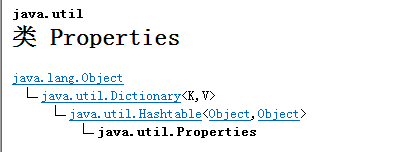
它提供了几个主要的方法:
1. getProperty ( String key),用指定的键在此属性列表中搜索属性。也就是通过参数 key ,得到 key 所对应的 value。
2. load ( InputStream inStream),从输入流中读取属性列表(键和元素对)。通过对指定的文件(比如说上面的 test.properties 文件)进行装载来获取该文件中的所有键 - 值对。以供 getProperty ( String key) 来搜索。
3. setProperty ( String key, String value) ,调用 Hashtable 的方法 put 。他通过调用基类的put方法来设置 键 - 值对。
4. store ( OutputStream out, String comments),以适合使用 load 方法加载到 Properties 表中的格式,将此 Properties 表中的属性列表(键和元素对)写入输出流。与 load 方法相反,该方法将键 - 值对写入到指定的文件中去。
5. clear (),清除所有装载的 键 - 值对。该方法在基类中提供。
二、Java读取Properties文件
Java读取Properties文件的方法有很多,详见: Java读取Properties文件的六种方法
但是最常用的还是通过java.lang.Class类的getResourceAsStream(String name)方法来实现,如下可以这样调用:
InputStream in = getClass().getResourceAsStream(“资源Name”);作为我们写程序的,用此一种足够。
或者下面这种也常用:
InputStream in = new BufferedInputStream(new FileInputStream(filepath));
三、相关实例
下面列举几个实例,加深对Properties类的理解和记忆。
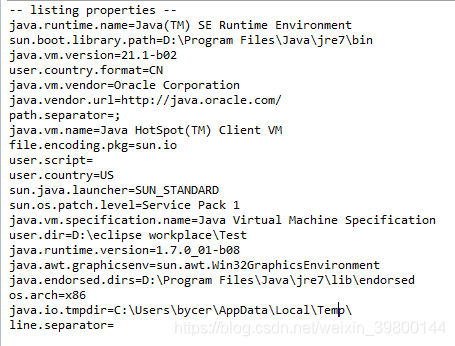
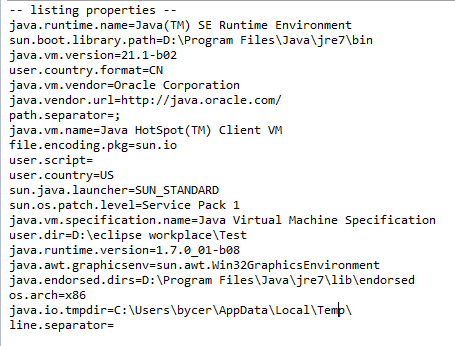
我们知道,Java虚拟机(JVM)有自己的系统配置文件(system.properties),我们可以通过下面的方式来获取。
1、获取JVM的系统属性
1import java.util.Properties;
2
3public class ReadJVM {
4
5
6
7    public static void main(String[] args) {
8
9
10
11        Properties pps = System.getProperties();
12        pps.list(System.out);
13    }
14}
结果:
2、随便新建一个配置文件(Test.properties)
1name=JJ
2Weight=4444
3Height=3333
4
5
6import java.util.Properties;
7
8public class ReadJVM {
9
10
11
12    public static void main(String[] args) {
13
14
15
16        Properties pps = System.getProperties();
17        pps.list(System.out);
18    }
19}
3、一个比较综合的实例
根据key读取value
读取properties的全部信息
写入新的properties信息
1//关于Properties类常用的操作
2public class TestProperties {
3
4
5
6    //根据Key读取Value
7    public static String GetValueByKey(String filePath, String key) {
8
9
10
11        Properties pps = new Properties();
12        try {
13
14
15
16            InputStream in = new BufferedInputStream (new FileInputStream(filePath));
17            pps.load(in);
18            String value = pps.getProperty(key);
19            System.out.println(key + " = " + value);
20            return value;
21
22        }catch (IOException e) {
23
24
25
26            e.printStackTrace();
27            return null;
28        }
29    }
30
31    //读取Properties的全部信息
32    public static void GetAllProperties(String filePath) throws IOException {
33
34
35
36        Properties pps = new Properties();
37        InputStream in = new BufferedInputStream(new FileInputStream(filePath));
38        pps.load(in);
39        Enumeration en = pps.propertyNames(); //得到配置文件的名字
40
41        while(en.hasMoreElements()) {
42
43
44
45            String strKey = (String) en.nextElement();
46            String strValue = pps.getProperty(strKey);
47            System.out.println(strKey + "=" + strValue);
48        }
49
50    }
51
52    //写入Properties信息
53    public static void WriteProperties (String filePath, String pKey, String pValue) throws IOException {
54
55
56
57        Properties pps = new Properties();
58
59        InputStream in = new FileInputStream(filePath);
60        //从输入流中读取属性列表(键和元素对)
61        pps.load(in);
62        //调用 Hashtable 的方法 put。使用 getProperty 方法提供并行性。
63        //强制要求为属性的键和值使用字符串。返回值是 Hashtable 调用 put 的结果。
64        OutputStream out = new FileOutputStream(filePath);
65        pps.setProperty(pKey, pValue);
66        //以适合使用 load 方法加载到 Properties 表中的格式,
67        //将此 Properties 表中的属性列表(键和元素对)写入输出流
68        pps.store(out, "Update " + pKey + " name");
69    }
70
71    public static void main(String [] args) throws IOException{
72
73
74
75        //String value = GetValueByKey("Test.properties", "name");
76        //System.out.println(value);
77        //GetAllProperties("Test.properties");
78        WriteProperties("Test.properties","long", "212");
79    }
80}
结果:
Test.properties中文件的数据为:
1#Update long name
2#Sun Feb 23 18:17:16 CST 2014
3name=JJ
4Weight=4444
5long=212
6Height=3333
作者:公众号「Linux云计算网络」,专注于Linux、云计算、网络领域技术干货分享
出处:https://www.cnblogs.com/bakari/p/3562244.html
本站使用「署名 4.0 国际」创作共享协议,转载请在文章明显位置注明作者及出处。
本文同步分享在 博客“IT云清”(CSDN)。
如有侵权,请联系 support@oschina.cn 删除。
本文参与“OSC源创计划”,欢迎正在阅读的你也加入,一起分享。