
wait方法是让当前线程等待,这里的当前线程不是指t,而是主线程。 wait会释放锁,等到其他线程调用notify方法时再继续运行。
可以看下面的例子。

11 package com.citi.test.mutiplethread.demo0503;
2 2
3 3 import java.util.Date;
4 4
5 5 public class WaitTest {
6 6     public static void main(String[] args) {
7 7         ThreadA t1=new ThreadA("t1");
8 8         System.out.println("t1:"+t1);
9 9         synchronized (t1) {
1010             try {
1111                 //启动线程
1212                 System.out.println(Thread.currentThread().getName()+" start t1");
1313                 t1.start();
1414                 //主线程等待t1通过notify唤醒。
1515                 System.out.println(Thread.currentThread().getName()+" wait()"+ new Date());
1616                 t1.wait();// 不是使t1线程等待,而是当前执行wait的线程等待
1717                 System.out.println(Thread.currentThread().getName()+" continue"+ new Date());
1818             } catch (Exception e) {
1919                 e.printStackTrace();
2020             }
2121         }
2222     }
2323 }
2424
2525 class ThreadA extends Thread{
2626     public ThreadA(String name) {
2727         super(name);
2828     }
2929     @Override
3030     public void run() {
3131         synchronized (this) {
3232             System.out.println("this:"+this);
3333             try {
3434                 Thread.sleep(2000);//使当前线程阻塞1秒
3535             } catch (InterruptedException e) {
3636                 // TODO Auto-generated catch block
3737                 e.printStackTrace();
3838             }
3939             System.out.println(Thread.currentThread().getName()+" call notify()");
4040             this.notify();
4141         }
4242     }
4343 }

下面是执行结果。
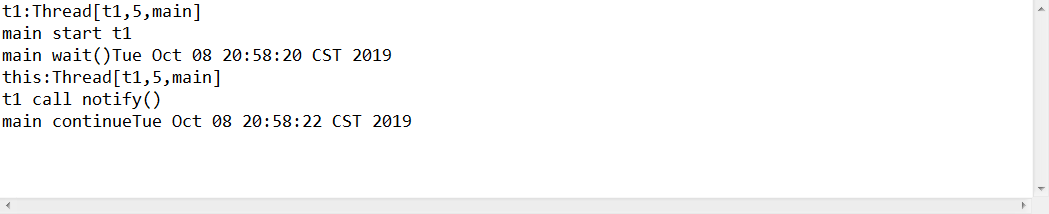
可以看到synchronized(this),和synchronized(t1), 锁的是同一个对象。
这个程序有两个线程,一个是主线程main,一个是线程t1,所以会有锁的竞争,因为是main方法先运行到第9行,所以先获取到锁。
这样就导致了32行到40行的代码必须在main主线程释放锁的时候才运行,而t1.await()就释放了锁,所以我们看执行结果。
32行在15行之后执行。
17行会等待t1线程执行完毕调用notify之后再执行。
这里就说明了,
在代码中t1.await(),是让运行这行代码的线程等待,而不是让t1这个线程等待。