 Kubernetes 已经成为容器编排(Orchestration)平台的事实标准,它为容器化应用提供了简单且高效部署的方式、大规模可伸缩、资源调度等生命周期管理功能。kube-scheduler作为kubernetes的核心组件,它负责整个集群资源的调度功能,根据特定的调度算法或调度策略,将Pod调度到最优的Node节点,使集群的资源得到合理且充分的利用。
一般情况下,kube-scheduler提供的默认算法或编排的策略能够满足我们绝大多数的要求,但是在实际的项目中,需要考虑的问题就有很多了,我们会比kubernetes更加了解我们自己的应用,比如kubernetes无法对GPU资源调度的,这就需要我们来扩展调度器功能。
自定义调度器
纵观Kubernetes的发展历程,经过近几年的快速发展,在稳定性、扩展性和规模化方面都有了长足进步,核心组件日臻成熟。但实际上社区对于kube-scheduler的整体扩展规划设计是近两年才开始的。早期提升调度器扩展能力的方式主要有两种,一种是调度器扩展(Scheduler Extender), 另外一种是多调度器(Multiple schedulers)。
不管是Scheduler Extender还是Multiple schedulers,在性能和灵活性方面都有很大的问题,为了解决该困境,社区从Kubernetes 1.15版本开始, 作为alpha功能加入了新的调度框架 Kubernetes Scheduling Framework机制,可插拔架构使Kube-scheduler 扩展性更好、代码更简洁。
在进入Framework之前,我们再来了解下Kubernetes调度程序大概过程:
- Kube-Controller-Manager将spec.nodeName为空的Pod加入待调度的Pod列表
- Kube-scheduler watch Kube-apiserver,从调度队列中Pop出一个Pod,开始一个标准的调度周期
- 经过过滤阶段,根据Pod的属性(如:CPU/内存,nodeSelector/nodeAffinity),在该阶段计算出满足要求的节点候选列表
- 然后打分阶段,为每个候选节点给出一个分数,并挑选出得分最高的节点
- 最后kube-scheduler向kube-apiserver发送绑定调用,设置Pod的spec.nodeName属性以表示将该Pod调度到的节点
- kubelet通过kube-apiserver监听到kube-scheduler产生的绑定信息,获得Pod列表,下载Image并启动容器,然后由kubelet负责拉起Pod
Scheduling Framework调度框架
Scheduling Framework在原有的调度流程中, 定义了丰富扩展点接口,用户可以实现扩展点定义的接口来定义自己的调度逻辑,并将扩展注册到扩展点上,调度框架在执行调度工作流时,运行到相应的扩展点时,会调用用户注册的插件。
调度框架定义了一些扩展点,有些扩展点上的扩展可以更改调度程序的决策,有些扩展点上的扩展只是发送一个通知。每次调度一个Pod的过程分为两个阶段:调度周期(Scheduling Cycle)和绑定周期(Binding Cycle)。
调度周期为Pod选择一个节点,绑定周期将该决定应用于集群。调度周期和绑定周期一起被称为"调度上下文"(scheduling context)。调度过程和绑定过程遇到该Pod不可调度或存在内部错误,则中止调度或绑定周期,该Pod将返回队列并重试。
下图展示了调度框架中的调度上下文及其中的扩展点,一个扩展可以注册多个扩展点,以便可以执行更复杂的有状态的任务

scheduling cycle 是同步执行的,同一个时间只有一个 scheduling cycle,是线程安全的; binding cycle 是异步执行的,同一个时间中可能会有多个 binding cycle在运行,是线程不安全的。
调度周期(Scheduling Cycle)
QueueSort 对调度队列中的Pod进行排序,以决定先调度哪个Pod,本质上提供了一个Less(Pod1, Pod2)功能用于比较两个Pod谁更优先获得调度,同一时间点只能有一个QueueSort插件生效。
PreFilter 对Pod的信息进行预处理,或者检查一些集群或Pod必须满足的前提条件,只有当所有的PreFilter插件都返回success时,才能进入下一个阶段,如果返回了error,则调度过程终止。
Filter 用来过滤掉不满足Pod调度要求的节点,对于每一个节点,调度器将按顺序执行Filter扩展。为了提升效率,Filter的执行顺序可以被配置,以减少Filter策略执行的次数,如可以把NodeSelector的Filter放到第一个,从而过滤掉大量的节点。Node节点执行Filter策略是并发执行的,所以在同一调度周期中多次调用过滤器。
PostFilter 在1.19版本发布,主要是用于处理当找不到该Pod的可行节点时才调用,例如试图通过抢占其他Pod来使该Pod可调度。,Autoscale触发等行为。
PreScore 在1.19之前版本称为PostFilter,主要用于在Score之前进行一些信息生成即预评分,从而为Score插件使用提供可共享的状态。如果PreScore插件返回错误,则调度周期将中止。
Score 用于对已通过过滤阶段的节点进行打分,调度器将针对每一个节点调用Score扩展,评分结果是一个范围内的整数。在NormalizeScore阶段之后,调度器将会把每个Score扩展对具体某个节点的评分结果和该扩展的权重合并起来,作为最终评分结果。
NormalizeScore 用于对节点进行最终排序之前修改每个节点的评分分数,注册到该扩展点的扩展在被调用时,将获得同一个插件中的Score扩展的评分结果作为参数,调度框架每执行一次调度,都将调用所有插件中的一个NormalizeScore扩展一次。
Reserve 用于避免调度器在等待Pod与节点绑定的过程中调度新的Pod到节点上时,发生实际使用资源超出可用资源的情况,因为绑定Pod到节点上是异步发生的。实现Reserve扩展的插件有两种方法,分别是Reserve和Unreserve,每个Reserve插件的Reserve方法可能成功也可能失败;如果一个Reserve方法调用失败,则不会执行后续插件,并且认为Reserve阶段失败,触发Unreserve扩展。
Permit 用于阻止或者延迟Pod与节点的绑定。可以执行三种操作:
approve(批准):所有Permit插件批准Pod后,将其发送进行绑定。
deny(拒绝):如果任何Permit插件拒绝Pod,则将其返回到调度队列,触发Reserve插件中的Unreserve扩展。
wait(等待):如果一个permit扩展返回了wait,则Pod将保持在permit阶段,如超时,wait状态变成deny,Pod 将被放回到待调度队列,触发Reserve插件中的Unreserve扩展。
绑定周期(Binding Cycle)
PreBind 用于在Pod绑定之前执行某些逻辑,如将数据卷挂载到节点上,然后再允许Pod在此处运行。如插件返回错误,则Pod被拒绝并返回到调度队列。
Bind 用于将Pod绑定到节点。在所有PreBind插件完成之前,不会调用Bind插件。调度框架按照Bind扩展注册的顺序逐个调用Bind扩展,具体某个Bind扩展可以选择处理或者不处理该Pod,如果某个Bind扩展处理了该Pod与节点的绑定,余下的Bind扩展将被忽略。
PostBind 这是一个信息扩展点。成功绑定Pod后,将调用后PostBind插件。Bind周期到此结束,可以用来清理关联的资源。
实现自定义的调度插件
sig-scheduling小组为了更好的管理调度相关的Plugin,新建scheduler-plugins项目,用户可以直接基于这个项目来定义自己的插件。 https://github.com/kubernetes-sigs/scheduler-plugins 接下来我们以社区示例的Qos的插件来为例,简单开发一个Filter、PreScore的插件。
定义插件的对象和构造函数:
1// Name is the name of the plugin used in the plugin registry and configurations.
2const Name = "sample"
3
4// Sort is a plugin that implements QoS class based sorting.
5type sample struct{}
6
7var _ framework.FilterPlugin = &sample{}
8var _ framework.PreScorePlugin = &sample{}
9
10// New initializes a new plugin and returns it.
11func New(_ runtime.Object, _ framework.FrameworkHandle) (framework.Plugin, error) {
12  return &sample{}, nil
13}
实现对应插件的接口:
1
2// Name returns name of the plugin.
3func (pl *sample) Name() string {
4  return Name
5}
6func (pl *sample) Filter(ctx context.Context, state *framework.CycleState, pod *v1.Pod, nodeInfo *framework.NodeInfo) *framework.Status {
7  log.Printf("filter pod: %v, node: %v", pod.Name, nodeInfo)
8  log.Println(state)
9  // 排除没有cpu=true标签的节点
10  if nodeInfo.Node().Labels["cpu"] != "true" {
11    return framework.NewStatus(framework.Unschedulable, "Node: "+nodeInfo.Node().Name)
12  }
13  return framework.NewStatus(framework.Success, "Node: "+nodeInfo.Node().Name)
14}
15func (pl *sample)PreScore(ctx context.Context, state *framework.CycleState, pod *v1.Pod, nodes []*v1.Node) *framework.Status  {
16  log.Println(nodes)
17  return framework.NewStatus(framework.Success, "Node: "+pod.Name)
18}
插件注册:
1func main() {
2  rand.Seed(time.Now().UnixNano())
3  // Register custom plugins to the scheduler framework.
4  // Later they can consist of scheduler profile(s) and hence
5  // used by various kinds of workloads.
6  command := app.NewSchedulerCommand(
7    app.WithPlugin(plugins.Name, plugins.New),
8  )
9  if err := command.Execute(); err != nil {
10    os.Exit(1)
11  }
12}
把编译源码并打包成容器镜像
1FROM debian:stretch-slim
2WORKDIR /
3COPY app /usr/local/bin
4CMD ["app"]
在kubernetes安装插件
1kind: ClusterRole
2apiVersion: rbac.authorization.k8s.io/v1
3metadata:
4name: sample-scheduler-clusterrole
5rules:
6- apiGroups:
7    - ""
8  resources:
9    - endpoints
10    - events
11  verbs:
12    - create
13    - get
14    - update
15- apiGroups:
16    - ""
17  resources:
18    - nodes
19  verbs:
20    - get
21    - list
22    - watch
23- apiGroups:
24    - ""
25  resources:
26    - pods
27  verbs:
28    - delete
29    - get
30    - list
31    - watch
32    - update
33- apiGroups:
34    - ""
35  resources:
36    - bindings
37    - pods/binding
38  verbs:
39    - create
40- apiGroups:
41    - ""
42  resources:
43    - pods/status
44  verbs:
45    - patch
46    - update
47- apiGroups:
48    - ""
49  resources:
50    - replicationcontrollers
51    - services
52  verbs:
53    - get
54    - list
55    - watch
56- apiGroups:
57    - apps
58    - extensions
59  resources:
60    - replicasets
61  verbs:
62    - get
63    - list
64    - watch
65- apiGroups:
66    - apps
67  resources:
68    - statefulsets
69  verbs:
70    - get
71    - list
72    - watch
73- apiGroups:
74    - policy
75  resources:
76    - poddisruptionbudgets
77  verbs:
78    - get
79    - list
80    - watch
81- apiGroups:
82    - ""
83  resources:
84    - persistentvolumeclaims
85    - persistentvolumes
86  verbs:
87    - get
88    - list
89    - watch
90- apiGroups:
91    - ""
92  resources:
93    - configmaps
94  verbs:
95    - get
96    - list
97    - watch
98- apiGroups:
99    - "storage.k8s.io"
100  resources:
101    - storageclasses
102    - csinodes
103  verbs:
104    - get
105    - list
106    - watch
107- apiGroups:
108    - "coordination.k8s.io"
109  resources:
110    - leases
111  verbs:
112    - create
113    - get
114    - list
115    - update
116- apiGroups:
117    - "events.k8s.io"
118  resources:
119    - events
120  verbs:
121    - create
122    - patch
123    - update
124---
125apiVersion: v1
126kind: ServiceAccount
127metadata:
128name: sample-scheduler-sa
129namespace: kube-system
130---
131kind: ClusterRoleBinding
132apiVersion: rbac.authorization.k8s.io/v1
133metadata:
134name: sample-scheduler-clusterrolebinding
135namespace: kube-system
136roleRef:
137apiGroup: rbac.authorization.k8s.io
138kind: ClusterRole
139name: sample-scheduler-clusterrole
140subjects:
141- kind: ServiceAccount
142name: sample-scheduler-sa
143namespace: kube-system
144---
145apiVersion: v1
146kind: ConfigMap
147metadata:
148name: scheduler-config
149namespace: kube-system
150data:
151scheduler-config.yaml: |
152  apiVersion: kubescheduler.config.k8s.io/v1beta1
153  kind: KubeSchedulerConfiguration
154  leaderElection:
155    leaderElect: false
156  clientConnection:
157    kubeconfig: /kube-scheduler.kubeconfig
158  profiles:
159  - schedulerName: sample-scheduler
160    plugins:
161      filter:
162        enabled:
163        - name: sample
164      preScore:
165        enabled:
166          - name: sample
167        disabled:
168          - name: "*"
169---
170apiVersion: apps/v1
171kind: Deployment
172metadata:
173name: sample-scheduler
174namespace: kube-system
175labels:
176  component: sample-scheduler
177spec:
178replicas: 1
179selector:
180  matchLabels:
181    component: sample-scheduler
182template:
183  metadata:
184    labels:
185      component: sample-scheduler
186  spec:
187    serviceAccount: sample-scheduler-sa
188    priorityClassName: system-cluster-critical
189    volumes:
190      - name: scheduler-config
191        configMap:
192          name: scheduler-config
193    containers:
194      - name: scheduler-ctrl
195        image: sample-scheduler:stretch-slim
196        imagePullPolicy: IfNotPresent
197        args:
198          - --config=/etc/kubernetes/scheduler-config.yaml
199          - --v=3
200        resources:
201          requests:
202            cpu: "50m"
203        volumeMounts:
204          - name: scheduler-config
205            mountPath: /etc/kubernetes
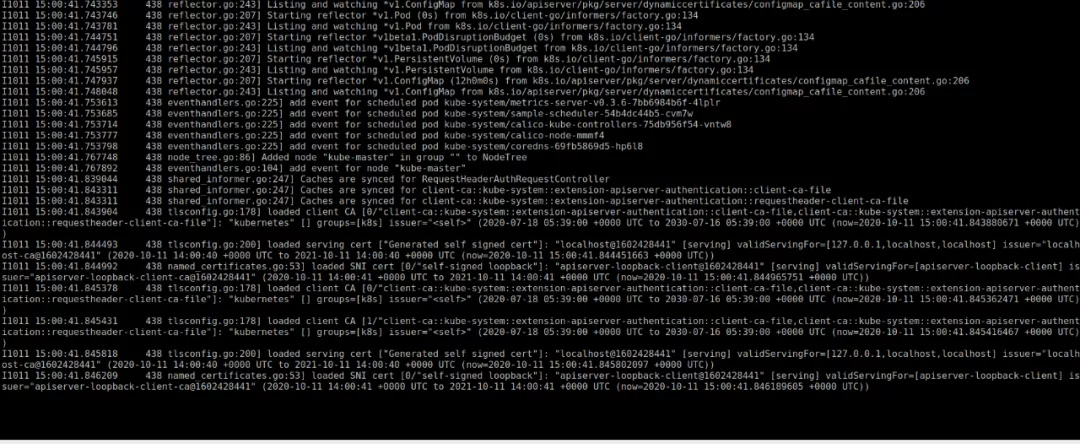
运行日志:
验证插件
测试的pod,schedulerName字段指定自定义调度器
1apiVersion: apps/v1
2kind: Deployment
3metadata:
4name: test-scheduler
5spec:
6replicas: 1
7selector:
8  matchLabels:
9    app: test-scheduler
10template:
11  metadata:
12    labels:
13      app: test-scheduler
14  spec:
15    schedulerName: sample-scheduler
16    containers:
17    - image: docker.io/library/nginx:1.19.2-alpine
18      imagePullPolicy: IfNotPresent
19      name: nginx
20      ports:
21      - containerPort: 80
创建测试pod
1
2root@ubuntu:~# kubectl create -f  test-deploy.yaml
3deployment.apps/test-scheduler created
4root@ubuntu:~# kubectl get po
5NAME                             READY   STATUS    RESTARTS   AGE
6test-scheduler-6645fd9f6-pfzkm   0/1     Pending   0          4s
7root@ubuntu:~# kubectl describe pod test-scheduler-6645fd9f6-pfzkm
8Name:           test-scheduler-6645fd9f6-pfzkm
9Namespace:      default
10Priority:       0
11Node:           <none>
12Labels:         app=test-scheduler
13                pod-template-hash=6645fd9f6
14Annotations:    <none>
15Status:         Pending
16IP:
17IPs:            <none>
18Controlled By:  ReplicaSet/test-scheduler-6645fd9f6
19Containers:
20  nginx:
21    Image:        docker.io/library/nginx:1.19.2-alpine
22    Port:         80/TCP
23    Host Port:    0/TCP
24    Environment:  <none>
25    Mounts:
26      /var/run/secrets/kubernetes.io/serviceaccount from default-token-jbdqf (ro)
27Conditions:
28  Type           Status
29  PodScheduled   False
30Volumes:
31  default-token-jbdqf:
32    Type:        Secret (a volume populated by a Secret)
33    SecretName:  default-token-jbdqf
34    Optional:    false
35QoS Class:       BestEffort
36Node-Selectors:  <none>
37Tolerations:     node.kubernetes.io/not-ready:NoExecute op=Exists for 360s
38                 node.kubernetes.io/unreachable:NoExecute op=Exists for 360s
39Events:
40  Type     Reason            Age   From  Message
41  ----     ------            ----  ----  -------
42  Warning  FailedScheduling  36s         0/1 nodes are available: 1 Node: kube-master.
43  Warning  FailedScheduling  36s         0/1 nodes are available: 1 Node: kube-master.
因为排除没有 cpu=true 标签的节点,故pod处于Pending状态,日志也会打印信息
1I1011 15:14:35.015568 466 factory.go:445] "Unable to schedule pod; no fit; waiting" pod="default/test-scheduler-6645fd9f6-pfzkm" err="0/1 nodes are available: 1 Node: kube-master."
给节点增加标签
1
2root@ubuntu:~# kubectl label nodes kube-master cpu=true
3node/kube-master labeled
4root@ubuntu:~# kubectl get nodes --show-labels
5NAME          STATUS   ROLES    AGE   VERSION   LABELS
6kube-master   Ready    <none>   30d   v1.19.1   beta.kubernetes.io/arch=amd64,beta.kubernetes.io/os=linux,cpu=true,kubernetes.io/arch=amd64,kubernetes.io/hostname=kube-master,kubernetes.io/os=linux
7root@ubuntu:~# kubectl get po
8NAME                             READY   STATUS    RESTARTS   AGE
9test-scheduler-6645fd9f6-pfzkm   1/1     Running   0          3m16s
Pod已经正常调度,处于running状态,同时自定义插件也输出对应的日志
1I1011 15:17:45.635502     466 default_binder.go:51] Attempting to bind default/test-scheduler-6645fd9f6-pfzkm to kube-master
2I1011 15:17:45.643123     466 eventhandlers.go:205] delete event for unscheduled pod default/test-scheduler-6645fd9f6-pfzkm
3I1011 15:17:45.643204     466 eventhandlers.go:225] add event for scheduled pod default/test-scheduler-6645fd9f6-pfzkm
4I1011 15:17:45.645886     466 scheduler.go:597] "Successfully bound pod to node" pod="default/test-scheduler-6645fd9f6-pfzkm" node="kube-master" evaluatedNodes=1 feasibleNodes=1
小结
最近一直在研究Scheduling Framework框架,发现还是挺有意思的,后续有时间再更新吧。
感兴趣的读者可以关注下微信号