一、抽象工厂模式
1、生活场景
汽车生产根据用户选择的汽车类型,指定不同的工厂进行生产,选择红旗轿车,就要使用中国工厂,选择奥迪轿车,就要使用德国工厂。
2、抽象工厂模式
- 抽象工厂模式:定义了一个interface用于创建相关对象或相互依赖的对象,而无需指明具体的类;
- 抽象工厂模式可以将简单工厂模式和工厂方法模式进行整合;
- 从设计层面看,抽象工厂模式就是对简单工厂模式的改进(或者称为进一步的抽象)。
- 将工厂抽象成两层,AbstractFactory(抽象工厂) 和 具体实现的工厂子类,方便程序扩展。
3、代码UML图

4、源代码实现
1/**
2 * 抽象工厂模式
3 */
4public class C01_AbstractFactory {
5    public static void main(String[] args) {
6        CarProductFactory factory = new ChinaCarFactory() ;
7        factory.getCar("hq") ;
8        factory = new GermanyCarFactory () ;
9        factory.getCar("ad") ;
10    }
11}
12
13// 汽车生产抽象工厂
14interface CarProductFactory {
15    CarProduct getCar (String type) ;
16}
17// 中国汽车工厂
18class ChinaCarFactory implements CarProductFactory {
19    @Override
20    public CarProduct getCar(String type) {
21        CarProduct product = null ;
22        if ("hq".equals(type)){
23            product = new HQCar() ;
24            product.name="红旗一号" ;
25            product.date="1999-09-19" ;
26            product.material();
27            product.origin();
28        } else if ("df".equals(type)){
29            product = new DFCar() ;
30            product.name="东风一号" ;
31            product.date="2019-09-19" ;
32            product.material();
33            product.origin();
34        }
35        return product ;
36    }
37}
38// 德国汽车工厂
39class GermanyCarFactory implements CarProductFactory {
40    @Override
41    public CarProduct getCar(String type) {
42        CarProduct product = null ;
43        if ("ad".equals(type)){
44            product = new ADCar() ;
45            product.name="奥迪A8" ;
46            product.date="2017-09-19" ;
47            product.material();
48            product.origin();
49        } else if ("bm".equals(type)){
50            product = new BMCar() ;
51            product.name="宝马X8" ;
52            product.date="2018-09-19" ;
53            product.material();
54            product.origin();
55        }
56        return product ;
57    }
58}
59// 汽车生产抽象类
60abstract class CarProduct {
61    /**
62     * 汽车名称
63     */
64    protected String name ;
65    /**
66     * 生产日期
67     */
68    protected String date ;
69    /**
70     * 材料
71     */
72    abstract void material () ;
73    /**
74     * 产地
75     */
76    abstract void origin () ;
77}
78// 红旗车
79class HQCar extends CarProduct {
80    @Override
81    void material() {
82        System.out.println(super.name+"材料...");
83    }
84    @Override
85    void origin() {
86        System.out.println(super.date+":"+super.name+"在中国北京生产");
87    }
88}
89// 东风车
90class DFCar extends CarProduct {
91    @Override
92    void material() {
93        System.out.println(super.name+"材料...");
94    }
95    @Override
96    void origin() {
97        System.out.println(super.date+":"+super.name+"在中国南京生产");
98    }
99}
100// 奥迪车
101class ADCar extends CarProduct {
102    @Override
103    void material() {
104        System.out.println(super.name+"材料...");
105    }
106    @Override
107    void origin() {
108        System.out.println(super.date+":"+super.name+"在德国柏林生产");
109    }
110}
111// 宝马车
112class BMCar extends CarProduct {
113    @Override
114    void material() {
115        System.out.println(super.name+"材料...");
116    }
117    @Override
118    void origin() {
119        System.out.println(super.date+":"+super.name+"在德国慕尼黑生产");
120    }
121}
二、Spring框架应用
1、场景描述
Spring框架中获取配置文件中Bean的多种方式。
2、核心配置
1<bean id="carBean" class="com.model.design.spring.node04.abstractFactory.CarBean">
2    <property name="name" value="中国红旗" />
3</bean>
4<bean id="carBean1" class="com.model.design.spring.node04.abstractFactory.CarBean">
5    <property name="name" value="德国奥迪" />
6</bean>
3、测试文件
这里使用了两种方式获取。
1@RunWith(SpringJUnit4ClassRunner.class)
2@ContextConfiguration(locations = {"classpath:/spring/spring-abstract-factory.xml"})
3public class SpringTest {
4
5    @Resource
6    private BeanFactory beanFactory ;
7
8    @Test
9    public void test01 (){
10        CarBean carBean = (CarBean)beanFactory.getBean("carBean") ;
11        System.out.println(carBean.getName());
12    }
13
14    @Test
15    public void test02 (){
16        ApplicationContext context01 = new ClassPathXmlApplicationContext(
17                "/spring/spring-abstract-factory.xml");
18        CarBean carBean = (CarBean)context01.getBean("carBean1") ;
19        System.out.println(carBean.getName());
20    }
21}
4、结构分析
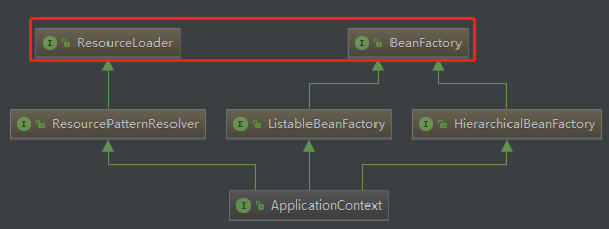
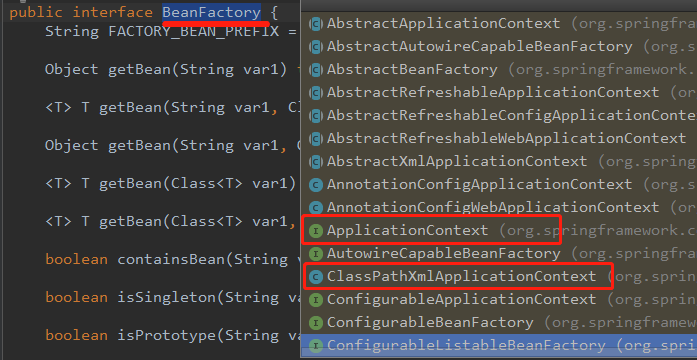
抽象工厂封装对象的创建。在Spring中,通过实现BeanFactory。可以从Spring的各种容器获取bean。根据Bean的配置,getBean方法可以返回不同类型的对象(单例作用域)或初始化新的对象(原型作用域)。在BeanFactory的实现中,我们可以区分:ClassPathXmlApplicationContext,XmlWebApplicationContext等。
三、工厂模式小结
三种工厂模式 (简单工厂模式、工厂方法模式、抽象工厂模式),工厂模式的核心用意将实例化对象的代码封装起来,放到工厂类中统一管理和维护,完成代码依赖关系的解耦。从而提高程序的可扩展性和维护性。
四、源代码地址
1GitHub地址:知了一笑
2https://github.com/cicadasmile/model-arithmetic-parent
3码云地址:知了一笑
4https://gitee.com/cicadasmile/model-arithmetic-parent