
对于没有覆盖hashCode()方法的对象
如果没有覆盖 hashCode() 方法,那么哈希值为底层 JDK C++ 源码实现,实例每次调用hashcode()方法,只有第一次计算哈希值,之后哈希值会存储在对象头的 标记字(MarkWord) 中。
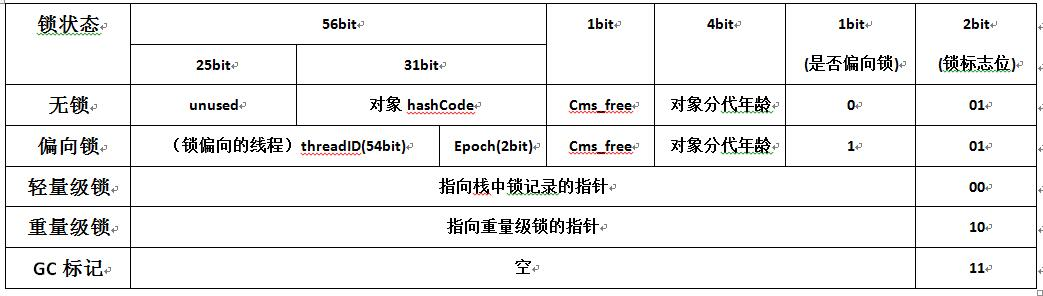
如果进入各种锁状态,那么会缓存在其他地方,一般是获取锁的线程里面存储,恢复无锁(即释放锁)会改回原有的哈希值。
对应源码synchronizer.cpp:
1//如果是无锁状态
2if (mark.is_neutral()) {
3  hash = mark.hash();
4  //如果hash不等于0,证明计算过,直接返回
5  if (hash != 0) {
6    return hash;
7  }
8  //否则,计算hash值
9  hash = get_next_hash(self, obj);  // get a new hash
10  //拷贝到Header中记录
11  temp = mark.copy_set_hash(hash);
12  test = obj->cas_set_mark(temp, mark);
13  //可能有并发,而且不同默认哈希值计算方法,可能每次哈希值不一样,只有 CAS 成功的才是最后的哈希值
14  //默认的哈希值计算,不论计算多少次,都不会变
15  if (test == mark) {
16    return hash;
17  }
18} else if (mark.has_monitor()) {
19  //如果是有 monitor 锁状态(重量级锁),则获取其 monitor,哈希值会记录在monitor的头部
20  monitor = mark.monitor();
21  temp = monitor->header();
22  assert(temp.is_neutral(), "invariant: header=" INTPTR_FORMAT, temp.value());
23  hash = temp.hash();
24  if (hash != 0) {
25    OrderAccess::loadload_for_IRIW();
26    if (monitor->is_being_async_deflated()) {
27      monitor->install_displaced_markword_in_object(obj);
28      continue;
29    }
30    return hash;
31  }
32} else if (self->is_lock_owned((address)mark.locker())) {
33  // 如果是轻量级锁状态,获取轻量锁,其中也记录着之前计算的哈希值
34  temp = mark.displaced_mark_helper();
35  assert(temp.is_neutral(), "invariant: header=" INTPTR_FORMAT, temp.value());
36  hash = temp.hash();
37  if (hash != 0) {                  // if it has a hash, just return it
38    return hash;
39  }
40}
对于已经覆盖hashCode()方法的对象
对于已经覆盖hashCode()方法的对象,则每次都会重新调用hashCode()方法重新计算哈希值。
微信搜索“我的编程喵”关注公众号,每日一刷,轻松提升技术,斩获各种offer: