
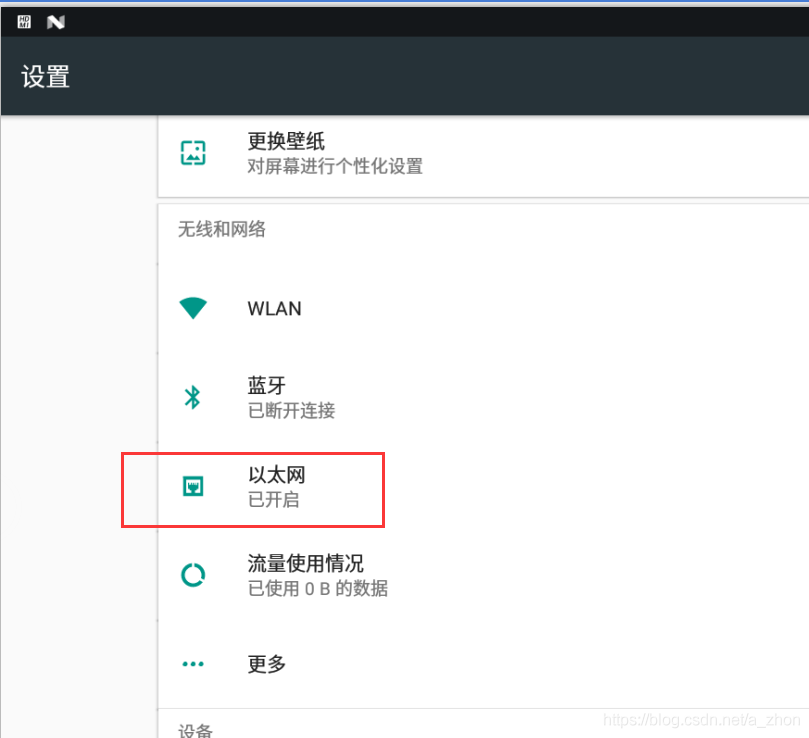
一、对于一些工控行业的Android主板一般都会扩展个以太网接口,也就是可以插网线进行上网;然后在系统设置页面有个以太网菜单可以进行IP、网关等设置,如下:
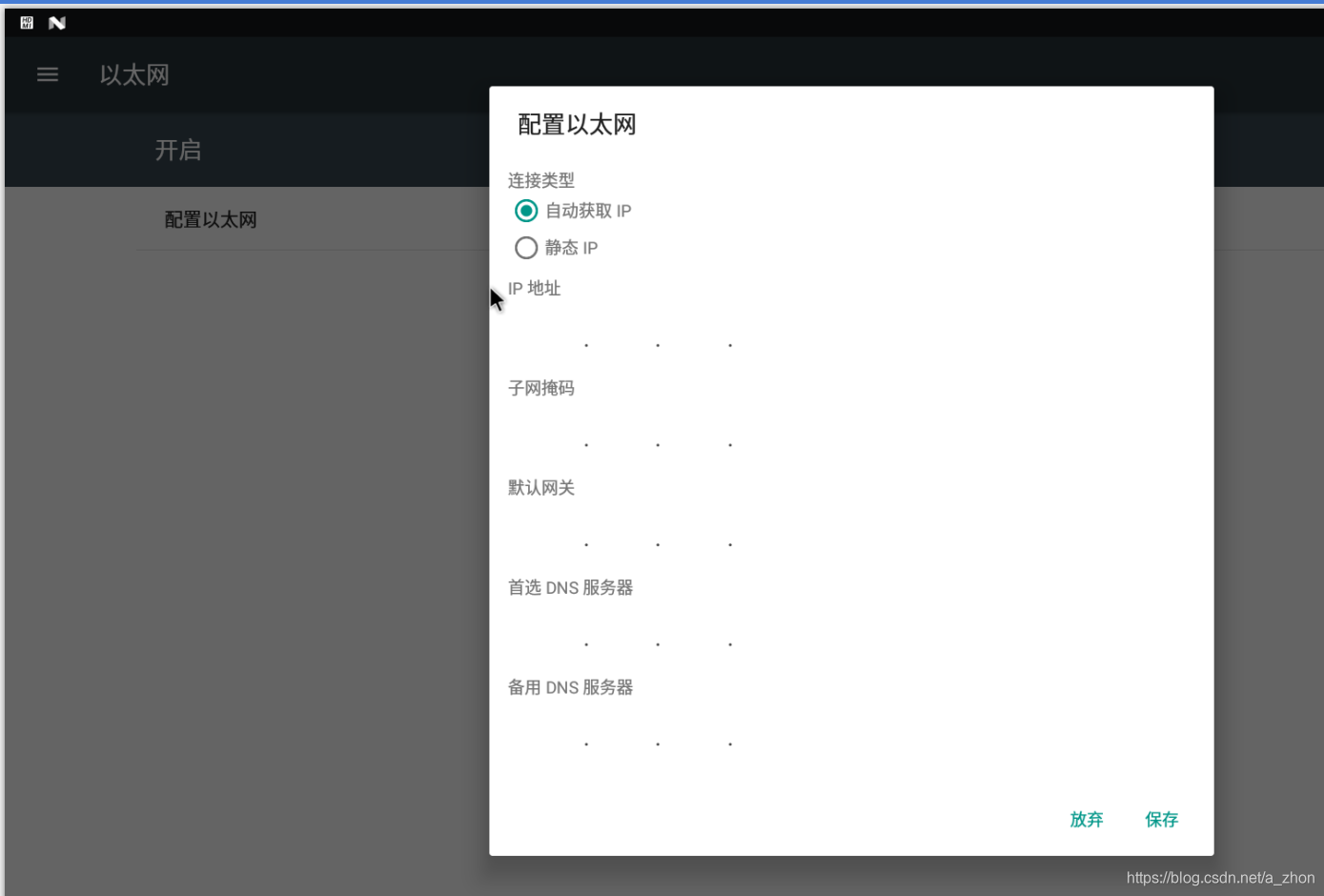
二、那怎么通过代码去设置呢?
1、Android系统在Framework层是有提供操作以太网Api的也就是android.net.EthernetManager,但是Google把Api给隐藏了;所以最终你是调用不了的
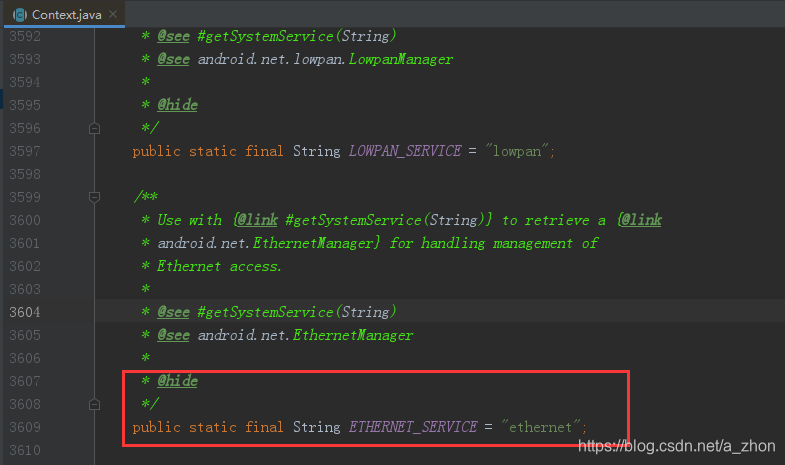
2、那需要怎么操作才能调用到隐藏的Api呢?相信你肯定会立马想到使用反射去调用;对,没错!这里我就是使用的这个方式;当然如果你公司系统层也是自己搞的话就更简单了
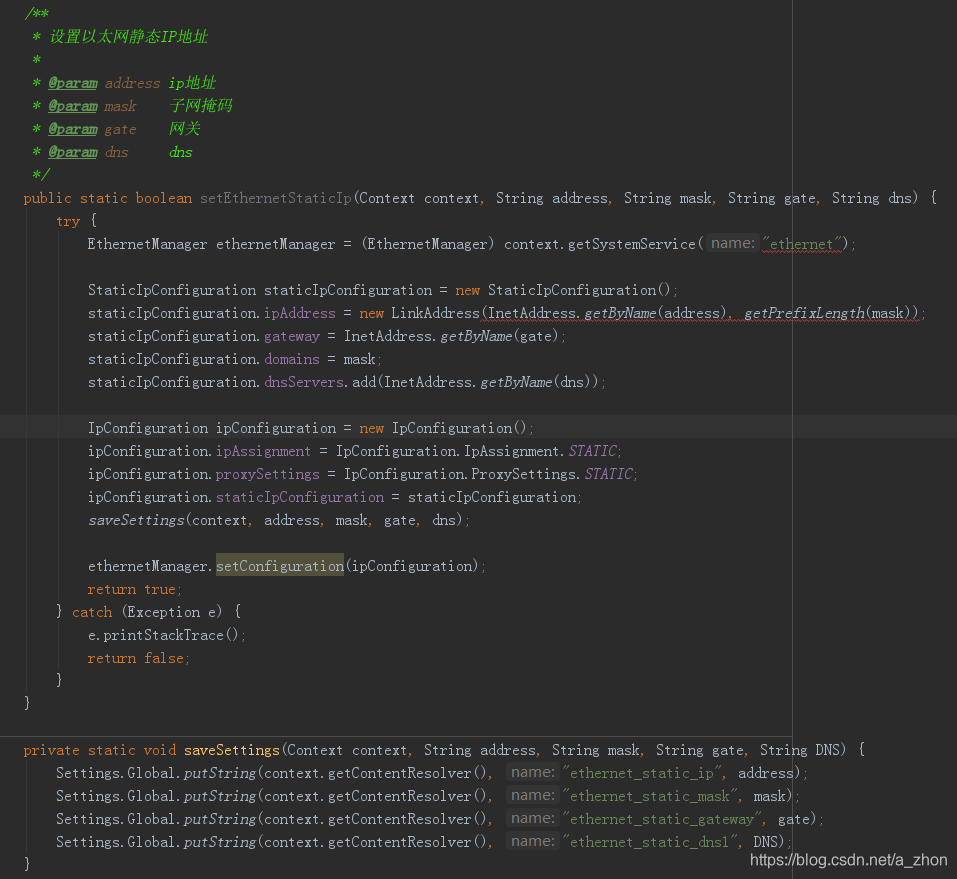
三、先假装如果可以调用到android.net.EthernetManager的Api,那么代码应该怎么写呢?
-
设置静态IP地址, new LinkAddress()报错是因为源码@hide了
-
设置动态ip地址
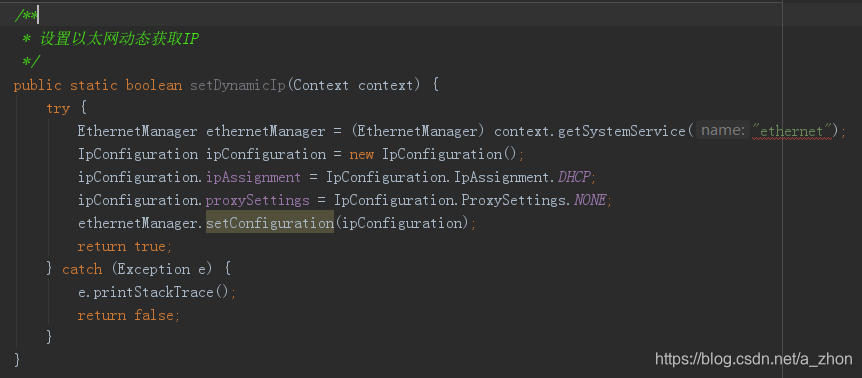
四、接下来就是通反射去调用了,代码量就比上面多的多了
1/**
2 * 文件名:    EthernetUtil
3 * 创建时间:  2020/8/21 on 11:22
4 * 描述:     TODO 设置以太网静态ip 动态ip地址
5 *
6 * @author 阿钟
7 */
8
9public class EthernetUtil {
10
11    /**
12     * 设置以太网动态获取IP
13     */
14    public static boolean setDynamicIp(Context context) {
15        try {
16            Class<?> ethernetManagerCls = Class.forName("android.net.EthernetManager");
17            //获取EthernetManager实例
18            Object ethManager = context.getSystemService("ethernet");
19            //创建IpConfiguration
20            Class<?> ipConfigurationCls = Class.forName("android.net.IpConfiguration");
21            Object ipConfiguration = ipConfigurationCls.newInstance();
22            //获取ipAssignment、proxySettings的枚举值
23            Map<String, Object> ipConfigurationEnum = getIpConfigurationEnum(ipConfigurationCls);
24            //设置ipAssignment
25            Field ipAssignment = ipConfigurationCls.getField("ipAssignment");
26            ipAssignment.set(ipConfiguration, ipConfigurationEnum.get("IpAssignment.DHCP"));
27            //设置proxySettings
28            Field proxySettings = ipConfigurationCls.getField("proxySettings");
29            proxySettings.set(ipConfiguration, ipConfigurationEnum.get("ProxySettings.NONE"));
30            //获取EthernetManager的setConfiguration()
31            Method setConfigurationMethod = ethernetManagerCls.getDeclaredMethod("setConfiguration", ipConfiguration.getClass());
32            //设置动态IP
33            setConfigurationMethod.invoke(ethManager, ipConfiguration);
34            return true;
35        } catch (Exception e) {
36            e.printStackTrace();
37            return false;
38        }
39    }
40
41    /**
42     * 设置以太网静态IP地址
43     *
44     * @param address ip地址
45     * @param mask    子网掩码
46     * @param gate    网关
47     * @param dns     dns
48     */
49    public static boolean setEthernetStaticIp(Context context, String address, String mask, String gate, String dns) {
50        try {
51            Class<?> ethernetManagerCls = Class.forName("android.net.EthernetManager");
52            //获取EthernetManager实例
53            Object ethManager = context.getSystemService("ethernet");
54            //创建StaticIpConfiguration
55            Object staticIpConfiguration = newStaticIpConfiguration(address, gate, mask, dns);
56            //创建IpConfiguration
57            Object ipConfiguration = newIpConfiguration(staticIpConfiguration);
58            //获取EthernetManager的setConfiguration()
59            Method setConfigurationMethod = ethernetManagerCls.getDeclaredMethod("setConfiguration", ipConfiguration.getClass());
60            //保存静态ip设置
61            saveIpSettings(context, address, mask, gate, dns);
62            //设置静态IP
63            setConfigurationMethod.invoke(ethManager, ipConfiguration);
64            return true;
65        } catch (Exception e) {
66            e.printStackTrace();
67            return false;
68        }
69    }
70
71
72    /**
73     * 获取StaticIpConfiguration实例
74     */
75    private static Object newStaticIpConfiguration(String address, String gate, String mask, String dns) throws Exception {
76        Class<?> staticIpConfigurationCls = Class.forName("android.net.StaticIpConfiguration");
77        //实例化StaticIpConfiguration
78        Object staticIpConfiguration = staticIpConfigurationCls.newInstance();
79        Field ipAddress = staticIpConfigurationCls.getField("ipAddress");
80        Field gateway = staticIpConfigurationCls.getField("gateway");
81        Field domains = staticIpConfigurationCls.getField("domains");
82        Field dnsServers = staticIpConfigurationCls.getField("dnsServers");
83        //设置ipAddress
84        ipAddress.set(staticIpConfiguration, newLinkAddress(address, mask));
85        //设置网关
86        gateway.set(staticIpConfiguration, InetAddress.getByName(gate));
87        //设置掩码
88        domains.set(staticIpConfiguration, mask);
89        //设置dns
90        ArrayList<InetAddress> dnsList = (ArrayList<InetAddress>) dnsServers.get(staticIpConfiguration);
91        dnsList.add(InetAddress.getByName(dns));
92        return staticIpConfiguration;
93    }
94
95    /**
96     * 获取LinkAddress实例
97     */
98    private static Object newLinkAddress(String address, String mask) throws Exception {
99        Class<?> linkAddressCls = Class.forName("android.net.LinkAddress");
100        Constructor<?> linkAddressConstructor = linkAddressCls.getDeclaredConstructor(InetAddress.class, int.class);
101        return linkAddressConstructor.newInstance(InetAddress.getByName(address), getPrefixLength(mask));
102    }
103
104    /**
105     * 获取IpConfiguration实例
106     */
107    private static Object newIpConfiguration(Object staticIpConfiguration) throws Exception {
108        Class<?> ipConfigurationCls = Class.forName("android.net.IpConfiguration");
109        Object ipConfiguration = ipConfigurationCls.newInstance();
110        //设置StaticIpConfiguration
111        Field staticIpConfigurationField = ipConfigurationCls.getField("staticIpConfiguration");
112        staticIpConfigurationField.set(ipConfiguration, staticIpConfiguration);
113        //获取ipAssignment、proxySettings的枚举值
114        Map<String, Object> ipConfigurationEnum = getIpConfigurationEnum(ipConfigurationCls);
115        //设置ipAssignment
116        Field ipAssignment = ipConfigurationCls.getField("ipAssignment");
117        ipAssignment.set(ipConfiguration, ipConfigurationEnum.get("IpAssignment.STATIC"));
118        //设置proxySettings
119        Field proxySettings = ipConfigurationCls.getField("proxySettings");
120        proxySettings.set(ipConfiguration, ipConfigurationEnum.get("ProxySettings.STATIC"));
121        return ipConfiguration;
122    }
123
124    /**
125     * 获取IpConfiguration的枚举值
126     */
127    private static Map<String, Object> getIpConfigurationEnum(Class<?> ipConfigurationCls) {
128        Map<String, Object> enumMap = new HashMap<>();
129        Class<?>[] enumClass = ipConfigurationCls.getDeclaredClasses();
130        for (Class<?> enumC : enumClass) {
131            Object[] enumConstants = enumC.getEnumConstants();
132            if (enumConstants == null) continue;
133            for (Object enu : enumConstants) {
134                enumMap.put(enumC.getSimpleName() + "." + enu.toString(), enu);
135            }
136        }
137        return enumMap;
138    }
139
140    /**
141     * 保存静态ip设置
142     */
143    private static void saveIpSettings(Context context, String address, String mask, String gate, String dns) {
144        ContentResolver contentResolver = context.getContentResolver();
145        Settings.Global.putString(contentResolver, "ethernet_static_ip", address);
146        Settings.Global.putString(contentResolver, "ethernet_static_mask", mask);
147        Settings.Global.putString(contentResolver, "ethernet_static_gateway", gate);
148        Settings.Global.putString(contentResolver, "ethernet_static_dns1", dns);
149    }
150
151    /**
152     * 获取长度
153     */
154    private static int getPrefixLength(String mask) {
155        String[] strs = mask.split("\\.");
156        int count = 0;
157        for (String str : strs) {
158            if (str.equals("255")) {
159                ++count;
160            }
161        }
162        return count * 8;
163    }
164}
-
使用只需调用方法即可:
//设置静态ip EthernetUtil.setEthernetStaticIp(context, "192.168.5.33", "255.255.255.0", "192.168.5.1", "8.8.8.8"); //设置动态获取ip EthernetUtil.setDynamicIp(context)
最后:这个代码本人在Android7.0的原生系统验证是可以使用的,有需要的可以使用试试EthernetUtil源码下载地址
- 最后在推荐个好用的系统源码查看网址吧:Android 系统源码在线查看