
事件总线就是订阅/发布模式的一种实现 事件总线就是为了降低耦合
1.比如在winform中 到处都是事件

触发事件的对象 sender
事件的数据 e
事件的处理逻辑 方法体
通过EventBus实现事件对象和处理逻辑的解耦
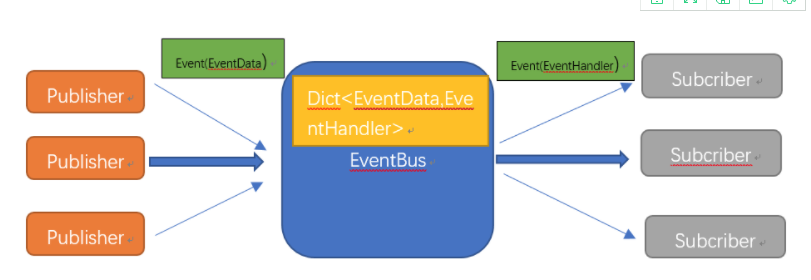
1.抽离事件对象 发生时间的事件 触发事件的对象源(可选)
1//
2    // 摘要:
3    //     Defines interface for all Event data classes.
4    public interface IEventData
5    {
6        //
7        // 摘要:
8        //     The time when the event occured.
9        DateTime EventTime { get; set; }
10        //
11        // 摘要:
12        //     The object which triggers the event (optional).
13        object EventSource { get; set; }
2.抽离事件的处理对象
1public interface IEventHandler
2    {
3    }
4    public interface IEventHandler<in TEventData> : IEventHandler
5    {
6        /// <summary>
7        /// Handler handles the event by implementing this method.
8        /// </summary>
9        /// <param name="eventData">Event data</param>
10        void HandleEvent(TEventData eventData);
11    }
3.所有EventData跟EventHandler不再耦合 全都跟EventBus进行通信
在EventBus中有一个字典进行存放 EventData类型跟需要触发的Handler对象
这里的Type就是EventData List<IEventHandlerFactory>>就是存放处理当前EventData的多个Handler
private readonly ConcurrentDictionary<Type, List<IEventHandlerFactory>> _handlerFactories;
4.ABP的EventBus封装的比较高深 自己来个简洁版 思想是一样的(这里还存在很多问题 比如并发 往字典存放数据没有加锁等问题 具体的看ABP)
ABP初始化的时候会把所有的EventData和EventHandler对应存放到字典中 也可以通过Unregister移除某一个Handler
1public class EventBus : IEventBus
2    {
3        public EventBus()
4        {
5            mapDic = new ConcurrentDictionary<Type, List<Type>>();
6        }
7        //EventBus单例模式
8        public static EventBus Default = new EventBus();
9        //存储EventData和EventHandle的映射关系(没有存放handler的实例而是存放metaData,然后通过反射调用)
10        private ConcurrentDictionary<Type, List<Type>> mapDic;
11
12        public void Register<TEventData>(Type handlerType) where TEventData : IEventData
13        {
14            //将数据存储到mapDic
15            var dataType = typeof(TEventData);
16            Register(dataType, handlerType);
17        }
18
19        public void Register(Type eventType, Type handlerType)
20        {
21            if (mapDic.Keys.Contains(eventType))
22            {
23                if (!mapDic[eventType].Contains(handlerType))
24                {
25                    mapDic[eventType].Add(handlerType);
26                }
27            }
28            else
29            {
30                mapDic[eventType] = new List<Type>() { handlerType };
31            }
32        }
33
34        public void Unregister<TEventData>(Type handler) where TEventData : IEventData
35        {
36            var dataType = typeof(TEventData);
37            Unregister(dataType, handler);
38        }
39
40        public void Unregister(Type eventType, Type handlerType)
41        {
42            if (mapDic.Keys.Contains(eventType))
43            {
44                if (mapDic[eventType].Contains(handlerType))
45                {
46                    mapDic[eventType].Remove(handlerType);
47                }
48            }
49        }
50
51        public void Trigger<TEventData>(TEventData eventData) where TEventData : IEventData
52        {
53            var dataType = eventData.GetType();
54            //获取当前的EventData绑定的所有Handler
55            var handlerTypes = mapDic[dataType];
56            foreach (var handlerType in handlerTypes)
57            {
58                var methodInfo = handlerType.GetMethod("EventHandle");
59                if (methodInfo != null)
60                {
61                    // var handler = Assembly.GetExecutingAssembly().CreateInstance(handlerType.FullName);
62                    var handler = Activator.CreateInstance(handlerType);
63                    //执行所有的Handler方法
64                    methodInfo.Invoke(handler, new object[] { eventData });
65                }
66            }
67        }
68    }
提供了EventData和Handler的绑定 也可以移除指定的Handler
通过调用.Trigger() 然后当前的EventData类型在字典中找到当前类型的所有Handler 执行所有Handler的处理方法
事件总线通过 EventBusInstaller 来注册 EventBus 和监听事件。 每当IocContainer注册一个类型后 会判断当前类型是否实现IEventHandler 获取具体的EventData类型在EventBus上进行注册
1private void Kernel_ComponentRegistered(string key, IHandler handler)
2        {
3            /* This code checks if registering component implements any IEventHandler<TEventData> interface, if yes,
4             * gets all event handler interfaces and registers type to Event Bus for each handling event.
5             */
6            if (!typeof(IEventHandler).GetTypeInfo().IsAssignableFrom(handler.ComponentModel.Implementation))
7            {
8                return;
9            }
10
11            var interfaces = handler.ComponentModel.Implementation.GetTypeInfo().GetInterfaces();
12            foreach (var @interface in interfaces)
13            {
14                if (!typeof(IEventHandler).GetTypeInfo().IsAssignableFrom(@interface))
15                {
16                    continue;
17                }
18
19                var genericArgs = @interface.GetGenericArguments();
20                if (genericArgs.Length == 1)
21                {
22                    _eventBus.Register(genericArgs[0], new IocHandlerFactory(_iocResolver, handler.ComponentModel.Implementation));
23                }
24            }
25        }
在ABP中使用EventBus
1.定义自己的数据对象
1public class MyEventData : EventData
2    {
3        public string Name { get; set; }
4    }
2.定义自己的处理事件Handler
1public class MyEventHandler : IEventHandler<MyEventData>, ITransientDependency
2    {
3        public ILogger Logger { set; get; }
4        public MyEventHandler()
5        {
6            Logger = NullLogger.Instance;
7        }
8        public void HandleEvent(MyEventData eventData)
9        {
10            Logger.Info($"这是{eventData.Name}自定义的HandEvent处理事件");
11        }
12    }
3.通过属性注入 或者构造函数注入 或者直接用静态实例
1public class TaskAppService : ApplicationService
2{
3    public IEventBus EventBus { get; set; }
4
5    public TaskAppService()
6    {
7        EventBus = NullEventBus.Instance;
8    }
9
10    public void CompleteTask(CompleteTaskInput input)
11    {
12        EventBus.Trigger(new MyEventData {Name= "abc123"});
13    }
14}
15
16EventBus.Default.Trigger(new MyEventData {Name= "abc123"});