
创建线程的4种方式
1、继承Thread类,复写run方法,run方法中为线程需要执行的逻辑部分,而启动线程调用start方法。小示例见代码,通过Thread.currentThread().getName()可以获得当前线程名称
1public class MyThread extends Thread {
2   private int i;
3   public void run(){
4       for(;i<100;i++){
5           System.out.println(Thread.currentThread().getName()+" "+i);
6       }
7   }
8};
9
10 public static void main(String[] args) {
11        for(int i=0;i<100;i++){
12            System.out.println(Thread.currentThread().getName()+""+i);
13            if(i==20){
14               new MyThread().start();
15               new MyThread().start();
16            }
17        }
18    }
19
2、由于java不支持多继承,当需要继承另一个类时,与第一种方式冲突。于是可以使用第二种方法,通过实现Runnable接口。复写run方法。代码下
1public class MyThread2 implements Runnable{
2     private int i;
3    @Override
4    public void run() {
5        for(;i<100;i++){
6           System.out.println(Thread.currentThread().getName()+" "+i);
7       }
8    }
9}
10    public static void main(String[] args) {
11          for(int i=0;i<100;i++){
12            System.out.println(Thread.currentThread().getName()+""+i);
13            if(i==20){
14                MyThread2 myThread2 = new MyThread2();
15               new Thread(myThread2).start();
16               new Thread(myThread2).start();
17            }
18
19    }
20
3使用callable和future,Callable()与Runable()不同的地方主要是,Callable方法有返回值。代码如下
1public class CallableDemo implements Callable<Integer> {
2    @Override
3    public Integer call() throws Exception {
4        int i = 5;
5        for(;i<100;i++){
6            System.out.println(Thread.currentThread().getName()+" "+i);
7        }
8        return i;
9    }
10}
11
12
13 public static void main(String[] args) {
14        CallableDemo callableDemo = new CallableDemo();
15        FutureTask<Integer> futureTask = new FutureTask<Integer>(callableDemo);
16        for(int i=0;i<100;i++){
17            System.out.println(Thread.currentThread().getName()+""+i);
18            if(i==20){
19               new Thread(futureTask,"有返回的线程:").start();
20               try {
21                   System.out.println("子线程的返回值" + futureTask.get());
22               }catch(Exception e){
23                    e.printStackTrace();
24               }
25            }
26        }
27    }
28
4、通过线程池创建线程,首先介绍几个相关的类:Executor,Executors,ExecutorService,Future。Executor为Java1.5后引入的一系列并发库中与executor相关的功能类。 Executors为一个创建线程的工厂,其中提供了4种创建线程的方式。 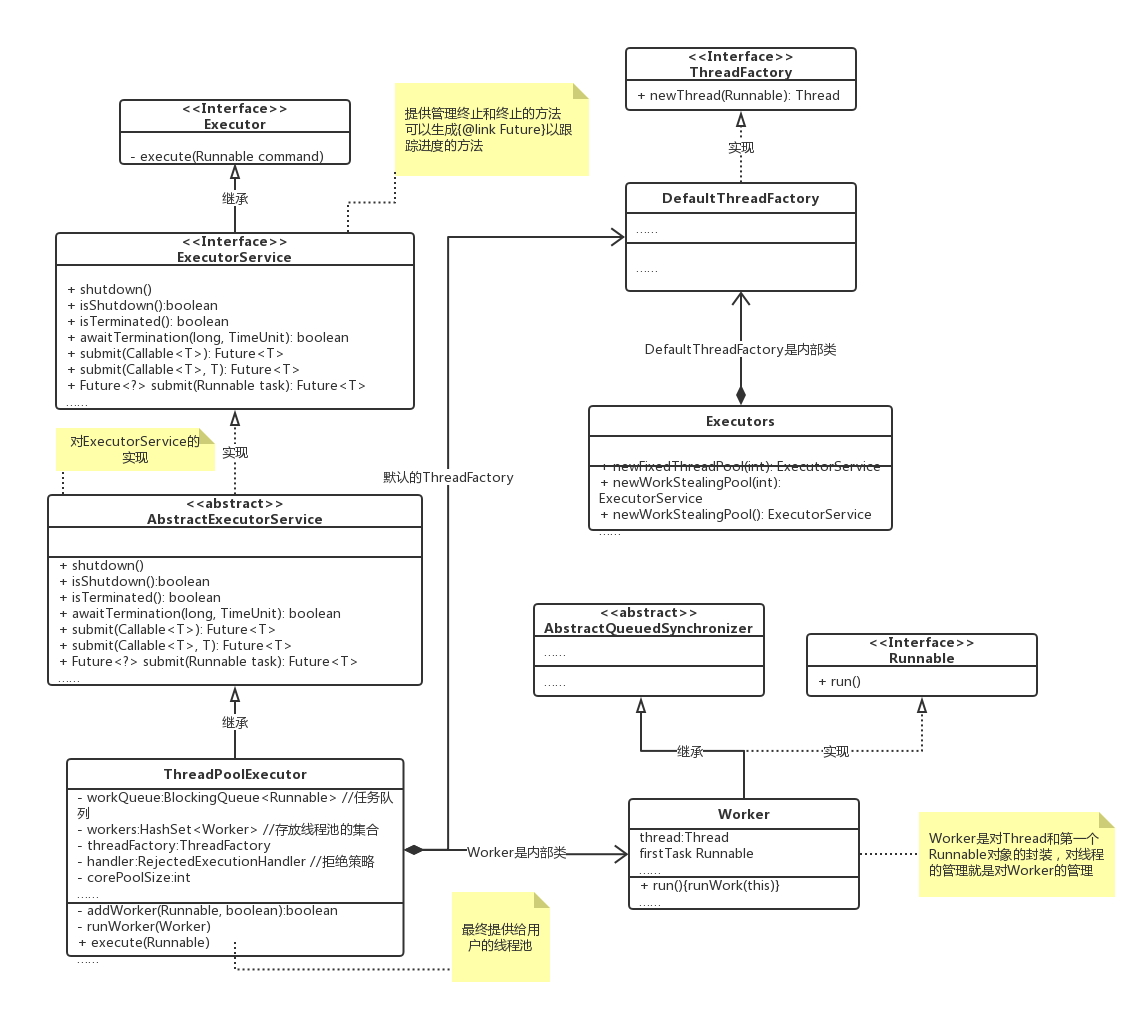
<一>创建固定数量的线程。其中参数即为固定线程的数量。
1public static ExecutorService newFixedThreadPool(int nThreads) {
2        return new ThreadPoolExecutor(nThreads, nThreads,
3                                      0L, TimeUnit.MILLISECONDS,
4                                      new LinkedBlockingQueue<Runnable>());
5    }
<二>创建可缓存的线程,线程超过60s会被回收。当缓存的没有线程可以使用时,则创建新线程使用。该情况下线程是无界的,只要想使用线程会无限的创建,除非发生内存溢出。
1public static ExecutorService newCachedThreadPool() {
2        return new ThreadPoolExecutor(0, Integer.MAX_VALUE,
3                                      60L, TimeUnit.SECONDS,
4                                      new SynchronousQueue<Runnable>());
5    }
<三>创建一个单线程化的Executor。
1public static ExecutorService newSingleThreadExecutor() {
2        return new FinalizableDelegatedExecutorService
3            (new ThreadPoolExecutor(1, 1,
4                                    0L, TimeUnit.MILLISECONDS,
5                                    new LinkedBlockingQueue<Runnable>()));
6    }
7
<四>创建一个支持定时及周期性的任务执行的线程池,多数情况下可用来替代Timer类。
1 public static ScheduledExecutorService newScheduledThreadPool(
2            int corePoolSize, ThreadFactory threadFactory) {
3        return new ScheduledThreadPoolExecutor(corePoolSize, threadFactory);
4    }