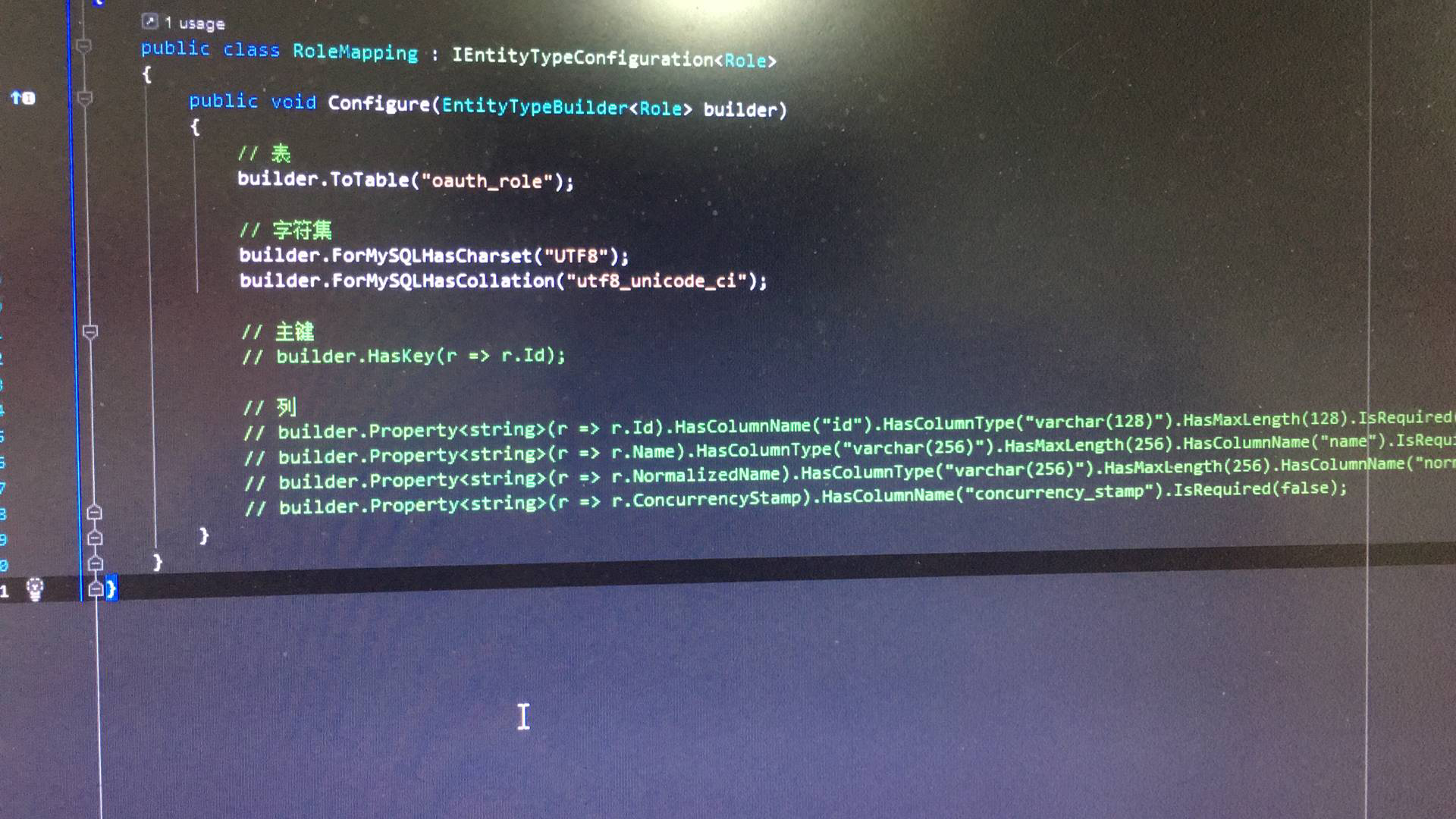
EntityFramework 有几种方式可实现数据库表与实体的关系配置(relationship)
- convention -
- annotation -
- fluent api -
使用数据注解
实体类通常是在Models目录下,直接在实体类上添加属性注解,比如[Required]/[Key]等.
1using System.ComponentModel.DataAnnotations;
2
3public class User()
4{
5    [Key]
6    public string UserId { get; set; }
7
8    [Required]
9    public string UserName { get; set; }
10}
重写配置方法
在自己实现的XxxDbContext数据库上下文类中重写配置方法,用Fluent API的方式添加所有实体的配置.
1using Microsoft.EntityFrameworkCore;
2
3public partial class XxxDbContext : DbContext
4{
5    public XxxDbContext()
6    {
7    }
8
9    public HaoyikuDbContext(DbContextOptions<HaoyikuDbContext> options)
10        : base(options)
11    {
12    }
13
14    public DbSet<User> Users { get; set; }
15
16    // 重写以下方法
17    protected override void OnModelCreating(ModelBuilder modelBuilder)
18    {
19        // 添加实体的配置
20        modelBuilder.Entity<BizOrderPush>().HasKey();
21    }
22}
实现实体类配置接口
-
新建
ModelConfigurations目录,在该目录下新增每一个实体对应的配置类.using Microsoft.EntityFrameworkCore; using Microsoft.EntityFrameworkCore.Metadata.Builders;
/// <summary> /// 用户实体-模型配置 /// </summary> public class UserConfiguration : IEntityTypeConfiguration<User> { public void Configure(EntityTypeBuilder<User> builder) { builder.HasKey(o => o.UserId); builder.Property(o => o.UserName).IsRequired(); } }
单独配置每一个实体类后,通过以下方法设置
1using Microsoft.EntityFrameworkCore;
2
3public partial class XxxDbContext : DbContext
4{
5    public XxxDbContext()
6    {
7    }
8
9    public HaoyikuDbContext(DbContextOptions<HaoyikuDbContext> options)
10        : base(options)
11    {
12    }
13
14    public DbSet<User> Users { get; set; }
15
16    // 重写以下方法
17    protected override void OnModelCreating(ModelBuilder modelBuilder)
18    {
19        // 添加实体的配置
20        modelBuilder.ApplyConfiguration(new UserConfiguration());
21        base.OnModelCreating(modelBuilder);
22    }
23}
以上几种方式可以共存,至于到底用哪种,推荐用哪种,各位看着办吧.