
Java.Utril.Concurrent
Volatile关键字
避免java虚拟机指令重排序,保证共享数据修改同步,数据可见性。volatile相较于synchronized是一种比较轻量级地同步策略,但不具备互斥性,不能成为synchronized的替代,不能保证原子性。
###示例
1package com.wang.test.juc.test_volatile;
2
3public class TestVolatile {
4    public static void main(String[] args) {
5        TestThread testThread = new TestThread();
6
7        new Thread(testThread).start();
8
9        while (true)//在线程运行后,读取线程中的flag值
10        {
11            if(testThread.isFlag()){
12                System.out.println(" get Flag success! ");
13                break;
14            }
15        }
16    }
17}
18
19class TestThread implements Runnable{
20
21    private boolean flag = false;
22
23    public boolean isFlag() {
24        return flag;
25    }
26
27    public void setFlag(boolean flag) {
28        this.flag = flag;
29    }
30
31    public void run(){
32
33        try {
34            Thread.sleep(200);
35        } catch (InterruptedException e) {
36            e.printStackTrace();
37        }
38        flag = true;
39        System.out.println("flag:" + flag);
40
41    }
42
43}
44
###分析
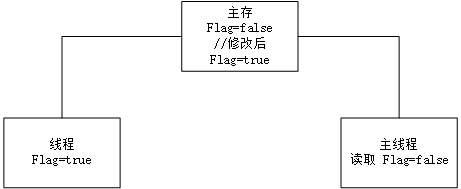
主线程中的读取操作看似在线程执行后,但并发地执行,在线程更改数据之前,主线程已经读取了数据,共享地数据flag不同步。
###修改
1public class TestVolatile {
2    public static void main(String[] args) {
3        TestThread testThread = new TestThread();
4
5        new Thread(testThread).start();
6
7        while (true)//在线程运行后,读取线程中的flag值
8        {
9            if(testThread.isFlag()){
10                System.out.println(" get Flag success! ");
11                break;
12            }
13        }
14    }
15}
16
17class TestThread implements Runnable{
18
19    private volatile boolean flag = false;
20
21    public boolean isFlag() {
22        return flag;
23    }
24
25    public void setFlag(boolean flag) {
26        this.flag = flag;
27    }
28
29    public void run(){
30        try {
31            Thread.sleep(200);
32        } catch (InterruptedException e) {
33            e.printStackTrace();
34        }
35        flag = true;
36        System.out.println("flag:" + flag);
37    }
38
39}
在Flag属性上添加volatile主方法即可读取正确值。
原子性
###示例
1package com.wang.test.juc.test_volatile;
2
3public class TestAtomic {
4    public static void main(String[] args) {
5        Atomic atomic = new Atomic();
6        Thread t1 = new Thread(atomic);
7        Thread t2 = new Thread(atomic);
8        t1.start();
9        t2.start();
10    }
11
12}
13
14class Atomic implements Runnable{
15
16    private int i =0;
17
18    public void run() {
19     while(true){
20        try {
21            Thread.sleep(200);
22        } catch (InterruptedException e) {
23            e.printStackTrace();
24        }
25System.out.println(Thread.currentThread().getName()+": "+getCountI());
26    	}
27    }
28
29    public int getCountI()
30    {
31        return i++;
32    }
33}
###分析
由于线程中操作i++不具备原子性,线程执行中,数据i的递增会出现重复问题,即i的值不会正常递增,会出现线程做出同样操作的情况。此时因为这个操作不是原子的,使用volitale修饰不能解决同步问题。 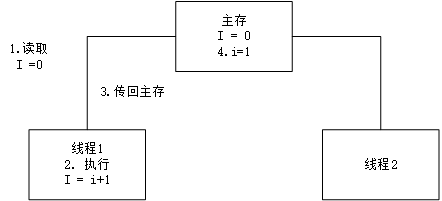
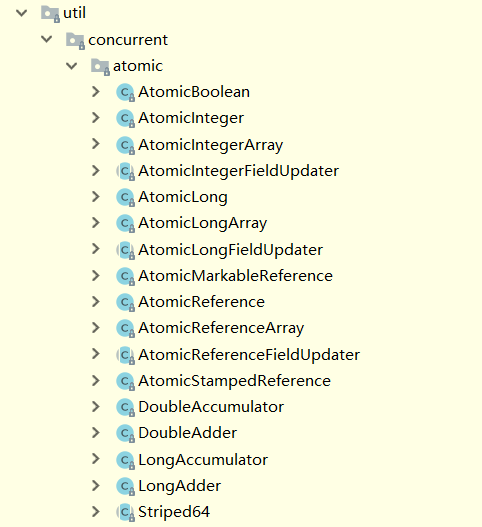
原子类
CAS算法
Compare-And-Swap算法时硬件对于并发操作共享数据的支持,包含三个操作数,内存值V、预估值A、更新值B,只有 V == A 时,V = B执行,否则不进行任何操作。
修改程序
1import java.util.concurrent.atomic.AtomicInteger;
2
3public class TestAtomic {
4    public static void main(String[] args) {
5        Atomic atomic = new Atomic();
6        Thread t1 = new Thread(atomic);
7        Thread t2 = new Thread(atomic);
8        t1.start();
9        t2.start();
10    }
11
12}
13
14class Atomic implements Runnable{
15
16
17    private AtomicInteger i = new AtomicInteger(0);
18
19    public void run() {
20        while(true){
21        try {
22            Thread.sleep(200);
23        } catch (InterruptedException e) {
24            e.printStackTrace();
25        }
26        System.out.println(Thread.currentThread().getName()+": "+getCountI());
27    }
28    }
29    public int getCountI()
30    {
31        return i.addAndGet(1);
32    }
33}
此时线程中i已经是一个原子类型,那么在对数据进行操作的时候是具备原子性的,所有线程在执行i自增时具有源自性,解决了并发问题。
ConcurrentHashMap
HashTable是线程安全的,在访问HashTable时会加上表锁,将操作转为串行,不允许有空值,效率比较低。
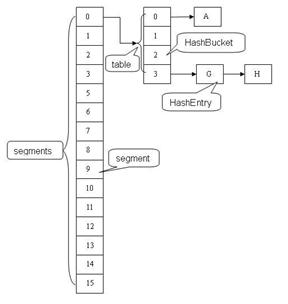
CuncurrentHashMap是线程安全的HashMap,采用锁分段机制,每个数据段都是独立的锁,在访问时,可以并行执行,提高效率
###其他 
ConcurrentSkipListMap:同步的TreeMap
CopyOnWriteArrayList:同步的ArrayList (读取和遍历大于更新)
Collections.synchronizedList(new ArrayList(String))
闭锁
CountDownLatch为同步辅助类,在完成一组正在其他线程中执行的操作之前,允许一个或多个线程一直等待。
###示例
1import java.util.concurrent.CountDownLatch;
2
3public class TestCountDownLatch {
4    public static void main(String[] args) {
5
6        final CountDownLatch countDownLatch = new CountDownLatch(2);
7      	//锁值为2
8
9        LatchLock latchLock = new LatchLock(countDownLatch);
10
11        long start = System.currentTimeMillis();
12
13        Thread t1 = new Thread(latchLock);
14        Thread t2 = new Thread(latchLock);
15        t1.start();
16        t2.start();
17
18        try {
19            countDownLatch.await();//锁不为0 主线程等待
20        } catch (InterruptedException e) {
21            e.printStackTrace();
22        }
23
24        long end = System.currentTimeMillis();
25
26        System.out.println("Time = [" + (end - start) + "mms"+"]");
27    }
28}
29
30class LatchLock implements Runnable{
31
32    private CountDownLatch countDownLatch;
33    public LatchLock(CountDownLatch countDownLatch){
34        this.countDownLatch = countDownLatch;
35    }
36    public void run() {
37       synchronized (this){
38        try {
39            for(int i=0;i<1000;i++)
40            {
41                System.out.println(Thread.currentThread().getName()+": "+i);
42            }
43        }finally {
44            countDownLatch.countDown();//线程执行一次锁减一
45        }
46       }
47    }
48}
Callable接口
此接口相较于Runnable接口,可以返回值和抛异常。
###示例
1public class TestCallable {
2
3    public static void main(String[] args) {
4        ThreadCallable testCallable = new ThreadCallable();
5
6        //执行Callable,需要使用FutureTask 实现类用于接收结果
7        FutureTask<Integer> futureTask = new FutureTask(testCallable);
8
9        Thread thread = new Thread(futureTask);
10        thread.start();
11
12        Integer result = 0;
13        try {
14            result = futureTask.get();
15          	//此方法将在线程执行结束后才会执行
16        } catch (Exception e) {
17            e.printStackTrace();
18        }
19
20        System.out.println("result = [" + result + "]");
21
22    }
23
24}
25
26class ThreadCallable implements Callable<Integer>{
27    public Integer call() throws Exception {
28        int sum = 0;
29
30        for (int i=0;i<100;i++) {
31            sum+=i;
32            System.out.println("i: "+i);
33        }
34        return sum;
35    }
36}
Lock锁
在解决同步问题时,采用synchronized关键字给代码块加锁或者给方法加锁,关键字加锁方式时隐式的,所的获取和释放由执行过程中的线程自行完成,需要显式地完成加锁和锁释放时,可以使用lock加锁方式。
示例
1package com.wang.test.juc.cchm;
2
3import java.util.concurrent.locks.Lock;
4import java.util.concurrent.locks.ReentrantLock;
5
6public class TestLock {
7    public static void main(String[] args) {
8
9        TestThread testThread = new TestThread();
10
11        Thread t1 = new Thread(testThread);
12        Thread t2 = new Thread(testThread);
13        Thread t3 = new Thread(testThread);
14
15        t1.start();
16        t2.start();
17        t3.start();
18    }
19}
20
21class TestThread implements Runnable{
22
23    private Lock lock = new ReentrantLock();//锁
24
25    private int count = 1000;
26
27    public void run() {
28        while (true){   //  自旋等待!
29            lock.lock();
30            try {
31                Thread.sleep(1);
32                if (count > 0)
33        System.out.println(Thread.currentThread().getName()+" count :"+ --count);
34            } catch (InterruptedException e) {
35                e.printStackTrace();
36            }finally {  //  finally释放锁!
37                lock.unlock();
38            }
39
40        }
41    }
42}
等待唤醒
###示例-生产者消费者
1public class TestProductorAndConsumer {
2    public static void main(String[] args) {
3
4        Clerk clerk = new Clerk();
5        Productor productor = new Productor(clerk);
6        Consumer consumer = new Consumer(clerk);
7
8        new Thread(productor,"Producter").start();
9        new Thread(consumer,"Customer").start();
10
11    }
12
13}
14
15class Clerk{
16
17    private int pruduct = 0;
18
19    public synchronized void income(){
20
21        if (pruduct >= 10){
22            System.out.println("Can not add more");
23        }else{
24            System.out.println(Thread.currentThread().getName()+": "+ ++pruduct);
25        }
26    }
27
28    public synchronized void sale(){
29
30        if (pruduct <= 0) {System.out.println("Can not sale anything!");}
31        else {
32            System.out.println(Thread.currentThread().getName()+" :"+ --pruduct);
33        }
34    }
35}
36
37class Productor implements Runnable{
38
39    private Clerk clerk;
40
41    public Productor(Clerk clerk){
42        this.clerk = clerk;
43    }
44
45    public void run(){
46        for (int i=0;i<20;i++){
47            clerk.income();
48        }
49    }
50}
51
52class Consumer implements Runnable{
53    private Clerk clerk;
54
55    public Consumer(Clerk clerk) {
56        this.clerk = clerk;
57    }
58
59    public void run() {
60        for (int i=0;i<20;i++){
61            clerk.sale();
62        }
63    }
64}
###分析
生产者消费者都会一直进行,会出现没有产品继续消费和库存已满继续生产,即没有货物依旧被多次消费,无法库存仍旧多次生产。
###改进
1public class TestProductorAndConsumer {
2    public static void main(String[] args) {
3
4        Clerk clerk = new Clerk();
5        Productor productor = new Productor(clerk);
6        Consumer consumer = new Consumer(clerk);
7
8        new Thread(productor,"Producter").start();
9        new Thread(consumer,"Customer").start();
10
11    }
12
13}
14
15class Clerk{
16
17    private int pruduct = 0;
18
19    public synchronized void income(){
20
21        if (pruduct >= 10){
22            System.out.println("Can not add more");
23            try {
24                this.wait();
25            } catch (InterruptedException e) {
26                e.printStackTrace();
27            }
28        }else{
29            System.out.println(Thread.currentThread().getName()+": "+ ++pruduct);
30            this.notifyAll();
31        }
32    }
33
34    public synchronized void sale(){
35
36        if (pruduct <= 0) {System.out.println("Can not sale anything!");
37            try {
38                this.wait();
39            } catch (InterruptedException e) {
40                e.printStackTrace();
41            }
42        }
43        else {
44            System.out.println(Thread.currentThread().getName()+" :"+ --pruduct);
45            this.notifyAll();
46        }
47    }
48}
49
50class Productor implements Runnable{
51
52    private Clerk clerk;
53
54    public Productor(Clerk clerk){
55        this.clerk = clerk;
56    }
57
58    public void run(){
59        for (int i=0;i<20;i++){
60            clerk.income();
61        }
62    }
63}
64
65class Consumer implements Runnable{
66    private Clerk clerk;
67
68    public Consumer(Clerk clerk) {
69        this.clerk = clerk;
70    }
71
72    public void run() {
73        for (int i=0;i<20;i++){
74            clerk.sale();
75        }
76    }
77}
等待唤醒,当发生满货或是销空时,进行等待。以上代码无法结束,最后一次地等待,无法被唤醒,由else引发,继续增加生产者和消费者,将会出现虚假唤醒,必须让它自旋等待。
改进 2.0
1package com.wang.test.juc.cchm;
2
3public class TestProductorAndConsumer {
4    public static void main(String[] args) {
5
6        Clerk clerk = new Clerk();
7        Productor productor = new Productor(clerk);
8        Consumer consumer = new Consumer(clerk);
9
10        new Thread(productor,"Producter").start();
11        new Thread(consumer,"Customer").start();
12        new Thread(productor,"Producter2").start();
13        new Thread(consumer,"Customer2").start();
14
15    }
16
17}
18
19class Clerk{
20
21    private int pruduct = 0;
22
23    public synchronized void income(){
24
25        while (pruduct >= 10){//自旋
26            System.out.println("Can not add more");
27            try {
28                this.wait();
29            } catch (InterruptedException e) {
30                e.printStackTrace();
31            }
32        }
33            System.out.println(Thread.currentThread().getName()+": "+ ++pruduct);
34            this.notifyAll();
35
36    }
37
38    public synchronized void sale(){
39
40        while (pruduct <= 0) {System.out.println("Can not sale anything!");
41            try {
42                this.wait();
43            } catch (InterruptedException e) {
44                e.printStackTrace();
45            }
46        }
47
48            System.out.println(Thread.currentThread().getName()+" :"+ --pruduct);
49            this.notifyAll();
50
51    }
52}
53
54class Productor implements Runnable{
55
56    private Clerk clerk;
57
58    public Productor(Clerk clerk){
59        this.clerk = clerk;
60    }
61
62    public void run(){
63        for (int i=0;i<20;i++){
64            clerk.income();
65        }
66    }
67}
68
69class Consumer implements Runnable{
70    private Clerk clerk;
71
72    public Consumer(Clerk clerk) {
73        this.clerk = clerk;
74    }
75
76    public void run() {
77        for (int i=0;i<20;i++){
78            clerk.sale();
79        }
80    }
81}
同步锁
生产消费模型
1import java.util.concurrent.locks.Condition;
2import java.util.concurrent.locks.Lock;
3import java.util.concurrent.locks.ReentrantLock;
4
5public class TestProductorAndConsumer {
6    public static void main(String[] args) {
7
8        Clerk clerk = new Clerk();
9        Productor productor = new Productor(clerk);
10        Consumer consumer = new Consumer(clerk);
11
12        new Thread(productor,"Producter").start();
13        new Thread(consumer,"Customer").start();
14        new Thread(productor,"Producter2").start();
15        new Thread(consumer,"Customer2").start();
16
17    }
18
19}
20
21class Clerk{
22
23    private int pruduct = 0;
24
25    private Lock lock = new ReentrantLock();
26
27    private Condition condition = lock.newCondition();
28  	//!!!!
29
30    public  void income(){
31
32        lock.lock();
33        try {
34                    while (pruduct >= 10){
35                        System.out.println("Can not add more");
36                        try {
37                            condition.await();
38                          	//!!!!!
39                        } catch (InterruptedException e) {
40                            e.printStackTrace();
41                        }
42                    }
43 	System.out.println(Thread.currentThread().getName()+": "+ ++pruduct);
44                    condition.signalAll();
45          					//!!!!
46
47        }finally {
48            lock.unlock();
49        }
50    }
51
52    public  void sale(){
53
54        lock.lock();
55        try {
56                while (pruduct <= 0) {System.out.println("Can not sale anything!");
57                    try {
58                        condition.await();
59                    } catch (InterruptedException e) {
60                        e.printStackTrace();
61                    }
62                }
63
64                System.out.println(Thread.currentThread().getName()+" :"+ --pruduct);
65                condition.signalAll();
66        }finally {
67            lock.unlock();
68        }
69    }
70}
71
72class Productor implements Runnable{
73
74    private Clerk clerk;
75
76    public Productor(Clerk clerk){
77        this.clerk = clerk;
78    }
79
80    public void run(){
81        for (int i=0;i<20;i++){
82            clerk.income();
83        }
84    }
85}
86
87class Consumer implements Runnable{
88    private Clerk clerk;
89
90    public Consumer(Clerk clerk) {
91        this.clerk = clerk;
92    }
93
94    public void run() {
95        for (int i=0;i<20;i++){
96            clerk.sale();
97        }
98    }
99}
示例交替打印
1import java.util.concurrent.locks.Condition;
2import java.util.concurrent.locks.Lock;
3import java.util.concurrent.locks.ReentrantLock;
4
5public class TestPrintInOrder {
6    public static void main(String[] args) {
7        final Alternate alternate = new Alternate();
8        new Thread(new Runnable() {
9            public void run() {
10
11                for (int i=0;i<20;i++){
12                    alternate.PrintA();
13                }
14            }
15        }).start();
16        new Thread(new Runnable() {
17            public void run() {
18
19                for (int i=0;i<20;i++){
20                    alternate.PrintB();
21                }
22            }
23        }).start();
24        new Thread(new Runnable() {
25            public void run() {
26
27                for (int i=0;i<20;i++){
28                    alternate.PrintC();
29                }
30            }
31        }).start();
32    }
33}
34
35class Alternate{
36    private int mark = 1;
37
38    private Lock lock = new ReentrantLock();
39    private Condition c1 =lock.newCondition();
40    private Condition c2 =lock.newCondition();
41    private Condition c3 =lock.newCondition();
42
43    public void PrintA(){
44        lock.lock();
45        try{
46            while (mark != 1){
47                c1.await();
48            }
49
50            System.out.println(Thread.currentThread().getName()+": "+"A");
51
52            mark = 2;
53            c2.signal();
54    } catch (InterruptedException e) {
55            e.printStackTrace();
56        } finally {
57
58            lock.unlock();
59        }
60    }
61
62    public void PrintB(){
63        lock.lock();
64        try{
65            while (mark != 2){
66                c2.await();
67            }
68
69            System.out.println(Thread.currentThread().getName()+": "+"B");
70
71            mark = 3;
72            c3.signal();
73        } catch (InterruptedException e) {
74            e.printStackTrace();
75        } finally {
76
77            lock.unlock();
78        }
79    }
80
81  public void PrintC(){
82        lock.lock();
83        try{
84            while (mark != 3){
85                c3.await();
86            }
87
88            System.out.println(Thread.currentThread().getName()+": "+"C");
89
90            mark = 1;
91            c1.signal();
92        } catch (InterruptedException e) {
93            e.printStackTrace();
94        } finally {
95
96            lock.unlock();
97        }
98    }
99}
读写锁
当数据在进行写入时,读取操作需要保持同步,即读写应当时互斥的,读取锁可以共享,写入锁独占。
###示例
1import java.util.concurrent.locks.ReadWriteLock;
2import java.util.concurrent.locks.ReentrantReadWriteLock;
3
4public class TestReadWriteLock {
5    public static void main(String[] args) {
6        final TestLockRW testLockRW = new TestLockRW();
7
8        new Thread(new Runnable() {
9            public void run() {
10               testLockRW.write((int)(Math.random()*1000));
11            }
12        }).start();
13
14        for (int i=0;i<20;i++){
15            new Thread(new Runnable() {
16                public void run() {
17                    testLockRW.read();
18                }
19            }).start();
20        }
21    }
22}
23
24class TestLockRW{
25
26    private int i = 0;
27
28    private ReadWriteLock readWriteLock = new ReentrantReadWriteLock();
29
30    public void read(){
31
32        readWriteLock.readLock().lock();
33        try {
34            System.out.println(Thread.currentThread().getName()+": "+i);
35        }finally {
36            readWriteLock.readLock().unlock();
37        }
38
39    }
40
41    public void write(int random){
42
43        readWriteLock.writeLock().lock();
44        try {
45            System.out.println(Thread.currentThread().getName()+": write "+random);
46            i = random;
47        }finally {
48            readWriteLock.writeLock().unlock();
49        }
50    }
51}
##线程八锁
1public class TestThread8Monitor {
2    public static void main(String[] args) {
3        Number number = new Number();
4        Number number2 = new Number();
5
6        new Thread(new Runnable() {
7            public void run() {
8                number.getOne();
9            }
10        }).start();
11        new Thread(new Runnable() {
12            public void run() {
13                number2.getTwo();
14            }
15        }).start();
16
17//        new Thread(new Runnable() {
18//            public void run() {
19//                number.getThree();
20//            }
21//        }).start();
22    }
23
24}
25
26class Number{
27    public static synchronized void getOne(){
28        try {
29            Thread.sleep(3000);
30        } catch (InterruptedException e) {
31            e.printStackTrace();
32        }
33        System.out.println("One");
34    }
35    public static synchronized void getTwo(){
36        System.out.println("Two");
37    }
38
39    public void getThree(){
40        System.out.println("Three");
41    }
42}
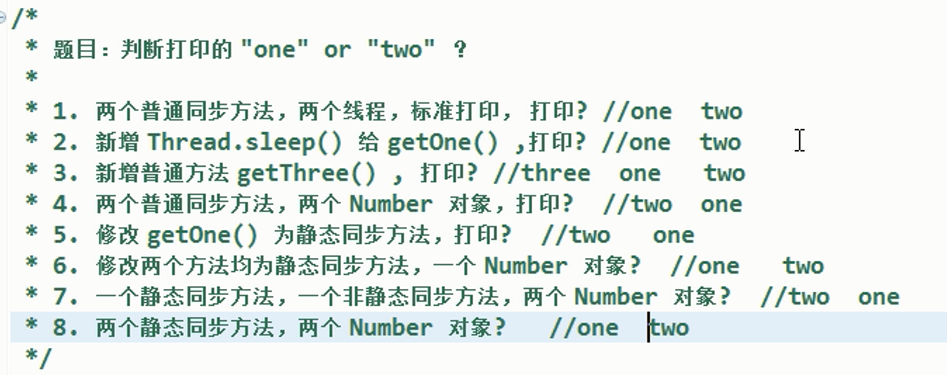
- 非静态方法的锁默认为this
- 静态方法的锁为Class实例
- 在某时刻内,只有一个线程拿到锁。
线程池
类比数据库连接池,创建线程和销毁线程比较浪费资源,建立一个线程池,线程池提供一个线程队列,队列中保存着所有等待状态的线程,在需要使用线程时直接在线程池中获取,使用完毕后,归还给线程池,提高相应速度。
体系结构
1java.util.concurrent.Executor
2	|--ExecutorService 						线程池主要接口
3		|--ThreadPoolExecutor							线程池实现类
4		|--ScheduleExecutorService				线程调度接口
5			|--ScheduledThreadPoolExecutor		继承线程池实现调度接口
6
7使用方法:
8		工具类:Executors
9		Executors.ewCachedThreadPool()				数量不固定,动态更改数量
10		Executors.newFixedThreadPool(int)			固定容量
11  	Executors.newSingleThreadExecutor()		单个线程线程池
12  	返回值类型为ExecurotService
13
14  	ScheduledThreadPoolExecutor						线程调度
15
16
17  静态方法。
18
19
20import java.util.concurrent.ExecutorService;
21import java.util.concurrent.Executors;
22
23public class TestThreadPool {
24
25    public static void main(String[] args) {
26
27        ExecutorService executorService = Executors.newCachedThreadPool();
28
29        ThreadPoolimp threadPoolimp = new ThreadPoolimp();
30
31
32        for ( int i = 0;i<1000;i++){
33
34            executorService.submit(threadPoolimp);
35          	//支持多种线程初始化参数 Runnable、Callable...
36        }
37
38        executorService.shutdown();
39
40        //new Thread(new ThreadPoolimp()).start();
41    }
42
43}
44class ThreadPoolimp implements Runnable{
45    private int i = 0;
46
47    public void run() {
48        while(true){
49            System.out.println(Thread.currentThread().getName()+" :"+ ++i);
50        }
51    }
52}
53
54
55
56
57
58public class TestScheduledThreadPool {
59    public static void main(String[] args) throws ExecutionException, InterruptedException {
60
61        ScheduledExecutorService pool = Executors.newScheduledThreadPool(5);
62
63        Future<Integer> future = pool.schedule(new Callable<Integer>() {
64            public Integer call() throws Exception {
65                int i =1;
66                System.out.println(Thread.currentThread().getName());
67                return i;
68            }
69        },5, TimeUnit.SECONDS);//延迟时间  时间单位
70
71        System.out.println(future.get());
72        pool.shutdown();
73    }
74}
75
分支合并框架
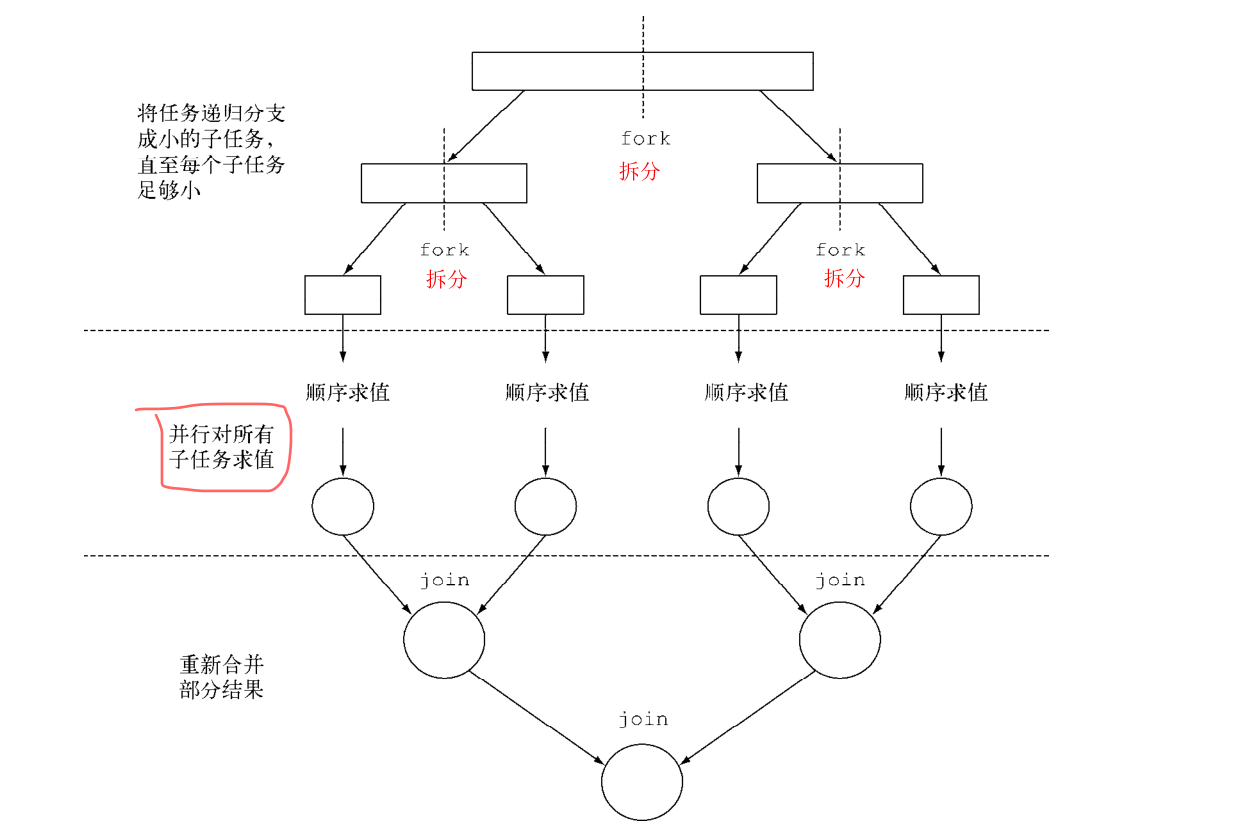
在必要的情况下,将一个大人物,进行拆分,拆分成若干的小人物,再将一个个小任务的运算结果进行汇总。
1import java.util.concurrent.ForkJoinPool;
2import java.util.concurrent.RecursiveTask;
3
4public class TestForkJoinPool {
5    public static void main(String[] args) {
6
7        ForkJoinPool pool = new ForkJoinPool();
8        ForkSun forkSun = new ForkSun(0L, 1000000000L);
9        Long sum = pool.invoke(forkSun);
10        System.out.println("sum = [" + sum + "]");
11
12    }
13}
14class ForkSun extends RecursiveTask<Long>{
15
16    private static final long serialVersionUID = 7430797084800536110L;
17    private long start;
18    private long end;
19
20    private static final long max = 10000l;
21
22    public ForkSun(long start, long end) {
23        this.start = start;
24        this.end = end;
25    }
26
27    protected Long compute() {
28        long len = end - start;
29        if(len <= max){
30            long sum = 0L;
31            for(long i = start;i<=end;i++)
32            {
33                sum+=i;
34            }
35            return sum;
36        }else {
37            long middle = (start + end)/2;
38            ForkSun left = new ForkSun(start,middle);
39            left.fork();
40            ForkSun right = new ForkSun(middle+1,end);
41            right.fork();
42
43            return left.join() + right.join();
44        }
45
46    }
47}