
##基本概念
LinkedBlockingQueue 是一个用链表实现的有界阻塞队列。
LinkedBlockingQueue 按照先进先出的原则对元素进行排序。
LinkedBlockingQueue 采用了双锁、双条件队列来提高读写效率。
##内部构造
LinkedBlockingQueue 内部维护着一个单向链表,且链表头节点的值永远为空。如下图所示:
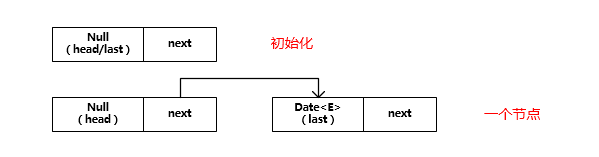
下面来看它的构成:
-
Node ,节点
static class Node<E> { E item;
1Node<E> next;
2
3Node(E x) {
4	item = x;
5}
}
-
构造函数
private transient Node<E> head; private transient Node<E> last; private final int capacity;
public LinkedBlockingQueue() { // 该队列是有界的,若不指定容量,默认为最大值 this(Integer.MAX_VALUE); }
public LinkedBlockingQueue(int capacity) { if (capacity <= 0){ // 抛出异常... }
1this.capacity = capacity;
2last = head = new Node<E>(null);
}
##双锁机制
由于采用了双锁机制,因此它的出队、入队操作可以同时进行,从而提高效率。
1// 用于入队操作
2private final ReentrantLock putLock = new ReentrantLock();
3private final Condition notFull = putLock.newCondition();
4
5// 用于出队操作
6private final ReentrantLock takeLock = new ReentrantLock();
7private final Condition notEmpty = takeLock.newCondition();
由于出入队可以同时进行,因此必须避免冲突问题。
-
同一元素操作冲突:由于 LinkedBlockingQueue 采用了 FIFO(先进先出)的原则,实际上是双端操作,不会存在冲突。并且在其内部定义了两个变量:head、last。
// 出队修改头节点 private transient Node<E> head;
// 入队修改尾节点 private transient Node<E> last;
-
元素数量操作冲突:因为入队数量要+1,出队数量要-1,因此需要保证它的可见性,这里采用了这里采用原子类来实现:
private final AtomicInteger count = new AtomicInteger(0);
##入队操作
-
offer,该操作成功返回 true,失败返回 false。
public boolean offer(E e) { if (e == null){ // 抛出异常... }
1// 判断元素的个数是否超过容量4
2final AtomicInteger count = this.count;
3if (count.get() == capacity){
4	return false;
5}
6
7int c = -1;
8
9Node<E> node = new Node(e);
10
11// 加锁
12final ReentrantLock putLock = this.putLock;
13putLock.lock();
14
15try {
16	// 再次判断,存在等待获取锁期间,其他线程执行入队操作。
17	if (count.get() < capacity) {
18		// 入队操作
19		enqueue(node);
20
21		// 注意:数量+1,返回的旧值
22		c = count.getAndIncrement();
23		if (c + 1 < capacity){
24			// 队列未满,唤醒因为队列满而阻塞的线程
25			notFull.signal();
26		}
27	}
28} finally {
29	putLock.unlock();
30}
31
32// 为 0 表示之前队列是空的,唤醒出队时因为空队列而进入 notEmpty 条件等待队列的线程
33if (c == 0){
34	signalNotEmpty();
35}
36
37return c >= 0;
}
-
put,该操作成功返回 true,失败则进入阻塞。
private final AtomicInteger count = new AtomicInteger(0);
public void put(E e) throws InterruptedException {
1if (e == null){
2	// 抛出异常...
3}
4
5int c = -1;
6Node<E> node = new Node(e);
7final ReentrantLock putLock = this.putLock;
8final AtomicInteger count = this.count;
9putLock.lockInterruptibly();
10
11try {
12
13	// 满队列,进入条件等待队列,线程阻塞
14	while (count.get() == capacity) {
15		notFull.await();
16	}
17
18	// 关键-> 入队操作
19	enqueue(node);
20
21	c = count.getAndIncrement();
22	if (c + 1 < capacity){
23		notFull.signal();
24	}
25
26} finally {
27	putLock.unlock();
28}
29
30if (c == 0){
31	signalNotEmpty();
32}
}
-
关键
private void enqueue(Node<E> node) { last = last.next = node; }
private void signalNotEmpty() { final ReentrantLock takeLock = this.takeLock; takeLock.lock(); try { notEmpty.signal(); } finally { takeLock.unlock(); } }
-
入队操作的过程如下所示:

##出队操作
-
poll,成功返回被移除的元素,失败返回 null。
public E poll() { final AtomicInteger count = this.count; if (count.get() == 0){ return null; }
1E x = null;
2int c = -1;
3
4// 加锁
5final ReentrantLock takeLock = this.takeLock;
6takeLock.lock();
7
8try {
9	if (count.get() > 0) {
10		// 关键 -> 出队
11		x = dequeue();
12		c = count.getAndDecrement();
13		if (c > 1){
14			notEmpty.signal();
15		}
16	}
17} finally {
18	takeLock.unlock();
19}
20
21// 表示出队前满队列,唤醒因入队时满队列而进入 notFull 条件等待队列的线程。
22if (c == capacity){
23	signalNotFull();
24}
25return x;
}
-
take,成功返回被移除的元素,失败则线程阻塞。
public E take() throws InterruptedException { E x; int c = -1; final AtomicInteger count = this.count; final ReentrantLock takeLock = this.takeLock; takeLock.lockInterruptibly(); try { // 空队列,进入条件等待队列,线程阻塞 while (count.get() == 0) { notEmpty.await(); } x = dequeue(); c = count.getAndDecrement(); if (c > 1){ notEmpty.signal(); }
1} finally {
2	takeLock.unlock();
3}
4
5if (c == capacity){
6	signalNotFull();
7}
8
9return x;
}
-
关键
private E dequeue() { // 头节点、以及它的后继节点 Node<E> h = head; Node<E> first = h.next;
1// 等于 h.next = null,即断开后指针
2h.next = h;
3
4// 设置新的头节点
5head = first;
6
7E x = first.item;
8
9// 将节点的值置空
10first.item = null;
11return x;
}
private void signalNotFull() { final ReentrantLock putLock = this.putLock; putLock.lock(); try { notFull.signal(); } finally { putLock.unlock(); } }
-
出队过程如下图所示:
