
在多线程开发中停止线程是很重要的技术点。停止线程在Java语言中并不像break语句那样干脆,需要一些技巧性的处理。
一、 异常法
采用异常法来停止一个线程,首先我们需要了解一下两个方法的用法:
1、interrupt()方法
1public class MyThread extends Thread{
2	@Override
3	public void run() {
4		for (int i = 1; i <= 10000; i++) {
5			System.out.println("i="+i);
6		}
7	}
8	public static void main(String[] args)throws Exception {
9		MyThread thread=new MyThread();
10		thread.start();
11		thread.sleep(10);
12		thread.interrupt();
13	}
14}
上面的例子调用interrupt()方法来停止线程,但interrupt()方法的使用效果并不像for+break语句那样,马上就能停止循环。调用interrupt()方法仅仅是在当前线程打了一个停止的标记,并不是真的停止。那么如果停止线程了?我们接着往下面看。
2、判断线程是否是停止状态
1)、 interrupted()
1public class MyThread extends Thread{
2	@Override
3	public void run() {
4		for (int i = 1; i <= 10000; i++) {
5			System.out.println("i="+i);
6		}
7	}
8	public static void main(String[] args)throws Exception {
9		try{
10			MyThread thread=new MyThread();
11			thread.start();
12			thread.sleep(100);
13			thread.interrupt();
14			System.out.println("线程停止了吗1?--->"+thread.interrupted());
15			System.out.println("线程停止了吗2?--->"+thread.interrupted());
16		}catch(Exception e){
17			e.printStackTrace();
18		}
19		System.out.println("end");
20
21	}
22}
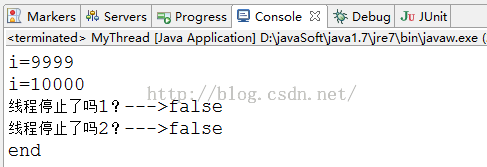
从控制台打印的结果来看,线程没有停止,这就是说,interrupted()测试当前线程是否中断,因为这个当前线程就是main,它没有中断过,所以打印的结果是两个false。
如何使main线程产生中断效果了。我们在看下,下面的例子:
1public class MyThread{
2	public static void main(String[] args){
3		Thread.currentThread().interrupt();
4		System.out.println("线程停止了吗1?---->"+Thread.interrupted());
5		System.out.println("线程停止了吗2?---->"+Thread.interrupted());
6		System.out.println("end");
7	}
8}
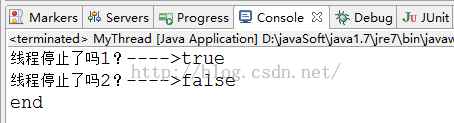
从上面的结果来看,interrupted()方法的确判断当前线程是否是停止状态。但是为什么第2个值是false。原来,连续两次调用该方法第一次会清除中断状态后,第二次调用所以返回flase。
2)、 isInterrupted()
1public class MyThread extends Thread{
2	@Override
3	public void run() {
4		for (int i = 1; i <= 10000; i++) {
5			System.out.println("i="+i);
6		}
7	}
8	public static void main(String[] args){
9		try{
10			MyThread thread=new MyThread();
11			thread.start();
12			thread.sleep(10);
13			thread.interrupt();
14			System.out.println("线程停止了吗1?--->"+thread.isInterrupted());
15			System.out.println("线程停止了吗2?--->"+thread.isInterrupted());
16		}catch(Exception e){
17			e.printStackTrace();
18		}
19		System.out.println("end");
20
21	}
22}
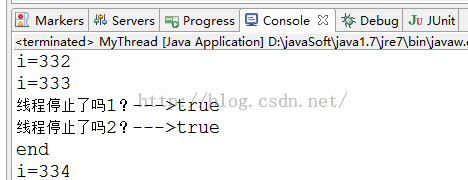
从结果看出方法isInterrupted()并未清除,所以打印出了两个true.
3、停止线程
1public class MyThread extends Thread{
2	@Override
3	public void run() {
4		for (int i = 1; i <= 10000; i++) {
5			if(this.interrupted()){
6				System.out.println("线程是停止状态了,我要退出了.");
7				break;
8			}
9			System.out.println("i="+i);
10		}
11		System.out.println("如果此处还是循环,那么我就会继续执行.线程并没有停止");
12	}
13	public static void main(String[] args){
14		try{
15			MyThread thread=new MyThread();
16			thread.start();
17			thread.sleep(10);
18			thread.interrupt();
19			System.out.println("end");
20		}catch(Exception e){
21			e.printStackTrace();
22		}
23	}
24}
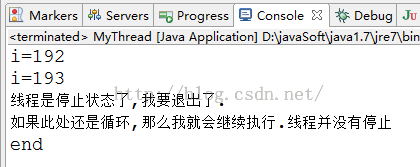
如果这么写的话,线程并没有停止。现在我们在修改下代码,也就是所谓的异常法停止线程。
1public class MyThread extends Thread{
2	@Override
3	public void run() {
4		try{
5			for (int i = 1; i <= 10000; i++) {
6				if(this.interrupted()){
7					System.out.println("线程是停止状态了,我要退出了.");
8					throw new InterruptedException();
9				}
10				System.out.println("i="+i);
11			}
12			System.out.println("我被执行了吗?");
13		}catch(InterruptedException e){
14			System.out.println("---这次线程停了---");
15			e.printStackTrace();
16		}
17	}
18	public static void main(String[] args){
19		try{
20			MyThread thread=new MyThread();
21			thread.start();
22			thread.sleep(10);
23			thread.interrupt();
24			System.out.println("end");
25		}catch(Exception e){
26			e.printStackTrace();
27		}
28	}
29}
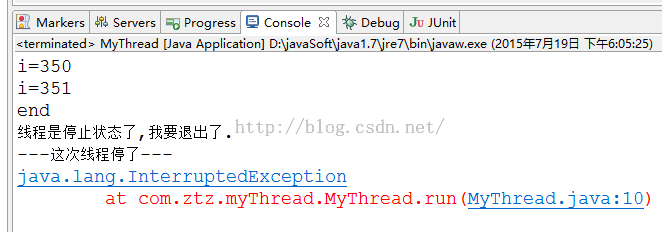
二、 在沉睡中停止
如果线程在sleep()状态下停止线程会有什么效果了?
1public class MyThread extends Thread{
2	@Override
3	public void run() {
4		try{
5			System.out.println("run start");
6			Thread.sleep(1000000);
7			System.out.println("run end");
8		}catch(InterruptedException e){
9			System.out.println("sleep被停止,状态:--->"+this.isInterrupted());
10			e.printStackTrace();
11		}
12	}
13	public static void main(String[] args){
14		try{
15			MyThread thread=new MyThread();
16			thread.start();
17			thread.interrupt();
18			thread.sleep(1000);
19		}catch(Exception e){
20			System.out.println("main catch");
21			e.printStackTrace();
22		}
23	}
24}
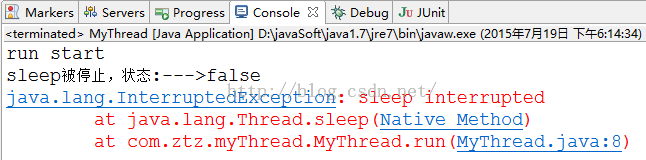
从结果我们可以看出,在线程睡眠时候停止某一线程,会异常,并且清除停止状态。我们前面异常停止线程,都是先睡眠,在停止线程,与之相反的操作,我写代码的时候需要注意下。
1public class MyThread extends Thread{
2	@Override
3	public void run() {
4		try{
5			for (int i = 1; i <= 10000; i++) {
6				System.out.println("i="+i);
7			}
8			System.out.println("run start");
9			Thread.sleep(1000000);
10			System.out.println("run end");
11		}catch(InterruptedException e){
12			System.out.println("线程被停止了,在sleep,状态:--->"+this.isInterrupted());
13			e.printStackTrace();
14		}
15	}
16	public static void main(String[] args){
17		try{
18			MyThread thread=new MyThread();
19			thread.start();
20			thread.interrupt();
21		}catch(Exception e){
22			System.out.println("main catch");
23			e.printStackTrace();
24		}
25	}
26}
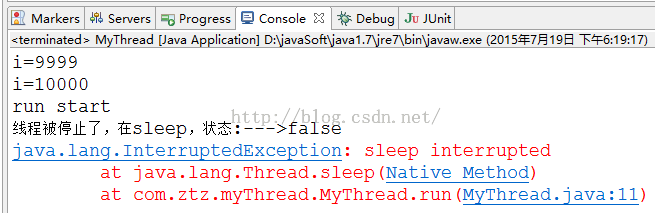
三、 暴力停止
1public class MyThread extends Thread{
2	private int i=0;
3	@Override
4	public void run() {
5		try{
6			while (true) {
7				i++;
8				System.out.println("i="+i);
9				Thread.sleep(1000);
10			}
11		}catch(Exception e){
12			e.printStackTrace();
13		}
14	}
15	public static void main(String[] args){
16		try{
17			MyThread thread=new MyThread();
18			thread.start();
19			Thread.sleep(6000);
20			thread.stop();
21		}catch(Exception e){
22			e.printStackTrace();
23		}
24	}
25}

stop()方法已经被弃用,如果强制让线程停止,可以会有一些清理工作没得到完成,还有就是对锁定的对象进行了解锁,导致数据不同步的现象,所以开发时候禁止使用该方法去暴力停止线程。
四、 使用return停止线程
1public class MyThread extends Thread{
2	private int i=0;
3	@Override
4	public void run() {
5		try{
6			while (true) {
7				i++;
8				if(this.interrupted()){
9					System.out.println("线程停止了");
10					return;
11				}
12				System.out.println("i="+i);
13			}
14		}catch(Exception e){
15			e.printStackTrace();
16		}
17	}
18	public static void main(String[] args){
19		try{
20			MyThread thread=new MyThread();
21			thread.start();
22			Thread.sleep(2000);
23			thread.interrupt();
24		}catch(Exception e){
25			e.printStackTrace();
26		}
27	}
28}
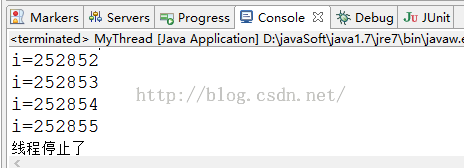
PS:不过还是建议使用异常法来停止线程,因为在catch块中还可以将异常向上抛,使线程停止事件得到传播。
版权声明:本文为博主原创文章,未经博主允许不得转载。