前言:由于搜集网络,发现Protostuff相关内容较少,故此发布这篇文章
1. 何为序列化
序列化 (Serialization)将对象的状态信息转换为可以存储或传输的形式的过程。在序列化期间,对象将其当前状态写入到临时或持久性存储区。以后,可以通过从存储区中读取或反序列化对象的状态,重新创建该对象。
序列化使其他代码可以查看或修改那些不序列化便无法访问的对象实例数据。确切地说,代码执行序列化需要特殊的权限:即指定了 SerializationFormatter 标志的 SecurityPermission。在默认策略下,通过 Internet 下载的代码或 Internet 代码不会授予该权限;只有本地计算机上的代码才被授予该权限。
通常,对象实例的所有字段都会被序列化,这意味着数据会被表示为实例的序列化数据。这样,能够解释该格式的代码有可能能够确定这些数据的值,而不依赖于该成员的可访问性。类似地,反序列化从序列化的表示形式中提取数据,并直接设置对象状态,这也与可访问性规则无关。
对于任何可能包含重要的安全性数据的对象,如果可能,应该使该对象不可序列化。如果它必须为可序列化的,请尝试生成特定字段来保存不可序列化的重要数据。如果无法实现这一点,则应注意该数据会被公开给任何拥有序列化权限的代码,并确保不让任何恶意代码获得该权限。
2. 常见的序列化有哪些
Xml、Json、JDK传统序列化、Protobuf序列化 (随口举例,笔者也懒得去收集了)
3. 序列化体积对比
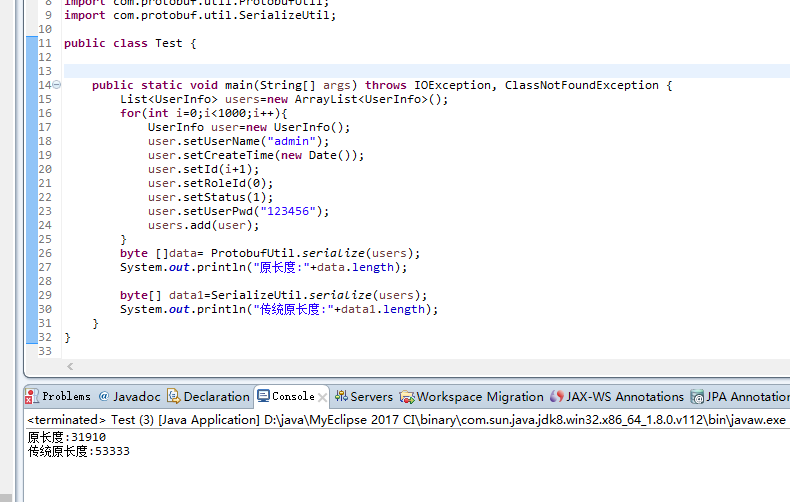
理论分析结论:Xml >或< Jdk原生> Json > Protobuf
其中在某些特殊场景下,Json可能大于Jdk,Xml可能大于或小于Jdk。
原理分析:传统的Xml序列化,以字段名开头,字段名结尾,存在一个字段冗余,在某些特定的级别格式下,Xml报文长度过量冗余。
:Json序列化,某些Json序列化可能将空字段也序列化出来,如:{“user”:”null”},在过滤空的场景下,Json序列化内容比Jdk传统序列化体积小
:Jdk传统序列化,即实现Serializable接口的对象或数据模型转化为Byte数组,内容包含类信息、字段信息等,故此体积较大
:Protobuf序列化,讲对象或数据模型中有效的内容转化成Byte数组,不包括类信息与数据模型,再反序列化时需要指定目标数据结构,根据数据结构类型对应反序列化,由于仅仅包含内容,故此体积最小
4. 序列效率对比
根据第3点理论原理分析我们不难看出来,xml和json实际效率相差不多,可能就在于xml稍多的内容读写,故此xml效率低于json
由于json序列化和反序列化是完全基于反射,故此,json效率低于Jdk原生序列化
Jdk原生序列化属于基于半反射完成,效率高于Json
而Protobuf,相比jdk原生序列化来说,少做了很多事情,故此Protobuf效率较jdk原生序列化高出很多(排除谷歌对Protobuf的特定算法带来的优势)。
5. 图标分析
笔者并非传说中的那么蛋疼,故此在网络收集相关评测结果。
来源:http://blog.csdn.net/antgan/article/details/52103966
详细评测:http://www.52im.net/thread-772-1-1.html
6. 在JAVA中如何使用
maven引入:
1		<dependency>
2			<groupId>com.dyuproject.protostuff</groupId>
3			<artifactId>protostuff-core</artifactId>
4			<version>1.0.12</version>
5		</dependency>
6		<dependency>
7			<groupId>com.dyuproject.protostuff</groupId>
8			<artifactId>protostuff-runtime</artifactId>
9			<version>1.0.12</version>
10		</dependency>
工具类:
1package com.protobuf.util;
2
3import java.io.ByteArrayInputStream;
4import java.io.ByteArrayOutputStream;
5import java.io.IOException;
6import java.io.Serializable;
7import java.lang.reflect.Field;
8import java.util.ArrayList;
9import java.util.Collection;
10import java.util.HashSet;
11import java.util.List;
12import java.util.Map;
13import java.util.Set;
14import java.util.concurrent.ConcurrentHashMap;
15
16import com.dyuproject.protostuff.LinkedBuffer;
17import com.dyuproject.protostuff.ProtostuffIOUtil;
18import com.dyuproject.protostuff.Schema;
19import com.dyuproject.protostuff.runtime.RuntimeSchema;
20
21@SuppressWarnings("unchecked")
22public class ProtobufUtil {
23
24
25	private static Map<Class<?>, Schema<?>> cachedSchema = new ConcurrentHashMap<Class<?>, Schema<?>>();
26
27	private static Map<Class<?>, Field> wrapperMap = new ConcurrentHashMap<Class<?>, Field>();
28
29	private static Map<Class<?>, Object> unWrapperMap = new ConcurrentHashMap<Class<?>, Object>();
30
31
32	private static <T> Schema<T> getSchema(Class<T> cls) {
33		Schema<T> schema = (Schema<T>) cachedSchema.get(cls);
34		if (schema == null) {
35			schema = RuntimeSchema.createFrom(cls);
36			if (schema != null) {
37				cachedSchema.put(cls, schema);
38			}
39		}
40		return schema;
41	}
42
43	/**
44	 * 序列化
45	 *
46	 * @param obj
47	 * @return
48	 */
49	public static <T> byte[] serialize(T obj) {
50		if (isNullOrEmpty(obj)) {
51			return null;
52		}
53		try {
54			if(List.class.isAssignableFrom(obj.getClass())){
55				List<T> list=(List<T>)obj;
56				Class<?> clazz=list.get(0).getClass();
57				byte [] data=serializeList(list);
58				CustomWrapper wrapper=new CustomWrapper(clazz,data);
59				return serializeT(wrapper);
60			}
61			if(Set.class.isAssignableFrom(obj.getClass())){
62				List<T> list=new ArrayList<T>((Set<T>)obj);
63				Class<?> clazz=list.get(0).getClass();
64				byte [] data=serializeList(list);
65				CustomWrapper wrapper=new CustomWrapper(clazz,data);
66				return serializeT(wrapper);
67			}
68			if(ValueWrapper.isSpecialType(obj.getClass())){
69				ValueWrapper wrapper=new ValueWrapper(obj);
70				return serializeT(wrapper);
71			}
72			return serializeT(obj);
73		} catch (Exception e) {
74			e.printStackTrace();
75			return null;
76		}
77
78	}
79	  public static <T> byte[] serializeList(List<T> objList) {
80	    	if (objList == null || objList.isEmpty()) {
81	            throw new RuntimeException("序列化对象列表(" + objList + ")参数异常!");
82	        }
83	        Schema<T> schema = (Schema<T>) RuntimeSchema.getSchema(objList.get(0).getClass());
84	        LinkedBuffer buffer = LinkedBuffer.allocate(1024 * 1024);
85	        byte[] protostuff = null;
86	        ByteArrayOutputStream bos = null;
87	        try {
88	            bos = new ByteArrayOutputStream();
89	            ProtostuffIOUtil.writeListTo(bos, objList, schema, buffer);
90	            protostuff = bos.toByteArray();
91	        } catch (Exception e) {
92	            throw new RuntimeException("序列化对象列表(" + objList + ")发生异常!", e);
93	        } finally {
94	            buffer.clear();
95	            try {
96	                if(bos!=null){
97	                    bos.close();
98	                }
99	            } catch (IOException e) {
100	                e.printStackTrace();
101	            }
102	        }
103	        return protostuff;
104	    }
105
106	private static <T> byte[] serializeT(T obj) {
107		Class<T> cls = (Class<T>) obj.getClass();
108		LinkedBuffer buffer = LinkedBuffer.allocate(LinkedBuffer.MIN_BUFFER_SIZE);
109		try {
110			Schema<T> schema = getSchema(cls);
111			return ProtostuffIOUtil.toByteArray(obj, schema, buffer);
112		} catch (Exception e) {
113			throw new IllegalStateException(e.getMessage(), e);
114		} finally {
115			buffer.clear();
116		}
117	}
118
119
120	/**
121	 * 反序列化
122	 *
123	 * @param data
124	 * @param cls
125	 * @return
126	 */
127
128	public static <T> T unSerialize(byte[] data,Class<?> clazz) {
129		if (isNullOrEmpty(data)) {
130			return null;
131		}
132		try {
133			if(List.class.isAssignableFrom(clazz)){
134				CustomWrapper wrapper= unSerializeT(data, CustomWrapper.class);
135				return (T) unSerializeList(data, wrapper.getClazz());
136			}
137			if(Set.class.isAssignableFrom(clazz)){
138				CustomWrapper wrapper= unSerializeT(data, CustomWrapper.class);
139				return (T) unSerializeSet(data, wrapper.getClazz());
140			}
141			if(ValueWrapper.isSpecialType(clazz)){
142				ValueWrapper wrapper= unSerializeT(data, ValueWrapper.class);
143				if(wrapper==null||isNullOrEmpty(wrapper)){
144					return null;
145				}
146				return wrapper.getValue();
147			}
148			return (T) unSerializeT(data, clazz);
149		} catch (Exception e) {
150			e.printStackTrace();
151			return null;
152		}
153
154	}
155	 public static <T> Set<T> unSerializeSet(byte[] data, Class<T> clazz) {
156	       if (data == null || data.length == 0) {
157	            throw new RuntimeException("反序列化对象发生异常,byte序列为空!");
158	        }
159
160	        Schema<T> schema = RuntimeSchema.getSchema(clazz);
161	        try {
162	           List<T> list = ProtostuffIOUtil.parseListFrom(new ByteArrayInputStream(data), schema);
163	           return new HashSet<T>(list);
164	        } catch (IOException e) {
165	            throw new RuntimeException("反序列化对象列表发生异常!",e);
166	        }
167	    }
168
169	  public static <T> List<T> unSerializeList(byte[] data, Class<T> clazz) {
170	       if (data == null || data.length == 0) {
171	            throw new RuntimeException("反序列化对象发生异常,byte序列为空!");
172	        }
173
174	        Schema<T> schema = RuntimeSchema.getSchema(clazz);
175	        List<T> result = null;
176	        try {
177	            result = ProtostuffIOUtil.parseListFrom(new ByteArrayInputStream(data), schema);
178	        } catch (IOException e) {
179	            throw new RuntimeException("反序列化对象列表发生异常!",e);
180	        }
181	        return result;
182	    }
183	private static <T> T unSerializeT(byte[] data, Class<T> cls) {
184		try {
185			T message = cls.newInstance();
186			Schema<T> schema = getSchema(cls);
187			ProtostuffIOUtil.mergeFrom(data, message, schema);
188			return message;
189		} catch (Exception e) {
190			throw new IllegalStateException(e.getMessage(), e);
191		}
192	}
193
194
195	public static boolean isNullOrEmpty(Object obj) {
196		try {
197			if (obj == null)
198				return true;
199			if (obj instanceof CharSequence) {
200				return ((CharSequence) obj).length() == 0;
201			}
202			if (obj instanceof Collection) {
203				return ((Collection<?>) obj).isEmpty();
204			}
205			if (obj instanceof Map) {
206				return ((Map<?, ?>) obj).isEmpty();
207			}
208			if (obj instanceof Object[]) {
209				Object[] object = (Object[]) obj;
210				if (object.length == 0) {
211					return true;
212				}
213				boolean empty = true;
214				for (int i = 0; i < object.length; i++) {
215					if (!isNullOrEmpty(object[i])) {
216						empty = false;
217						break;
218					}
219				}
220				return empty;
221			}
222			return false;
223		} catch (Exception e) {
224			e.printStackTrace();
225			return true;
226		}
227
228	}
229
230
231	@SuppressWarnings({  "serial" })
232	public static class CustomWrapper  implements Serializable{
233
234		private Class<?> clazz;
235
236		private byte []data;
237
238		public CustomWrapper(){}
239
240		public CustomWrapper(Class<?> clazz,byte[] data){
241			this.clazz=clazz;
242			this.data=data;
243		}
244
245		public byte[] getData() {
246			return data;
247		}
248
249		public void setData(byte[] data) {
250			this.data = data;
251		}
252
253		public Class<?> getClazz() {
254			return clazz;
255		}
256
257		public void setClazz(Class<?> clazz) {
258			this.clazz = clazz;
259		}
260
261
262	}
263
264
265	@SuppressWarnings({ "rawtypes", "serial", "unused" })
266	public static class ValueWrapper implements Serializable{
267
268
269		private Map mapValue;
270
271		private List listValue;
272
273		private Collection collectionValue;
274
275		private Iterable iterableValue;
276
277		private Set setValue;
278
279		private String stringValue;
280
281		private Byte byteValue;
282
283		private Short shortValue;
284
285		private Long longValue;
286
287		private Integer integerValue;
288
289		private Double doubleValue;
290
291		private Float floatValue;
292
293		private Character characterValue;
294
295		private Boolean booleanValue;
296
297
298		public ValueWrapper(){}
299
300		public ValueWrapper(Object data) throws IllegalArgumentException, IllegalAccessException {
301			if (data == null) {
302				return;
303			}
304				if (isNullOrEmpty(wrapperMap)) {
305					initFiledType();
306				}
307				if (wrapperMap.containsKey(data.getClass())) {
308					Field f = wrapperMap.get(data.getClass());
309					f.setAccessible(true);
310					f.set(this, data);
311				}
312				for (Class<?> clazz : wrapperMap.keySet()) {
313					if (!clazz.isAssignableFrom(data.getClass())) {
314						continue;
315					}
316					Field f = wrapperMap.get(clazz);
317					f.setAccessible(true);
318					f.set(this, data);
319					wrapperMap.put(data.getClass(), f);
320					return;
321				}
322		}
323
324		public static  boolean isSpecialType(Class<?> clazz){
325			if (isNullOrEmpty(wrapperMap)) {
326				initFiledType();
327			}
328			if(unWrapperMap.containsKey(clazz)){
329				return false;
330			}
331			if(wrapperMap.containsKey(clazz)){
332				return true;
333			}
334			for (Class<?> clazzTmp : wrapperMap.keySet()) {
335				if (!clazzTmp.isAssignableFrom(clazz)) {
336					continue;
337				}
338				Field f = wrapperMap.get(clazzTmp);
339				f.setAccessible(true);
340				wrapperMap.put(clazz, f);
341				return true;
342			}
343			unWrapperMap.put(clazz, clazz);
344			return false;
345		}
346		private static void initFiledType() {
347			Field[] fields = ValueWrapper.class.getDeclaredFields();
348			for (Field f : fields) {
349				wrapperMap.put(f.getType(), f);
350			}
351		}
352
353		public <T> T getValue() throws IllegalArgumentException, IllegalAccessException {
354				for (Class<?> clazz : wrapperMap.keySet()) {
355					T result = (T) wrapperMap.get(clazz).get(this);
356					if (isNullOrEmpty(result)) {
357						continue;
358					}
359					return result;
360				}
361				return null;
362		}
363
364	}
365
366
367}
测试图: