上文地址:SpringSecurityOAuth2(1)(password,authorization_code,refresh_token,client_credentials)获取token
上一篇博客写了一个至简的OAuth2的token认证服务器,只实现了4种获取token的方式 ,对于异常处理,以及无权处理,生成token前的数据完整性校验等等没有涉及,该篇文章对于这些内容做一些补充:
OAUth2的认证适配器AuthorizationServerConfigurerAdapter有三个主要的方法:
-
AuthorizationServerSecurityConfigurer:
配置令牌端点(Token Endpoint)的安全约束
-
ClientDetailsServiceConfigurer:
配置客户端详细服务, 客户端的详情在这里进行初始化
-
AuthorizationServerEndpointsConfigurer:
配置授权(authorization)以及令牌(token)的访问端点和令牌服务(token services)
1、请求前客户端信息完整校验
对于携带数据不完整的请求,可以直接返回给前端,不需要经过后面的验证 client信息一般以Base64编码放在Authorization 中 例如编码前为
1client_name:111  (client_id:client_secret Base64编码)
2Basic Y2xpZW50X25hbWU6MTEx
新建一个ClientDetailsAuthenticationFilter继承OncePerRequestFilter
1/**
2 * @Description 客户端不带完整client处理
3 * @Author wwz
4 * @Date 2019/07/30
5 * @Param
6 * @Return
7 */
8@Component
9public class ClientDetailsAuthenticationFilter extends OncePerRequestFilter {
10
11    private ClientDetailsService clientDetailsService;
12
13    @Override
14    protected void doFilterInternal(HttpServletRequest request, HttpServletResponse response, FilterChain filterChain) throws ServletException, IOException {
15        // 只有获取token的时候需要携带携带客户端信息,放过其他
16        if (!request.getRequestURI().equals("/oauth/token")) {
17            filterChain.doFilter(request, response);
18            return;
19        }
20        String[] clientDetails = this.isHasClientDetails(request);
21
22        if (clientDetails == null) {
23            ResponseVo resultVo = new ResponseVo(HttpStatus.UNAUTHORIZED.value(), "请求中未包含客户端信息");
24            HttpUtilsResultVO.writerError(resultVo, response);
25            return;
26        }
27        this.handle(request, response, clientDetails, filterChain);
28    }
29    private void handle(HttpServletRequest request, HttpServletResponse response, String[] clientDetails, FilterChain filterChain) throws IOException, ServletException {
30        Authentication authentication = SecurityContextHolder.getContext().getAuthentication();
31
32        if (authentication != null && authentication.isAuthenticated()) {
33            filterChain.doFilter(request, response);
34            return;
35        }
36
37
38        MyClientDetails details = (MyClientDetails) this.getClientDetailsService().loadClientByClientId(clientDetails[0]);
39        UsernamePasswordAuthenticationToken token =
40                new UsernamePasswordAuthenticationToken(details.getClientId(), details.getClientSecret(), details.getAuthorities());
41
42        SecurityContextHolder.getContext().setAuthentication(token);
43
44
45        filterChain.doFilter(request, response);
46    }
47    /**
48     * 判断请求头中是否包含client信息,不包含返回null  Base64编码
49     */
50    private String[] isHasClientDetails(HttpServletRequest request) {
51
52        String[] params = null;
53
54        String header = request.getHeader(HttpHeaders.AUTHORIZATION);
55
56        if (header != null) {
57
58            String basic = header.substring(0, 5);
59
60            if (basic.toLowerCase().contains("basic")) {
61
62                String tmp = header.substring(6);
63                String defaultClientDetails = new String(Base64.getDecoder().decode(tmp));
64
65                String[] clientArrays = defaultClientDetails.split(":");
66
67                if (clientArrays.length != 2) {
68                    return params;
69                } else {
70                    params = clientArrays;
71                }
72
73            }
74        }
75        String id = request.getParameter("client_id");
76        String secret = request.getParameter("client_secret");
77
78        if (header == null && id != null) {
79            params = new String[]{id, secret};
80        }
81        return params;
82    }
83    public ClientDetailsService getClientDetailsService() {
84        return clientDetailsService;
85    }
86
87    public void setClientDetailsService(ClientDetailsService clientDetailsService) {
88        this.clientDetailsService = clientDetailsService;
89    }
90}
然后在AuthorizationServerSecurityConfigurer中加入过滤链
1   /**
2     * 配置令牌端点(Token Endpoint)的安全约束
3     */
4    @Override
5    public void configure(AuthorizationServerSecurityConfigurer oauthServer) throws Exception {
6        // 加载client的 获取接口
7        clientDetailsAuthenticationFilter.setClientDetailsService(clientDetailsService);
8        // 客户端认证之前的过滤器
9        oauthServer.addTokenEndpointAuthenticationFilter(clientDetailsAuthenticationFilter);
10        oauthServer
11                .tokenKeyAccess("permitAll()")
12                .checkTokenAccess("isAuthenticated()")
13                .allowFormAuthenticationForClients();   // 允许表单登录
14    }
验证效果:
未携带client信息
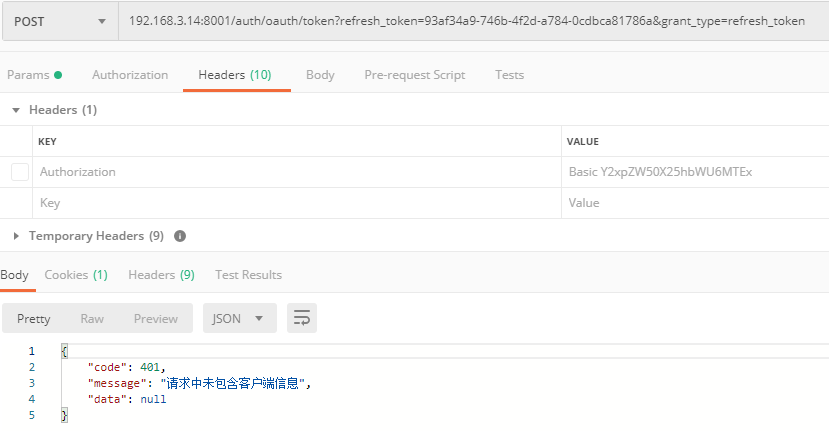
携带client信息

2、自定义异常返回格式
OAuth2自带的异常返回格式是:
1 {
2 	"error": "invalid_grant",
3 	"error_description": "Bad credentials"
4 }
这个格式对前端来说不是很友好,我们期望的格式是:
1{
2   "code":401,
3   "msg":"msg"
4}
下面是具体实现:
新建MyOAuth2WebResponseExceptionTranslator实现 WebResponseExceptionTranslator接口 重写ResponseEntity<Oauth2Exception> translate(Exception e)方法; 认证发送的异常在这里捕获,认证发生的异常在这里能捕获到,在这里我们可以将我们的异常信息封装成统一的格式返回即可,这里怎么处理因项目而异,这里我直接复制了DefaultWebResponseExceptionTranslator 实现方法
1/**
2 * @Description WebResponseExceptionTranslator
3 * @Author wwz
4 * @Date 2019/07/30
5 * @Param
6 * @Return
7 */
8@Component
9public class MyOAuth2WebResponseExceptionTranslator implements WebResponseExceptionTranslator<OAuth2Exception> {
10
11    private ThrowableAnalyzer throwableAnalyzer = new DefaultThrowableAnalyzer();
12
13    @Override
14    public ResponseEntity<OAuth2Exception> translate(Exception e) throws Exception {
15
16        // Try to extract a SpringSecurityException from the stacktrace
17        Throwable[] causeChain = throwableAnalyzer.determineCauseChain(e);
18
19        // 异常栈获取 OAuth2Exception 异常
20        Exception ase = (OAuth2Exception) throwableAnalyzer.getFirstThrowableOfType(
21                OAuth2Exception.class, causeChain);
22
23        // 异常栈中有OAuth2Exception
24        if (ase != null) {
25            return handleOAuth2Exception((OAuth2Exception) ase);
26        }
27        ase = (AuthenticationException) throwableAnalyzer.getFirstThrowableOfType(AuthenticationException.class,
28                causeChain);
29        if (ase != null) {
30            return handleOAuth2Exception(new UnauthorizedException(e.getMessage(), e));
31        }
32
33        ase = (AccessDeniedException) throwableAnalyzer
34                .getFirstThrowableOfType(AccessDeniedException.class, causeChain);
35        if (ase instanceof AccessDeniedException) {
36            return handleOAuth2Exception(new ForbiddenException(ase.getMessage(), ase));
37        }
38
39        ase = (HttpRequestMethodNotSupportedException) throwableAnalyzer
40                .getFirstThrowableOfType(HttpRequestMethodNotSupportedException.class, causeChain);
41        if (ase instanceof HttpRequestMethodNotSupportedException) {
42            return handleOAuth2Exception(new MethodNotAllowed(ase.getMessage(), ase));
43        }
44
45        // 不包含上述异常则服务器内部错误
46        return handleOAuth2Exception(new ServerErrorException(HttpStatus.INTERNAL_SERVER_ERROR.getReasonPhrase(), e));
47    }
48
49    private ResponseEntity<OAuth2Exception> handleOAuth2Exception(OAuth2Exception e) throws IOException {
50
51        int status = e.getHttpErrorCode();
52        HttpHeaders headers = new HttpHeaders();
53        headers.set("Cache-Control", "no-store");
54        headers.set("Pragma", "no-cache");
55        if (status == HttpStatus.UNAUTHORIZED.value() || (e instanceof InsufficientScopeException)) {
56            headers.set("WWW-Authenticate", String.format("%s %s", OAuth2AccessToken.BEARER_TYPE, e.getSummary()));
57        }
58
59        MyOAuth2Exception exception = new MyOAuth2Exception(e.getMessage(), e);
60
61        ResponseEntity<OAuth2Exception> response = new ResponseEntity<OAuth2Exception>(exception, headers,
62                HttpStatus.valueOf(status));
63
64        return response;
65
66    }
67
68    public void setThrowableAnalyzer(ThrowableAnalyzer throwableAnalyzer) {
69        this.throwableAnalyzer = throwableAnalyzer;
70    }
71
72    @SuppressWarnings("serial")
73    private static class ForbiddenException extends OAuth2Exception {
74
75        public ForbiddenException(String msg, Throwable t) {
76            super(msg, t);
77        }
78
79        public String getOAuth2ErrorCode() {
80            return "access_denied";
81        }
82
83        public int getHttpErrorCode() {
84            return 403;
85        }
86
87    }
88
89    @SuppressWarnings("serial")
90    private static class ServerErrorException extends OAuth2Exception {
91
92        public ServerErrorException(String msg, Throwable t) {
93            super(msg, t);
94        }
95
96        public String getOAuth2ErrorCode() {
97            return "server_error";
98        }
99
100        public int getHttpErrorCode() {
101            return 500;
102        }
103
104    }
105
106    @SuppressWarnings("serial")
107    private static class UnauthorizedException extends OAuth2Exception {
108
109        public UnauthorizedException(String msg, Throwable t) {
110            super(msg, t);
111        }
112
113        public String getOAuth2ErrorCode() {
114            return "unauthorized";
115        }
116
117        public int getHttpErrorCode() {
118            return 401;
119        }
120
121    }
122
123    @SuppressWarnings("serial")
124    private static class MethodNotAllowed extends OAuth2Exception {
125
126        public MethodNotAllowed(String msg, Throwable t) {
127            super(msg, t);
128        }
129
130        public String getOAuth2ErrorCode() {
131            return "method_not_allowed";
132        }
133
134        public int getHttpErrorCode() {
135            return 405;
136        }
137
138    }
139}
定义自己的OAuth2Exception格式 MyOAuth2Exception
1/**
2* @Description 异常格式
3* @Author wwz
4* @Date 2019/07/30
5* @Param
6* @Return
7*/
8@JsonSerialize(using = MyOAuthExceptionJacksonSerializer.class)
9public class MyOAuth2Exception extends OAuth2Exception {
10    public MyOAuth2Exception(String msg, Throwable t) {
11        super(msg, t);
12
13    }
14    public MyOAuth2Exception(String msg) {
15        super(msg);
16
17    }
18}
定义异常的MyOAuth2Exception的序列化类 MyOAuth2ExceptionJacksonSerializer
1/**
2* @Description 定义异常MyOAuth2Exception的序列化
3* @Author wwz
4* @Date 2019/07/11
5* @Param
6* @Return
7*/
8public class MyOAuthExceptionJacksonSerializer extends StdSerializer<MyOAuth2Exception> {
9
10    protected MyOAuthExceptionJacksonSerializer() {
11        super(MyOAuth2Exception.class);
12    }
13
14    @Override
15    public void serialize(MyOAuth2Exception value, JsonGenerator jgen, SerializerProvider serializerProvider) throws IOException {
16        jgen.writeStartObject();
17        jgen.writeObjectField("code", value.getHttpErrorCode());
18        jgen.writeStringField("msg", value.getSummary());
19        jgen.writeEndObject();
20    }
21}
将定义好的异常处理 加入到授权配置的 AuthorizationServerEndpointsConfigurer配置中
1    /**
2     * 配置授权(authorization)以及令牌(token)的访问端点和令牌服务(token services)
3     */
4    @Override
5    public void configure(AuthorizationServerEndpointsConfigurer endpoints) throws Exception {
6        endpoints
7                .tokenStore(tokenStore())  // 配置token存储
8                .userDetailsService(userDetailsService)  // 配置自定义的用户权限数据,不配置会导致token无法刷新
9                .authenticationManager(authenticationManager)
10                .tokenServices(defaultTokenServices())// 加载token配置
11                .exceptionTranslator(webResponseExceptionTranslator);  // 自定义异常返回
12    }
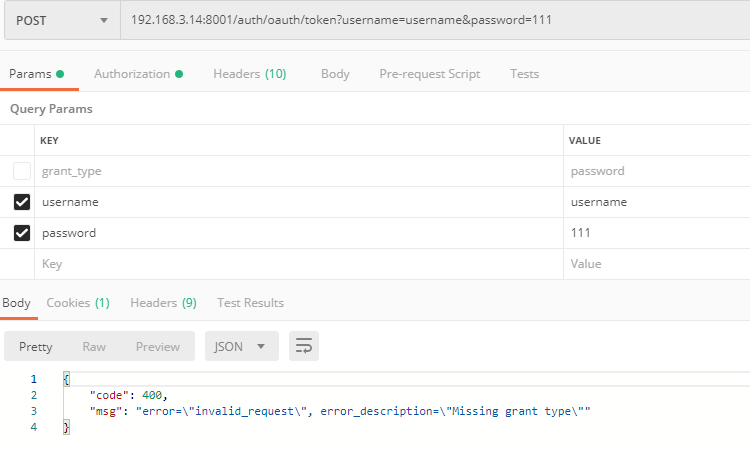
演示效果:
3、自定义无权访问处理器
默认的无权访问返回格式是:
1{
2    "error": "access_denied",
3    "error_description": "不允许访问"
4}
我们期望的格式是:
1{
2   "code":401,
3   "msg":"msg"
4}
新建一个MyAccessDeniedHandler 实现AccessDeniedHandler,自定义返回信息:
1/**
2 * @Description 无权访问处理器
3 * @Author wwz
4 * @Date 2019/07/30
5 * @Param
6 * @Return
7 */
8@Component
9public class MyAccessDeniedHandler implements AccessDeniedHandler {
10    @Override
11    public void handle(HttpServletRequest request, HttpServletResponse response, AccessDeniedException accessDeniedException) throws IOException, ServletException {
12        ResponseVo resultVo = new ResponseVo();
13        resultVo.setMessage("无权访问!");
14        resultVo.setCode(403);
15        HttpUtilsResultVO.writerError(resultVo, response);
16    }
17}
在ResourceServerConfigurerAdapter资源配置中增加
http.exceptionHandling().accessDeniedHandler(accessDeniedHandler); // 无权处理器

因为我在请求上增加了注解权限只能ROLE_USER用户访问,然后我登录的是ROLE_ADMIN用户,所以无权处理。
1 @GetMapping("/hello")
2    @PreAuthorize("hasRole('ROLE_USER')")
3    public String hello(Principal principal) {
4        return principal.getName() + " has hello Permission";
5    }
4、自定义token无效处理器
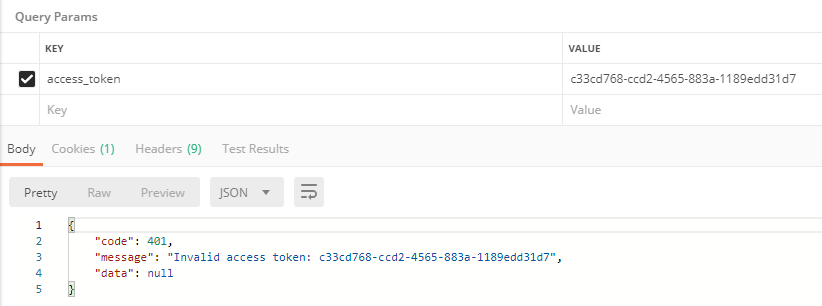
默认的token无效返回信息是:
1{
2    "error": "invalid_token",
3    "error_description": "Invalid access token: 78df4214-8e10-46ae-a85b-a8f5247370a"
4}
我们期望的格式是:
1{
2   "code":403,
3   "msg":"msg"
4}
新建MyTokenExceptionEntryPoint 实现AuthenticationEntryPoint
1/**
2 * @Description 无效Token返回处理器
3 * @Author wwz
4 * @Date 2019/07/30
5 * @Param
6 * @Return
7 */
8@Component
9public class MyTokenExceptionEntryPoint implements AuthenticationEntryPoint {
10    @Override
11    public void commence(HttpServletRequest request, HttpServletResponse response, AuthenticationException authException) throws IOException, ServletException {
12        Throwable cause = authException.getCause();
13        response.setStatus(HttpStatus.OK.value());
14        response.setHeader("Content-Type", "application/json;charset=UTF-8");
15        try {
16             HttpUtilsResultVO.writerError(new ResponseVo(401, authException.getMessage()), response);
17        } catch (IOException e) {
18            e.printStackTrace();
19        }
20    }
21}
在 资源配置中ResourceServerConfigurerAdapter中注入:
1@Override
2    public void configure(ResourceServerSecurityConfigurer resources) throws Exception {
3        resources.authenticationEntryPoint(tokenExceptionEntryPoint); // token失效处理器
4        resources.resourceId("auth"); // 设置资源id  通过client的 scope 来判断是否具有资源权限
5    }
展示效果: