
1 什么是SPI
SPI 全称Service Provider Interface。面向接口编程中,我们会根据不同的业务抽象出不同的接口,然后根据不同的业务实现建立不同规则的类,因此一个接口会实现多个实现类,在具体调用过程中,指定对应的实现类,当业务发生变化时会导致新增一个新的实现类,亦或是导致已经存在的类过时,就需要对调用的代码进行变更,具有一定的侵入性。
整体机制图如下:
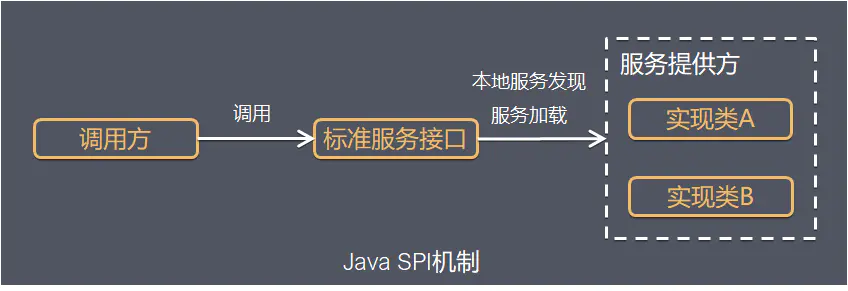
Java SPI 实际上是“基于接口的编程+策略模式+配置文件”组合实现的动态加载机制。
2 SPI在京喜业务中的使用
2.1 简介
目前仓储中台和京喜BP的合作主要通过SPI扩展点的方式。好处就是对修改封闭、对扩展开放,中台不需要关心BP的业务实现细节,通过对不同BP配置扩展点的接口来达到个性化的目的。目前京喜BP主要提供两种方式的接口实现,一种是jar包的方式,一种是提供jsf接口。
下边来分别介绍下两种方式的定义和实现。
2.2 jar包方式
2.2.1 说明及示例
扩展点接口继承IDomainExtension,这个接口是dddplus包中的一个插件化接口,实现类要使用Extension(io.github.dddplus.annotation)注解,标记BP业务方和接口识别名称,用来做个性化的区分实现。
以在库库存盘点扩展点为例,接口定义在调用方提供的jar中,定义如下:
1public interface IProfitLossEnrichExt extends IDomainExtension {
2    @Valid
3    @Comment({"批量盘盈亏数据丰富扩展", "扩展的属性请放到对应明细的 extendContent.extendAttr Map字段中:profitLossBatchDetail.putExtendAttr(key, value)"})
4    List<ProfitLossBatchDetailExt> enrich(@NotEmpty List<ProfitLossBatchDetailExt> var1);
5}
实现类定义在服务提供方的jar中,如下:
1实现类:/**
2 * ProfitLossEnrichExtImpl
3 * 批量盘盈亏数据丰富扩展
4 *
5 * @author jiayongqiang6
6 * @date 2021-10-15 11:30
7 */
8@Extension(code = IPartnerIdentity.JX_CODE, value = "jxProfitLossEnrichExt")
9@Slf4j
10public class ProfitLossEnrichExtImpl implements IProfitLossEnrichExt {
11    private SkuInfoQueryService skuInfoQueryService;
12
13    @Override
14    public @Valid @Comment({"批量盘盈亏数据丰富扩展", "扩展的属性请放到对应明细的 extendContent.extendAttr Map字段中:profitLossBatchDetail" +
15            ".putExtendAttr(key, value)"}) List<ProfitLossBatchDetailExt> enrich(@NotEmpty List<ProfitLossBatchDetailExt> list) {
16        ...
17        return list;
18    }
19
20    @Autowired
21    public void setSkuInfoQueryService(SkuInfoQueryService skuInfoQueryService) {
22        this.skuInfoQueryService = skuInfoQueryService;
23    }
24}
这个实现类会依赖主数据的jsf服务SkuQueryService,SkuInfoQueryService对SkuQueryService进行rpc封装调用。通过Autowired的方式注入进来,消费者需要定义在xml文件中,这个跟我们通常引入jsf消费者是一样的。示例如下:jx/spring-jsf-consumer.xml
1<?xml version="1.0" encoding="UTF-8"?>
2<beans xmlns="http://www.springframework.org/schema/beans" xmlns:xsi="http://www.w3.org/2001/XMLSchema-instance"
3       xmlns:jsf="http://jsf.jd.com/schema/jsf"
4       xsi:schemaLocation="http://www.springframework.org/schema/beans
5       http://www.springframework.org/schema/beans/spring-beans-3.0.xsd
6       http://jsf.jd.com/schema/jsf
7       http://jsf.jd.com/schema/jsf/jsf.xsd"
8       default-lazy-init="false" default-autowire="byName">
9    <jsf:consumer id="skuQueryService" interface="com.jdwl.wms.masterdata.api.sku.SkuQueryService"
10                  alias="${jsf.consumer.masterdata.alias}" protocol="jsf" check="false" timeout="10000"  retries="3"/>
11</beans>
jar包的使用方可以直接加载consumer资源文件,也可以依赖得服务直接手动加到工程目录下。第一种方式更加方便,但是容易引起冲突,第二种方式虽然麻烦,但能够避免冲突。
2.2.2 扩展点的测试
因为扩展点依赖杰夫的关系,所以需要在配置文件中添加注册中心的配置和依赖服务的相关配置。示例如下:application-config.properties
1jsf.consumer.masterdata.alias=wms6-test
2jsf.registry.index=i.jsf.jd.com
通过在单元测试中加载consumer资源文件和配置文件把相关的依赖都加载进来,就能够实现对接口的贯穿调用测试。如下代码所示:
1package com.zhongyouex.wms.spi.inventory;
2
3import com.alibaba.fastjson.JSON;
4import com.jdwl.wms.inventory.spi.difference.entity.ProfitLossBatchDetailExt;
5import com.zhongyouex.wms.spi.inventory.service.SkuInfoQueryService;
6import org.junit.Before;
7import org.junit.Ignore;
8import org.junit.Test;
9import org.junit.runner.RunWith;
10import org.mockito.MockitoAnnotations;
11import org.springframework.boot.autoconfigure.EnableAutoConfiguration;
12import org.springframework.boot.autoconfigure.jdbc.DataSourceAutoConfiguration;
13import org.springframework.context.annotation.ComponentScan;
14import org.springframework.context.annotation.PropertySource;
15import org.springframework.test.context.ContextConfiguration;
16import org.springframework.test.context.junit4.SpringJUnit4ClassRunner;
17
18import javax.annotation.Resource;
19import java.util.ArrayList;
20import java.util.List;
21
22@RunWith(SpringJUnit4ClassRunner.class)
23@ContextConfiguration({"classpath:jx/spring-jsf-consumer.xml"})
24@PropertySource(value = {"classpath:application-config.properties"})
25@EnableAutoConfiguration(exclude = {DataSourceAutoConfiguration.class})
26@ComponentScan(basePackages = {"com.zhongyouex.wms"})
27public class ProfitLossEnrichExtImplTest {
28    @Resource
29    SkuInfoQueryService skuInfoQueryService;
30
31    ProfitLossEnrichExtImpl profitLossEnrichExtImpl = new ProfitLossEnrichExtImpl();
32
33    @Before
34    public void setUp() {
35        MockitoAnnotations.initMocks(this);
36    }
37
38    @Test
39    public void testEnrich() throws Exception {
40        profitLossEnrichExtImpl.setSkuInfoQueryService(skuInfoQueryService);
41        ProfitLossBatchDetailExt ext = new ProfitLossBatchDetailExt();
42        ext.setSku("100008483105");
43        ext.setWarehouseNo("6_6_618");
44        ProfitLossBatchDetailExt ext1 = new ProfitLossBatchDetailExt();
45        ext1.setSku("100009847591");
46        ext1.setWarehouseNo("6_6_618");
47        List<ProfitLossBatchDetailExt> list = new ArrayList<>();
48        list.add(ext);
49        list.add(ext1);
50        profitLossEnrichExtImpl.enrich(list);
51        System.out.write(JSON.toJSONBytes(list));
52    }
53}
54
55//Generated with love by TestMe :) Please report issues and submit feature requests at: http://weirddev.com/forum#!/testme
2.3 jsf接口方式
jsf方式的扩展点实现和jar包方式是一样的,区别是这种方式不需要依赖服务提供方实现的jar,无需加载具体的实现类。通过配置jsf接口的杰夫别名来识别扩展点并进行扩展点的调用。
3 SPI原理分析
3.1dddplus
dddplus-runtime包中ExtensionDef主要是用来加载扩展点bean到InternalIndexer:
1public void prepare(@NotNull Object bean) {
2    this.initialize(bean);
3    InternalIndexer.prepare(this);
4}
5
6private void initialize(Object bean) {
7    Extension extension = (Extension)InternalAopUtils.getAnnotation(bean, Extension.class);
8    this.code = extension.code();
9    this.name = extension.name();
10    if (!(bean instanceof IDomainExtension)) {
11        throw BootstrapException.ofMessage(new String[]{bean.getClass().getCanonicalName(), " MUST implement IDomainExtension"});
12    } else {
13        this.extensionBean = (IDomainExtension)bean;
14        Class[] var3 = InternalAopUtils.getTarget(this.extensionBean).getClass().getInterfaces();
15        int var4 = var3.length;
16
17        for(int var5 = 0; var5 < var4; ++var5) {
18            Class extensionBeanInterfaceClazz = var3[var5];
19            if (extensionBeanInterfaceClazz.isInstance(this.extensionBean)) {
20                this.extClazz = extensionBeanInterfaceClazz;
21                log.debug("{} has ext instance:{}", this.extClazz.getCanonicalName(), this);
22                break;
23            }
24        }
25
26    }
27}
3.2 java spi
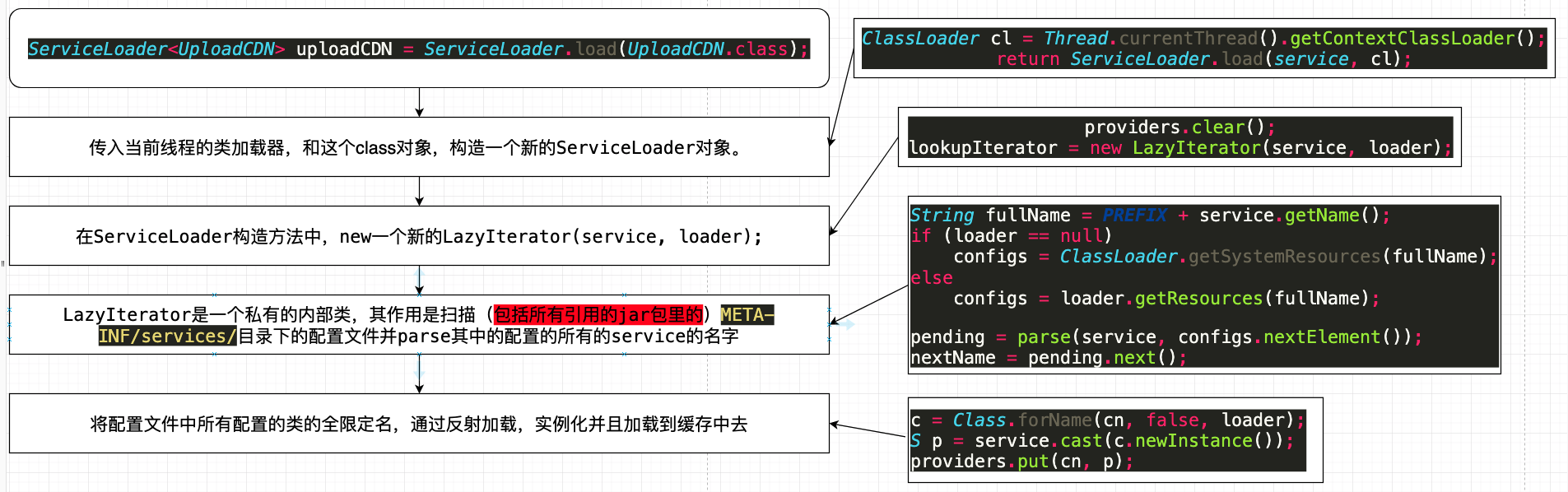
通过上面简单的demo,可以看到最关键的实现就是ServiceLoader这个类,可以看下这个类的源码,如下:
1public final class ServiceLoader<S> implements Iterable<S> {
2 2 3 4     //扫描目录前缀 5     private static final String PREFIX = "META-INF/services/";
3 6 7     // 被加载的类或接口 8     private final Class<S> service;
4 910     // 用于定位、加载和实例化实现方实现的类的类加载器11     private final ClassLoader loader;
51213     // 上下文对象14     private final AccessControlContext acc;
61516     // 按照实例化的顺序缓存已经实例化的类17     private LinkedHashMap<String, S> providers = new LinkedHashMap<>();
71819     // 懒查找迭代器20     private java.util.ServiceLoader.LazyIterator lookupIterator;
82122     // 私有内部类,提供对所有的service的类的加载与实例化23     private class LazyIterator implements Iterator<S> {
924         Class<S> service;
1025         ClassLoader loader;
1126         Enumeration<URL> configs = null;
1227         String nextName = null;
132829         //...30         private boolean hasNextService() {
1431             if (configs == null) {
1532                 try {
1633                     //获取目录下所有的类34                     String fullName = PREFIX + service.getName();
1735                     if (loader == null)
1836                         configs = ClassLoader.getSystemResources(fullName);
1937                     else38                         configs = loader.getResources(fullName);
2039                 } catch (IOException x) {
2140                     //...41                 }
2242                 //....43             }
2344         }
244546         private S nextService() {
2547             String cn = nextName;
2648             nextName = null;
2749             Class<?> c = null;
2850             try {
2951                 //反射加载类52                 c = Class.forName(cn, false, loader);
3053             } catch (ClassNotFoundException x) {
3154             }
3255             try {
3356                 //实例化57                 S p = service.cast(c.newInstance());
3458                 //放进缓存59                 providers.put(cn, p);
3560                 return p;
3661             } catch (Throwable x) {
3762                 //..63             }
3864             //..65         }
3966     }
4067 }
上面的代码只贴出了部分关键的实现,有兴趣的读者可以自己去研究,下面贴出比较直观的spi加载的主要流程供参考:
4 总结
SPI的两种提供方式各有优缺点,jar包方式部署成本低、依赖多,增加调用方的配置成本;jsf接口方式部署成本高,但调用方依赖少,只需要通过别名识别不同的BP。
总结下spi能带来的好处:
- 不需要改动源码就可以实现扩展,解耦。
- 实现扩展对原来的代码几乎没有侵入性。
- 只需要添加配置就可以实现扩展,符合开闭原则。
作者:京东物流 贾永强
来源:京东云开发者社区 自猿其说Tech 转载请注明来源