
一、Elasticsearch
Elasticsearch是一个基于Apache Lucene的开源的实时分布式搜索和分析引擎。
1. 分布式
- 低成本,高可用,高效
- 配置简单,轻松搭建集群,易扩展
2. 实时
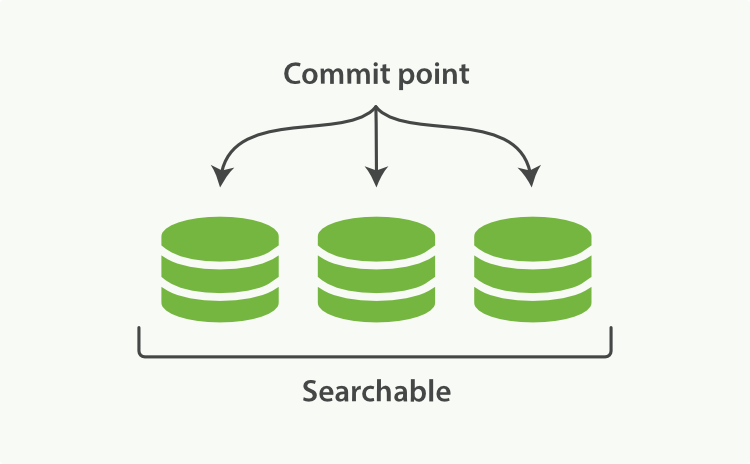
- 当前索引有 3 个文档可用
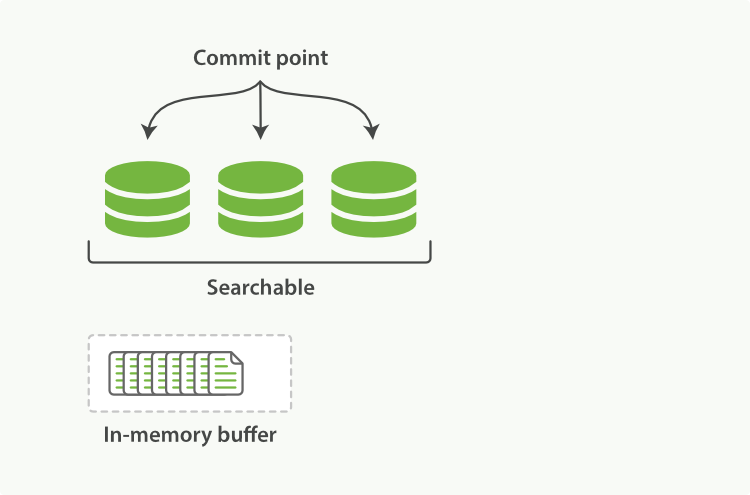
- 新加入一个文档,数据先进入内存buffer
- 内存buffer刷到文件系统缓存中(默认这个时间需要1s),此时新文档已经被索引,可以搜索
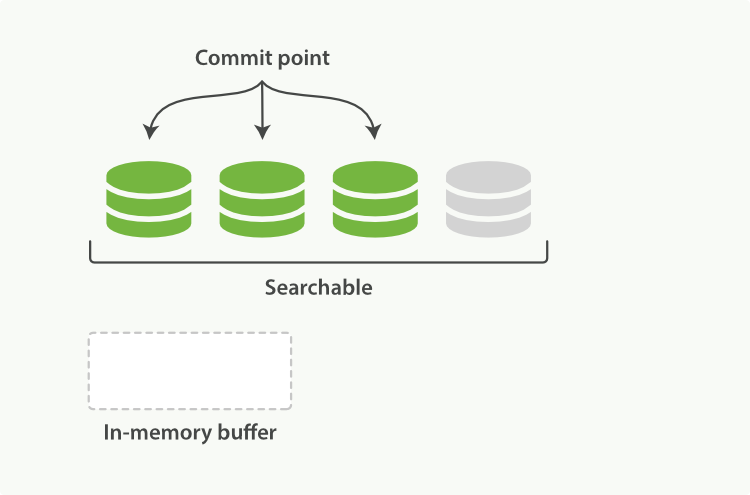
- 文件系统缓存写入磁盘,更新commit文件
3. 分析
提供各种丰富的查询子句,不仅可以实现全文检索,更能对海量数据进行聚合分析。
二、elasticsearch基本概念
1. 索引
-
索引(indexing) 在Elasticsearch中存储数据的行为
-
倒排索引(inverted index) Elasticsearch中存储数据的数据结构,加速文档检索
1Doc0:"it is what it is"
2Doc1:"what is it"
3Doc2:"it is a banana"
反向文件索引
1"a":      {2}
2"banana": {2}
3"is":     {0, 1, 2}
4"it":     {0, 1, 2}
5"what":   {0, 1}
完全反向索引
1"a": {(2, 2)} 2"banana": {(2, 3)} 3"is": {(0, 1), (0, 4), (1, 1), (2, 1)} 4"it": {(0, 0), (0, 3), (1, 2), (2, 0)} 5"what": {(0, 2), (1, 0)} -
索引(index) 相关文档存储的地方,等同于传统关系数据库中的数据库概念
2. 类型(type)
类型存在于索引(index)中,等同于传统关系数据库中的表概念
3. 文档(document)
文档归属于一种类型(type),等同于传统关系数据库中的行概念
1Relational DB -> Databases -> Tables -> Rows -> Columns
2Elasticsearch -> Indices   -> Types  -> Documents -> Fields
3
4Elasticsearch集群可以包含多个索引(indices)(数据库),
5每一个索引可以包含多个类型(types)(表),
6每一个类型包含多个文档(documents)(行),
7然后每个文档包含多个字段(Fields)(列)。
4. 分片
存储文档数据的容器,被均匀的分配到各个节点,保证索引和搜索的负载均衡。